

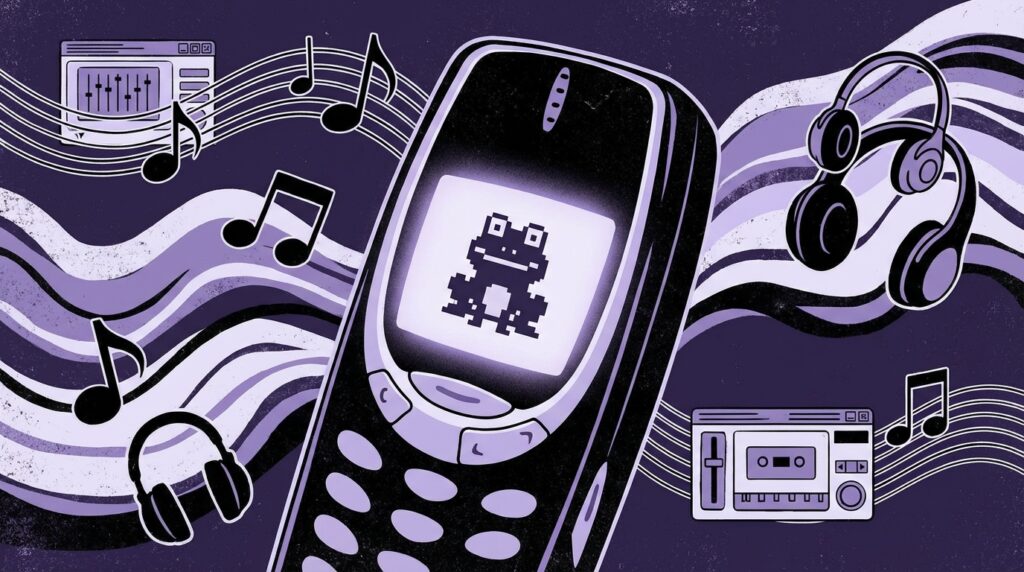
“The first time I heard Crazy Frog blasted from a polyphonic speaker on the bus, I honestly thought my phone was broken.”
You remember that sound, right? That strange mix of a two-stroke engine, high pitched “ding ding,” and a catchy Eurodance beat leaking out of a tiny plastic brick. Back then, it was not just background noise. It was status. Your ringtone said as much about you as your shoes, your MSN nickname, or your MySpace song. Today we spend time tweaking notification summaries and Focus modes. Back then, we spent actual money to make our phones scream “Crazy Frog” every time mom called.
The funny part is that what feels like a weird cultural glitch now was actually one of the first times mobile content felt personal. Before App Stores, before Spotify, before “creator economy,” there were ringtones. Stupidly compressed, overcharged, relentlessly advertised ringtones. And sitting right at the center of that storm was Jamster. Or Jamba, depending on what country you were watching TV in. Same frog. Same engine noise. Same recurring subscription catching teenagers off guard.
The phones in your pocket at that time were small but not light. A Nokia 3310 had this dense, reassuring weight, like you could throw it at a wall and the wall would lose. The plastic felt slightly rough, textured to survive greasy hands and cheap denim. The screen glowed a pale green or blue, pixels big enough that you could see the gaps. When a ringtone played, the tiny rear speaker rattled the back cover. You could actually feel the vibration through the casing. That physicality matters, because those devices were not just screens. They were objects you gripped while a 16‑voice polyphonic version of “Crazy Frog” tried its best to sound like a full track.
Maybe it was just nostalgia talking, but the whole Jamster era felt intense. The TV spots were loud. The animations were crude. The billing was… aggressive. Yet that period explains a lot about how we buy digital stuff now. Subscription traps, upsells, limited previews, catchy hooks, viral characters. We see the same tricks in modern apps and services. They just get wrapped in nicer fonts and cleaner interfaces.
The ringtone economy before Crazy Frog
Before we get to Jamster’s little blue menace, you have to remember what “music on phones” actually meant in the early 2000s.
CDs still ruled. If you wanted to hear a song you owned, you carried a Discman or one of those chunky MP3 players with 64 MB of storage. Your phone’s job was calls, maybe some T9 texting, and Snake. Sound came from a tiny buzzer in the back of the phone. At first, ringtones were just monophonic beeps. Notes on a grid. No drums, no chords, just simple melodies like “Nokia tune” or poorly recreated pop hooks.
You did not buy these at first. You typed them. Magazines printed ringtone codes in the back pages. Lines of numbers and symbols that mapped to the keypad, like a secret language for patient nerds. You would sit on a couch entering “8#7*2**99…” for ten minutes only to hear a broken version of “Mission: Impossible.” It sounded terrible, but when your phone played it, it felt like magic you had programmed yourself.
Then phones got polyphonic sound. Suddenly you could have multiple notes playing at once. 4‑voice, 8‑voice, then 16‑voice. That is where things started to get commercial. Brands saw money in selling pre-made tones instead of letting kids hack them together. You could text a code from a TV ad, get charged through your phone bill, and receive a ringtone as a tiny file. No credit card, no PC, no wires. The first wave of mobile content stores had arrived.
The trick was that those tones were short and small. Perfect for the limited memory on those devices. A full MP3 file was huge by comparison. So ringtones were not just a side thing. They were the main way music squeezed into early phones without breaking storage or data costs. That gap created space for companies like Jamster to move in.
Enter Jamster and the birth of a mobile media monster
Jamster was not a household name at first. What you saw was “Crazy Frog,” “Bling Bling,” “Sweety the Chick,” and a wall of premium SMS codes at the bottom of your TV screen. Jamster sat behind that, running the billing, licensing, and distribution. Think of it as an early mobile content hub that figured out two things:
1. Kids had phones.
2. Parents paid the bills.
So Jamster flooded music channels, kids TV, and late-night slots with short, aggressive ads. Loud loops. Bright colors. A text code. A price that looked small. Often in tiny letters, the subscription part: “X messages per week.” That detail powered the whole engine.
“Retro Specs: Premium SMS – Send ‘FROG’ to 88888. You get a Crazy Frog ringtone for $2.99 per week. To stop, send STOP to 88888… if you ever read the small print.”
Premium SMS was the core tech. You texted a keyword to a short code, the carrier handled the charge, and Jamster pushed the ringtone or wallpaper back to your phone. No app store. No middleman beyond the operator. Simple for the user, very profitable if you could keep that subscription rolling for months.
Screens were tiny, usually 128×128 or 176×220 pixels. Colors were bright but flat. Animations were looping GIF-style clips. Jamster leaned right into that limitation. The characters were bold, with thick outlines that survived bad compression. Audio excerpts were 15 to 30 seconds long so they fit in one ringtone file. These constraints shaped the culture. You were not buying a full music track. You were buying a tiny slice, a statement blast that repeated every time someone called you.
Crazy Frog: the accidental ringtone superstar
Crazy Frog did not start as a ringtone. It started as a weird sound effect. A Swedish student, Daniel Malmedahl, recorded himself imitating a two-stroke engine in the late 1990s. That sound clip spread online, ended up on loop, and someone paired it with visuals: a small blue, helmet-wearing creature riding an invisible motorcycle.
Then a German company, Jamba (Jamster’s European brand), spotted it and did what they did best: turned viral weirdness into a ringtone subscription. They packaged the engine noise and squeaks with a Eurodance beat, paired it with the blue character, and pushed it through TV ads nonstop.
“User Review from 2005: ‘I got it as a joke. Now my phone sounds like a cartoon meltdown every time someone calls. My parents hate it. I kind of love it.'”
The ringtone exploded. By 2004-2005, Crazy Frog was everywhere. It did not stay just a tone. It became a full single, “Axel F,” that topped charts in multiple countries. You would walk into a record store and see a CD based on what started as a ringtone.
Ringtone sales at that peak were not small-time. Global ringtone revenue in the mid-2000s sat in the billions of dollars. In some markets, ringtones made more money than single-track digital downloads. Crazy Frog was the poster child. It made the whole space feel like a gold rush.
Phones of that time amplified the absurdity. Their speakers were not tuned for full songs. They were tuned for loud alerts. So when Crazy Frog played, it cut through any environment. On a bus, in a quiet classroom, in a supermarket line. That harsh, compressed high end made it almost impossible to ignore. Which was kind of the point.
Jamster rode that wave with spin-offs: Crazy Frog wallpapers, Crazy Frog videos, Crazy Frog games for Java phones. Everything was small, compressed, and sold through the same SMS funnel. The frog was an IP before most people had even heard the phrase “mobile brand.”
The Jamster model: hooks, loops, and subscriptions
The magic formula behind the Jamster era had less to do with tech and more to do with psychology and billing. But the tech enabled the tricks.
The technical side of ringtone delivery
On the device side, a few things had to line up:
– Phones needed to support custom ringtones stored in memory.
– Carriers had to support premium SMS and WAP (early mobile web).
– Users had to be willing to download files over slow networks.
Ringtones came in different formats: simple monophonic, polyphonic MIDI, and then later, compressed audio like AMR, AAC, or small MP3 clips. The file size limit was tight. We are talking kilobytes, not megabytes. So Jamster edited tracks into short, hooky segments. The chorus. The drop. The engine noise.
When you sent that SMS, a backend system matched your number, charged your carrier account, then pushed a WAP link or direct binary SMS to your phone. You saved the tone, set it as default, and bragged to your friends.
The subscription twist
Where things got messy was the recurring nature of the service.
Many users thought they were buying a one-off ringtone. In practice, they were signing up for a weekly “club” where they got credits or new content each week, and their phone bill ticked up steadily. The phone screen might show “Subscription: Jamster Club” in tiny text in some menu. Most teenagers never checked.
Parents started seeing inflated bills. Regulators noticed. Consumer groups complained. In some countries, complaints about Jamster and similar companies stacked up fast.
“User Review from 2005: ‘My daughter downloaded Crazy Frog and my bill went up by 30 euro. Canceling it took three messages and another fee. Never again.'”
Jamster defended itself by pointing to on-screen disclosures and opt-out instructions. But the whole setup showed how powerful mobile billing could be when friction was low and attention was high. One word text. Instant content. Recurring charges.
If that pattern sounds familiar, it should. Subscription boxes, in-app purchases, free trials that auto renew. The seeds were visible in the Jamster playbook.
Then vs. now: from Crazy Frog to Spotify and TikTok sounds
You can draw a straight line from Crazy Frog to the way we treat audio on phones today. Just swap out formats and business models.
Here is a simple hardware comparison to ground it:
| Feature | Nokia 3310 (2000) | iPhone 17 (projected high-end flagship) |
|---|---|---|
| Screen | 84 x 48 pixels, monochrome | ~6.3 inch OLED, ~2800 x 1320 pixels |
| Ringtone type | Monophonic beeps, later custom polyphonic | Full songs, high-bitrate audio, spatial tones |
| Storage | No user storage for media, limited internal space | 256 GB to 1 TB for apps, music, video |
| Network | 2G (GSM), SMS and very slow data | 5G/6G, broadband-level data speeds |
| Audio output | Single rear buzzer speaker, harsh and thin sound | Stereo speakers, high-quality DAC, spatial audio |
| Monetization | Premium SMS, pay-per-tone or subscriptions | App subscriptions, in-app purchases, ad-supported music |
Back then you were paying a couple of dollars for a 20 second clip that sounded half broken. Today you pay a monthly fee for near unlimited streaming, custom notification sounds inside apps, and full control over volume profiles. Or you grab free clips from TikTok or Reels and let them live in your head rent-free.
Yet the social function looks similar. We still use audio to signal identity. Maybe it is your Discord join sound, your Twitch alert, your favorite TikTok meme audio, or the little custom tone on your smart doorbell. The packaging changed. The instinct did not.
Jamster sold you ringtones with loud TV ads and SMS codes. Modern apps do it with push notifications, creator partnerships, and subtle nudges in interface design. Back then, you thumb-typed a word like “FROG” on a T9 keypad that clicked softly with each press. Now you tap a glossy “Subscribe” button.
The cultural moment: when ringtones ruled everything
In the mid-2000s, you could not escape ringtones as culture. Chart shows mentioned ringtone sales next to CD singles. Magazines printed “Top 10 ringtones” lists. Major labels cut deals with mobile companies to get early access to hooks. Artists bragged about ringtone sales like people brag about streaming milestones now.
Phones became personal speakers in public spaces. Someone’s phone would ring in a café and half the room turned. Not because of volume, but because of the tune. A tinny version of a current hit, a football chant, a joke sound. In the right group, a rare or funny ringtone got laughs. It felt like a micro performance.
Crazy Frog sat at the loudest, most annoying peak of that period. If you had it as your tone, you were either trolling your friends or fully leaning into the chaos. The little blue character showed up in memes, magazine covers, even Halloween costumes in some places. Schools banned certain tones in class because kids would “prank call” each other to trigger the sound.
The tech behind it stayed simple. MIDI instruments, compressed audio, looping GIF animations. Nothing fancy. But those limits forced catchy hooks. No one bought a ringtone for the second verse. They wanted the part they recognized instantly.
Maybe it was just nostalgia talking, but there was something strangely pure about caring so much about a 15 second snippet. You could not scrub, skip, or shuffle. When your phone rang, the hook hit, and you either picked up or scrambled to silence it before the teacher saw you.
The backlash: regulation, fatigue, and changing phones
The Jamster model did not last forever. Three big waves hit it.
Regulation and complaints
As more parents saw inflated bills, regulators started to clamp down on premium SMS services. They pushed for clearer pricing, double opt-in flows, and easier opt-out steps. TV regulators pressured networks about ads targeting kids. Consumer groups ran campaigns calling these services misleading.
Jamster and similar players had to reword ads, slow down the fine print scroll, and improve help lines. The friction they had avoided at the start started to creep back in. Once people got burned, they became cautious about texting codes they saw on TV.
Ringtone fatigue
Phones got more advanced. They could store real music. Bluetooth made sideloading tracks easier. People started just cutting their own ringtones from MP3 files on their PCs. Why pay for a 20 second clip when you can grab the real song off a CD or file-sharing network and sync it?
Also, social norms shifted. Loud, obnoxious ringtones in public started to feel tacky. Silent mode, vibrate, and subtle tones became the default. Workplaces pushed for quiet phones. Schools banned them entirely during lessons. The cultural spotlight moved from the ring to the wallpaper, then later to apps and social media.
The smartphone shift
When smartphones landed with full app stores, the old premium SMS business started to feel old. Apple and Google cut carriers out of the content loop and took their own share. Suddenly you had a store where you could buy full songs, ringtones, and apps through an account instead of per-message billing.
Jamster tried to pivot into broader content and services, but the moat they had relied on was gone. Carriers wanted fancier decks. Users wanted apps, not logos and monotone beeps.
The frog faded. The TV spots slowed. The ringtone charts shrank. By the early 2010s, the idea of paying a few dollars for a 20 second sound clip felt like an odd relic.
What Crazy Frog and Jamster taught modern mobile tech
If you work in mobile products today, the Jamster era looks like a rough draft of many patterns we still see.
Monetizing tiny pieces of content
Jamster proved people were willing to pay real money for very small digital bits if those bits were:
– Immediate
– Personal
– Shareable or noticeable in social settings
Think:
– Stickers and emoji packs in messaging apps
– Fortnite skins
– Filters on Snapchat and Instagram
– Notification sound packs
Ringtones were early microtransactions. The value was not in the bytes. It was in how those bytes changed how the device felt in daily life.
Owning the billing channel
Premium SMS gave Jamster direct access to the user’s wallet. No separate login. No external checkout. That tight loop is the same power card Apple and Google later played with in-app purchases. Control the billing. Control the revenue flows.
Today you see similar fights around app store fees, alternative billing, and web sign-ups. The tension between platform, carrier, and content provider did not start with app stores. It was already visible in the battles around who got what share of those ringtone fees.
Virality before social networks
Crazy Frog spread without TikTok, Instagram, or YouTube Shorts. It used TV, word of mouth, and the public nature of ringtones. Each loud ring in a group was a mini ad. You heard something weird, you asked what it was, you saw the TV ad later, and then you texted the code.
Modern viral sounds work through remixes, duets, and clips shared in feeds. The loop is faster and has metrics, but the core remains: a recognizable hook that stands out in a crowded environment.
From ringtones to notification culture
If you look at your phone today, ringtones are almost the quietest part of the experience. Calls are rarer. Messaging dominates. Apps generate most of the pings.
Instead of one primary ringtone, you have:
– Notification sounds tuned per app
– Haptic patterns that signal alerts without sound
– Smart watches tapping your wrist
– Smart speakers chiming in your home
We traded one loud, public tone for dozens of softer, targeted nudges.
Yet when a certain sound breaks out, it still becomes cultural. Think of the iPhone default tone, the Slack “knock brush,” or the WhatsApp ding. People recognize them in coffee shops and joke about “phantom notifications” when they hear them in a TV show.
Crazy Frog took that public recognition to an extreme. It was impossible not to react when you heard it. Maybe you rolled your eyes. Maybe you laughed. Maybe you scrambled to silence the thing. In that sense, it did what any strong notification sound does: it demanded attention.
The hardware shaped the shape of that attention. Thick plastic shells, single speakers, low bit-rate compression. Modern devices wrap sounds in gentle reverb and tuned frequency curves. Back then, it was raw.
Smart homes and the ghost of Crazy Frog
We ended up in a place where audio feedback is everywhere. Smart fridges beep. Doorbells talk. Assistants chirp. Each brand wants a distinct sonic identity.
If you ask a smart speaker today to play “Crazy Frog Axel F,” it will pull a high-quality stream from a service. The frog that once chewed through Nokia speakers now comes out smooth and fully mastered. Your home fills with the same hook that once came out of a tiny 2G phone in a bus.
Ringtones laid the groundwork for that sonic branding. They trained users to associate certain sounds with certain services or moods. They proved that people latch on to short, repeatable audio cues far more than they do to visual logos in moments of interruption.
Maybe it was just nostalgia talking, but when you hear an early 2000s ringtone pop up in a modern show or meme, you can almost feel the weight of that old device in your hand again. The faint warmth of the battery after a long call. The stretch of the coiled antenna inside the plastic. The rough edge of the removable back cover catching on your fingernail.
The Jamster era came and went, but its echo sits under every subscription prompt, every “try premium” screen, every little paid sound pack in your favorite app. A small blue frog revving an invisible engine helped show how much people would pay to make their phones sound like theirs.
