

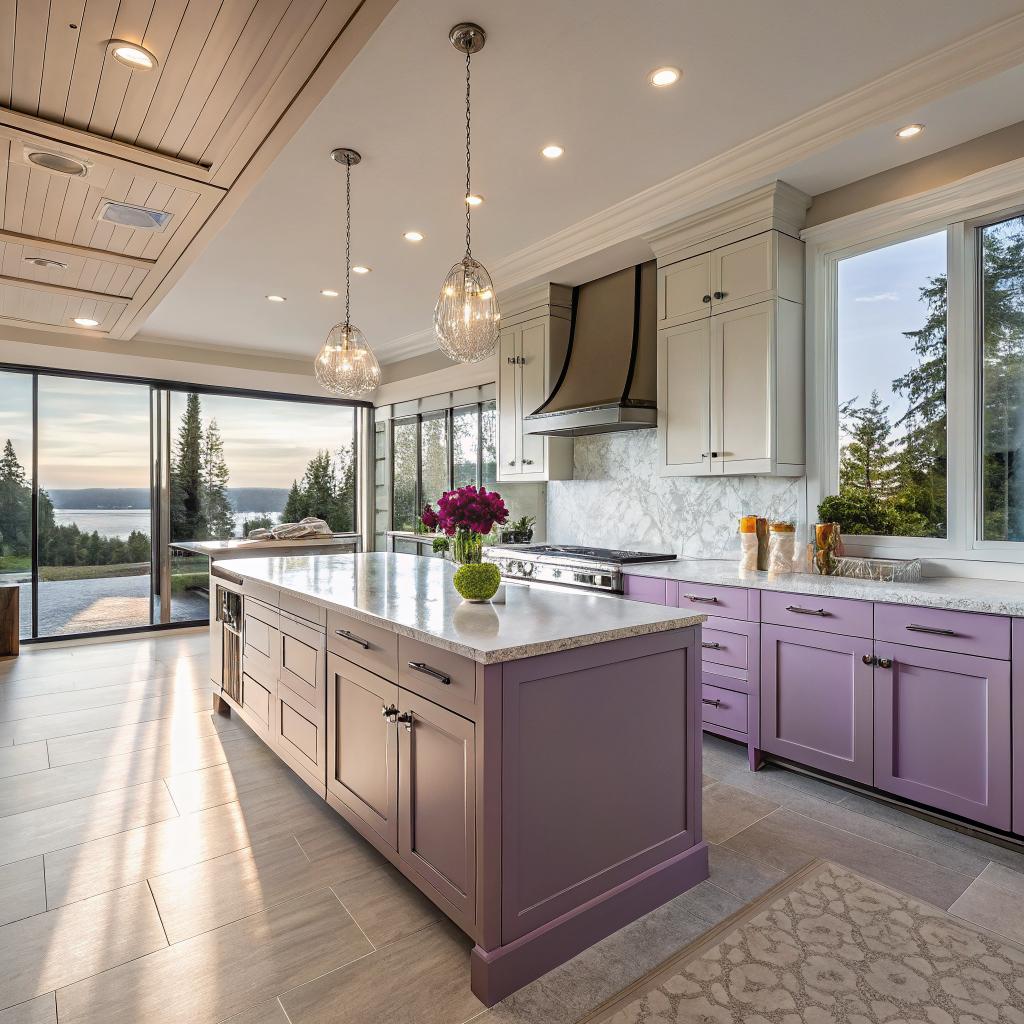
What if I told you the most future ready room in your home is also the one built on nostalgia, repetition, and habit? Not the smart home hub. Not the living room screen. It is your kitchen. And the way you choose to handle a kitchen remodel in Bellevue, WA over the next few years will either age gracefully with your life and technology, or feel outdated faster than your last phone upgrade.
Here is the short version. A future ready kitchen is one that keeps the timeless parts of cooking and gathering, then quietly makes space for tech, new appliances, and changing routines without you needing to tear everything apart again. It combines flexible storage, smart but replaceable gear, durable and easy to clean surfaces, and wiring and layout that can handle upgrades later. If you want an example of the type of project that aims for this balance, a kitchen remodel Bellevue WA that takes both design and technology seriously is where you start the planning conversation.
Why the future of your kitchen is also about your past
A kitchen is not like a phone app you can uninstall.
You remember the sounds, the smell of certain meals, the way light hit the counter in the place you grew up. Many people in Bellevue carry those mental snapshots from another city or country. When they remodel now, they do not really want a showroom. They want something that feels familiar but works better.
So the question is not just: “How do I make my kitchen modern?”
A more honest question is: “How do I build a kitchen that respects my habits and history, but will not feel clumsy with new tech and new ways of cooking in ten years?”
That is where this idea of “future ready” design starts to matter. It is not only about gadgets. It is about planning for:
- Appliances that will be smarter and possibly physically different
- Cooking methods that blend analog and digital tools
- More charging, more screens, maybe even less gas
- Friends and family who show up with their own devices and quirks
And I will be blunt. If you only chase a glossy, tech-heavy look without thinking about how you cook, where you stand, or what you love about older kitchens, you will likely regret it.
Future ready kitchens work when they treat technology as a guest and your daily habits as the host.
Balancing nostalgia, evolution, and technology in one room
Since this article is for people who like to think about old vs new, let us slow down and treat the kitchen like a small case study.
Think about three layers:
1. The nostalgic layer: what should never really change
This is all the stuff that feels human and stable.
- The smell of coffee or tea in the morning
- A spot where someone always leans while talking
- A surface that is good for rolling out dough or chopping
- Open shelving where you keep the same three mugs in rotation
In a Bellevue kitchen, I often see this as:
- Wood accents that warm up otherwise clean, simple cabinets
- Classic tile patterns that echo older homes your parents or grandparents had
- Analog tools that always stay out, like a kettle or cast iron pan
These touches keep the room from feeling like a science lab. They also age well because they are about behavior, not trends.
2. The evolving layer: what should be flexible
This is where people often make mistakes. They lock in choices that really should move around.
Some examples:
- Where small appliances live
- Which wall or area holds screens or voice assistants
- Whether you eat at an island, peninsula, or table
- How much pantry space you need as your food habits change
You might be into air fryers and pour over coffee right now. In five years, who knows. So a future ready design tries not to embed specific gadgets into fixed custom slots that only fit one model.
Think adjustable shelves, plug strips hidden under cabinets, and a layout that has two or three “tech friendly” surfaces, not just one designated “smart” corner.
3. The technology layer: what should be easy to swap
This one sounds obvious, but in practice it is where remodeling projects in Bellevue can get too rigid. People install high tech items in ways that are painful to replace.
For example:
- Custom cabinets built tightly around one fridge model
- Fancy, hardwired under cabinet lighting that is hard to service
- Built in screens near the stove that cook in the steam and grease
Treat every piece of tech in your kitchen as temporary, even if you plan to keep it for a long time.
That mindset leads to simple but smart design moves:
- Extra conduit in the walls, so adding or changing cables is not a mess
- Outlet placement that assumes more plugs than you think you need
- Wireless controls when possible, with manual backups
So you keep the warm, repeated rituals. You allow furniture, storage, and devices to shift. Then you plan all technology as a layer that can be swapped during the next mini upgrade, not the next full remodel.
Planning a future ready layout in Bellevue
Bellevue homes cover a wide range. Older ramblers, newer townhomes, condos in high rises, and large modern builds. The same idea works across them, but the layout choices change.
Here is where design and daily life meet. Instead of starting with “what is trendy,” start with three questions.
Question 1: How many people actually cook here, at the same time?
Not dream cooking. Real cooking on a Tuesday night.
If it is just you, a tight working triangle still works. If two or three people share kitchen tasks, then you want:
- Two clear prep zones, each with a cutting area, knife storage, and trash access
- A landing spot next to the stove and oven wide enough for hot pans
- A separate coffee or drink station so guests do not crowd the main work area
People often forget that “future ready” includes the future of your family size. Maybe your kids are small now, but in ten years they will be at the counter, chopping or baking. Or maybe you expect more multigenerational living. That changes who needs access to what.
Question 2: How much do you really sit in the kitchen?
A big island looks nice. That does not mean everyone needs one.
If most of your eating happens in a dining room or on the couch, an island used only for seating may end up as a clutter zone. In that case, you might prioritize:
- More storage under a slimmer island
- Comfortable standing prep height instead of bar stool comfort
- Pull out surfaces that appear only when guests visit
On the other hand, if your kitchen is where everything happens, like many open concept Bellevue homes, then the island or peninsula becomes a social hub, a study spot, sometimes even a remote work desk. That calls for:
- Easy to clean top that handles laptops and spills
- Hidden cable management for chargers
- Lighting that can shift from bright cooking to softer conversation
Question 3: How much tech pressure is realistic for this space?
Some people want a near silent kitchen with as few blinking lights as possible.
Others want connected appliances, app based cooking guidance, whole home voice control, and energy tracking.
You do not have to pick one extreme. What does matter is being honest:
- Will you really use an app to preheat the oven, or will you forget it exists?
- Do you want your fridge to show recipes, or is it just a distraction?
- Is data about your energy use interesting enough that you will actually look at it?
The most advanced kitchen technology you own is useless if you never touch the settings after week one.
So start with habits. Then let the tech support those habits, not dictate them.
Materials that age well with tech and time
Future ready design is not only about screens and wiring. It is also about how surfaces respond to years of use, spills, gadgets sliding around, and maybe a couple of small accidents.
Here is a simple table that compares common counter materials and how they behave in a “future focused” kitchen that might see more device use and more daily wear.
| Material | How it handles daily tech use | Maintenance level | Best for people who… |
|---|---|---|---|
| Quartz | Stable surface for laptops and devices, resists most stains | Low, simple cleaning, no sealing | Want clean look and do not want to fuss over upkeep |
| Granite | Durable, but some finishes show fingerprints around tech hubs | Medium, needs periodic sealing | Like natural variation and do not mind light maintenance |
| Butcher block | Warm and tactile for writing or laptop use, can be dented or stained | Higher, needs oiling and care around sinks | Value warmth and are willing to accept patina and marks |
| Porcelain / Sintered stone | Handles heat and scratching well, good for heavy appliance zones | Low, very durable | Cook a lot and move heavy equipment often |
You will notice none of this is very glamorous. It is practical. But picking the right material now can prevent headaches later, especially when your kitchen becomes a hybrid of cooking space and gadget parking lot.
Lighting for cooking, working, and staring at screens
Lighting may be the most underrated part of a future ready kitchen.
Your eyes will deal with brighter screens and more use of phones and tablets in the kitchen. At the same time, older eyes will need better lighting to read labels, see into pots, and avoid accidents.
Think of kitchen lighting in three simple layers:
Ceiling lighting
This is your general light. Recessed fixtures, surface mounts, or a combination.
Key points:
- Place cans so they shine in front of where you stand at the counter, not behind your head
- Use dimmers, so you are not stuck with one harsh level
- Choose warm white to neutral white temperature that is kind to skin tones and food
Task lighting
This is where tech and everyday use meet.
Under cabinet lights work well here. LED strips or pucks can brighten counters without glare. The trick is to:
- Use quality drivers so lights do not flicker on camera or bother your eyes
- Put under cabinet lights on their own switch or smart control
- Plan wiring paths so they can be serviced later
Accent and adaptive lighting
This is for the future side of the design.
It might mean:
- Toe kick lighting that acts as a night path
- LEDs integrated into shelves for display
- Smart bulbs in pendants that adjust color temperature through the day
If this sounds like overkill, remember that your kitchen may become the most photographed room in your home. Online recipes, video calls, or kids filming small cooking videos all like even, flexible light. You do not need a studio. Just smart basic planning.
Storage that works with changing gadgets
Storage in a kitchen that plans for the future has less to do with pretty pull outs and more to do with sizing for unknowns.
Imagine your appliance collection five years from now. You might add:
- A second pressure cooker or multi cooker
- A larger stand mixer
- More containers for meal prep and food storage
- An indoor hydroponic unit or compact herb garden
If every cabinet is built to fixed, narrow dimensions based on what you own today, you will start storing new items on counters. That is fine for some people, but if you want clean surfaces, the cabinets should anticipate bulkier shapes.
Some helpful storage ideas for a future ready Bellevue kitchen:
- At least one deep drawer stack for heavier, changing appliances
- Adjustable shelves in pantry areas, not fixed ones at odd heights
- A high cabinet or closet space reserved for rarely used devices
- Vertical storage near outlets for charging or docking portable units
And do not forget old tech. You may keep a favorite slow cooker long after better models exist. Nostalgia is not only about heirloom dishes. It can attach to an aging rice cooker that just “tastes right.”
So the storage plan respects both new and old tools, switching them in and out without redoing the room.
Energy, ventilation, and the shift away from gas
Looking ahead, a big technical and emotional topic is cooking fuel.
Bellevue, like many cities, is seeing more discussion about gas vs induction. Some people feel very attached to the open flame. Others like the quick response and easy cleaning of induction.
I will not claim one is perfect. They are different.
What matters for future ready design is leaving room for change. If you remodel now with gas, but a few years later you want induction, will your electrical panel and wiring support it?
Think about your kitchen as an energy hub:
- Cooktop or range power needs
- Oven or double oven circuits
- Microwave, dishwasher, and fridge circuits
- Multiple small appliance circuits for counter use
A good remodel plan checks your home’s electrical capacity then gives the kitchen a bit of headroom. Not massive overbuilding, just enough that a swap from gas to induction or a larger appliance later is not a crisis.
Ventilation also ties into this. Hoods should be sized for the cooking you actually do. Many older homes treat hoods as decoration. For a kitchen that will see more frequent use, sometimes with oil heavy cooking and more people home during the day, real air movement helps.
You might find it helpful to think of hood choices like this:
| Hood type | Strengths | Things to watch |
|---|---|---|
| Under cabinet hood | Compact, fits small spaces | Can be noisy if undersized, weak capture area |
| Wall mounted chimney hood | Good capture area, clear vertical path | Requires planning for duct path and ceiling height |
| Insert with custom surround | Blends with cabinets, flexible styling | Needs careful design to keep performance strong |
| Downdraft system | Clean look, helpful near windows with views | Less effective for taller pots and high heat cooking |
The future part here is simple. As air quality awareness grows, you will probably care more, not less, about how your kitchen handles smoke and steam.
Smart features that do not age badly
This is where many tech fans light up. Smart features can be fun. They can also be fussy, fragile, or just annoying when the app breaks.
If you love tech, you might be tempted to connect everything at once. I think it is better to pick a few areas where “smart” adds real value, and let the rest stay simple.
Here are features that tend to age fairly well:
- Smart dimmers and switches that also work manually
- Smart plugs for under cabinet or accent lighting strips
- Appliances that offer smart features but do not require the app for basic use
- Water leak sensors under sink cabinets or near dishwashers and fridges
Features that often feel dated faster:
- Built in touchscreens in cabinet faces
- Proprietary hubs that only work with one brand
- Complex, app only controls for simple tasks like turning on a light
A nice compromise is to route wiring and locate outlets with smart gear in mind, then start small. If your habits support it, you can layer in more devices later.
For a website audience that cares about the relationship between nostalgia and tech, this approach keeps your kitchen from becoming a museum of failed devices. It becomes more like a studio where tools come and go, but the core space stays solid.
Design details that keep the kitchen human
Future ready can sound cold. It does not have to be.
In fact, the more tech you add, the more care you should give to the human touches.
Some small details that matter more than they seem:
1. Sound
Hard surfaces and open layouts can lead to echo and noise. Add the hum of appliances and occasional device speakers, and it is easy to get tired.
You can soften this with:
- Soft seating in nearby areas
- Textiles like rugs in adjacent spaces
- Thoughtful placement of noisy appliances away from conversation zones
2. Touch
Cool metals and hard counters are fine, but a kitchen where everything feels rigid and smooth can feel less welcoming.
You can balance this with:
- Wood or wood look elements on handles or trim
- Textured tile instead of only flat glossy surfaces
- Knobs and pulls that feel solid but not sharp or slippery
3. Memory
Here is where nostalgia and tech meet nicely.
You might:
- Frame an old recipe card from a parent or grandparent near a modern induction cooktop
- Display a vintage tool next to your latest gadget
- Keep one small open shelf for items that do not “match” but tell your story
These little anchors prevent your remodeled kitchen from feeling like it dropped out of a catalog. They remind you why you wanted a better space in the first place.
Local context: what makes a Bellevue kitchen different
Bellevue is not a generic suburb. There is a strong tech influence, a lot of commuting, many people working remote or hybrid schedules, and a mix of cultures that bring different cooking traditions.
How does that shape a future ready kitchen?
- More daytime use. Remote work means people cook or reheat at noon, not only at night.
- Diverse cooking smells and methods. Stronger ventilation and more durable surfaces help.
- Higher device load. Phones, tablets, laptops, wearables, and smart speakers nearby.
There is also the local cost of housing. Many residents look at a remodel not only as comfort but as a long term asset. That does not mean you should design only for resale. But it does mean planning for adaptable spaces that can suit different future owners is wise.
For example:
- A microwave in a lower drawer might be perfect now, but it should be easy to convert to storage or another appliance later.
- An island with power on both sides is nicer for both left handed and right handed cooks.
- A walk in pantry that can turn into a small pocket office later gives flexibility.
This sort of planning interests people who like to think about how spaces evolve over time. You can almost treat the kitchen as a physical version of a software platform that will run many “apps” in its lifetime.
Preparing for your own remodel: questions to ask yourself
If you are seriously thinking about a remodel, whether soon or in a year, it can help to do some homework at home before you talk to any contractor or designer.
Here are questions that lead to better future ready choices:
Habits and nostalgia
- What is one thing from your childhood kitchen you still miss?
- Which three tools or items do you reach for almost every day?
- Is there a meal you want to cook more often but the current layout slows you down?
Tech and change
- How many screens are in your kitchen during a typical day?
- Do you want to see devices while cooking, or hide them away?
- Are you likely to adopt new cooking gadgets in the next few years, or do you stick with a core set?
Future house use
- Do you plan to stay in this home more than ten years?
- Could an older relative live with you in the future?
- Could this kitchen need to support mobility aids or seated cooking someday?
Your answers will not be perfect or final. That is fine. What they do is reveal the direction your life is more likely to move. The remodel can then aim slightly ahead of that curve, not behind it.
Common mistakes in “future ready” kitchens
Since you asked me not to agree blindly, I want to push back on some ideas that get repeated a lot.
“You should automate everything”
No. Many people regret hyper automated systems that break down or confuse guests.
Start with manual systems that are comfortable. Add simple automation where it clearly saves time or friction. Lights, leak detection, and maybe some appliance alerts are usually enough.
“White, glossy, and minimal is the only modern look”
Again, no. White can feel clean, but it can also feel cold. It can even highlight clutter more.
A future ready kitchen can be dark, warm, colorful, or simple. The test is whether the space supports changing uses, not whether it resembles a lab.
“If you are going high tech, you cannot mix in vintage elements”
This is the one I disagree with most.
A smart induction cooktop under a hand painted tile backsplash that looks like a 1970s pattern is not a conflict. It is actually more honest. It says you live in time, not in a catalog.
In a city like Bellevue, where a lot of daily life runs on screens, keeping some analog charm in the kitchen can be grounding.
A small, concrete example
Let me sketch a simple before and after that ties all this together.
Imagine a 1980s Bellevue kitchen:
- Upper and lower oak cabinets, heavy grain
- Tile counters with grout lines that are hard to clean
- Single central fluorescent light
- Electric coil range with a microwave over it
- No island, small table crowded into a nook
Now picture a future ready remodel of the same footprint, without blowing out walls:
- Base cabinets in a soft color with simple fronts, a few glass uppers for display
- Quartz counters, with a section of butcher block near a window for prep and laptop work
- Layered lighting: recessed ceiling lights, under cabinet strips, two pendants over a small island
- Induction range, vented hood to outside, but 240v circuit sized to also handle a future upgrade if needed
- Nook turned into a flexible bench with storage below, table that can shift positions
- Two dedicated charging drawers with outlets inside, plus one counter area with a built in power strip and data port
- Pantry wall with adjustable shelves and space tall enough for future appliances
Tech touches:
- Smart switches that can be voice or app controlled, but also work like normal switches
- Leak sensor under the sink that sends alerts
- Appliances that offer Wi Fi, but all essential functions work from simple knobs and buttons
Nostalgia touches:
- One open shelf with old cookbooks and a framed family recipe
- Warm wood bench top and cutting board storage
- Tile pattern over the range that echoes an older style from a previous home
This kitchen will not feel frozen in a particular year. It will probably still feel workable in 15 years because it is not tied to one specific gadget or look.
Q & A: Is a future ready kitchen actually worth the effort?
Let me end with a simple question and answer, since that is often how people think through real projects.
Question: “If I plan a kitchen remodel in Bellevue with all this future stuff in mind, will it really matter, or am I just overthinking things?”
Answer: It will matter most in the quiet ways. You will notice it when you do not trip over cords, when you can add a new appliance without a power crisis, when someone older in your family can still cook safely there, and when the room still feels comfortable after your third phone upgrade and your tenth app controlled gadget. The big pictures on remodel sites rarely show that kind of value, but you will feel it on a random Tuesday night when the space works with you rather than against you.
