

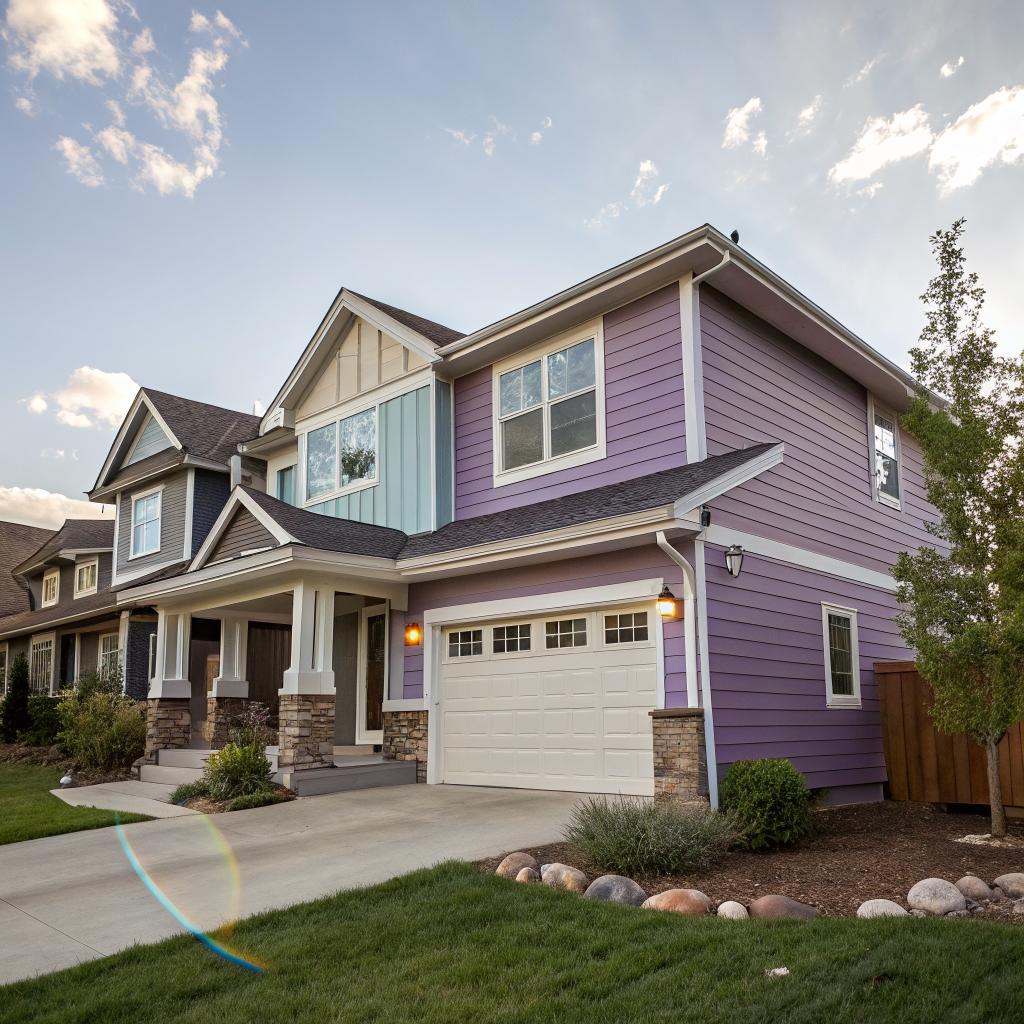
What if I told you that the paint color you pick for your hallway can feel like dialing into your childhood living room and a sci‑fi future at the same time?
That is really what “modern nostalgia” is in home design. You take colors, textures, and little visual memories from the past, then frame them with clean lines, simple palettes, and smarter choices about light and space. And in Colorado Springs, where you have sharp sunlight, changing seasons, and a mix of older neighborhoods and new builds, the way you handle color matters more than most people think. The short answer: if you want a home that feels both familiar and fresh, you need to treat paint as a memory tool as much as a design choice, and you probably need a residential painter who understands both.
If you just want the headline: you create modern nostalgia at home in Colorado Springs by choosing a few grounded, memory-triggering colors, pairing them with quiet neutrals, respecting the local light and altitude, and using professional prep and application so those choices actually last. That can sound obvious, but the difference between “cozy retro” and “dated and kind of sad” is almost always in the details of sheen, contrast, and placement, not the color names on the paint chips. A team that knows residential painting Colorado Springs COlorado like residential painting Colorado Springs COlorado will usually treat your walls like a small design lab, not just surfaces to cover.
You do not have to repaint your whole house to get there. In fact, you probably should not. A couple of key rooms, one or two accent walls, and a thoughtful exterior scheme can shift the whole mood of a home you already know by heart.
Why “modern nostalgia” actually fits Colorado Springs homes
Colorado Springs is strange in the best way. You have mid‑century ranches, 80s and 90s two‑stories, downtown houses from much earlier, and new construction with big open plans. At the same time, you have people who love national parks, retro tech, and smart homes. That mix almost begs for a style that looks back and forward at once.
You probably notice it in other parts of your life:
- You listen to old music on new headphones.
- You stream shows that pretend to be set in the 80s on a 4K screen.
- You keep a box of old game cartridges near a brand new console.
So it makes sense your walls and trim can tell a similar story.
Modern nostalgia painting is less about copying a past decade and more about re‑using fragments of it in a cleaner, calmer way.
Think about a soft avocado or sage green, but with more gray in it than your grandparents would have picked. Or a warm off‑white with the slightest pink or peach memory of a 70s bathroom, updated so it feels airy instead of cramped.
Colorado Springs has strong sun, dry air, and big swings between seasons. All of that interacts with color and finish:
- UV light can fade certain pigments faster.
- Snow glare near big windows shifts how whites look.
- Dust and dry air can make some glossy finishes feel harsh.
So the “modern” in modern nostalgia here is not just the style. It is also the choice of paint technology, primers, and sheens that work for this climate.
How paint plays with memory, light, and tech
This may sound a little abstract, but it actually becomes very practical once you think about it for a minute.
Color as a memory trigger
Most people remember spaces as a mix of color, smell, sound, and tiny details. You might not recall the exact couch from your childhood, but you remember:
- The warm beige walls.
- The dark brick fireplace.
- The way afternoon light hit the carpet.
Painting with modern nostalgia pulls from that. It asks questions like:
- “What color were the kitchen cabinets you grew up with?”
- “Was your grandparents hallway cool or warm?”
- “Do you remember a particular blue from a bedroom or toy?”
Then it dials those memories forward into updated, less saturated, more flexible colors. You are not re‑creating a room from a photo. You are echoing the feeling.
If a color makes you think “I know this somehow,” even if you cannot place it, that is usually a good sign you are close to nostalgic without being stuck in the past.
The Colorado Springs light factor
Here is where things get technical in a quiet way.
Higher altitude light is sharper. On a bright day, Pikes Peak almost blinds you. That same intensity hits your paint:
- Cool grays can look blue or even cold.
- Warm creams can look almost pure white in afternoon sun.
- Deep colors can feel flat if the paint quality is low.
In a city closer to sea level, a certain warm white might feel nostalgic and cozy. In Colorado Springs, that same color can look strangely stark at noon and then too yellow at night.
A good residential painter here will often:
- Sample at least two or three shades of a color on different walls.
- Check them morning, midday, and evening.
- Take photos under both daylight and artificial light.
This is not fussing. It is the only way to know if that soft “grandma beige” you like will still feel grounded when snow reflects sun into your living room.
Tech, nostalgia, and how your walls can support both
Since this is for readers who care about technology and evolution, let us talk about how paint intersects with that.
Modern homes in Colorado Springs often have:
- Large TVs or projectors
- Smart lighting with color temperature control
- LED strips behind shelves or desks
- Hidden speakers or soundbars
That changes how you pick nostalgic colors.
If you paint a living room in a rich retro blue that looks great in natural light but turns almost black when your TV is on, you lose comfort. On the other hand, a soft green‑gray can sit quietly behind screens and still hint at older spaces.
Also, smart bulbs let you shift from cool office‑style light to warm “analog” light at night. Your paint has to be stable in both modes. The more intense the color, the more it jumps around.
Think of paint as the operating system for your room: everything else runs on top of it, from your smart lights to your old vinyl collection.
That might be a slightly nerdy analogy, but it helps. If the base is calm and balanced, your mix of old and new tech feels more natural, not like a showroom.
Modern nostalgic interior painting ideas for Colorado Springs homes
Let us get specific. Here are some room‑by‑room ways to use paint to get that modern nostalgia feeling.
Living room: your memory hub
The living room usually holds the most tech and the most memories. Family photos, movie nights, gaming, reading, all in one space.
A simple approach that works well here in Colorado Springs:
- Pick a soft, warm neutral for most walls.
- Add one accent wall in a deeper, memory‑inspired color.
- Keep trim crisp but not bright white.
Some pairs that often feel nostalgic without being old:
| Wall role | Color type | Why it works for modern nostalgia |
|---|---|---|
| Main walls | Warm greige or mushroom beige | Reminds people of 80s/90s neutrals, but softer and more complex. |
| Accent wall | Desaturated forest green or muted navy | Hints of retro dens and libraries, but plays well with TVs and art. |
| Trim | Off‑white with a touch of cream | Less stark than pure white, easier on the eyes in bright sun. |
If you have a fireplace, that surface can carry a bolder memory:
- Charcoal or deep brown to echo old brick without the dust.
- Soft clay or terracotta tone for a quiet southwestern nod.
In Colorado Springs, where winters feel real, that deep color around a fire has emotional weight.
Kitchen: retro comfort with real function
Kitchens are where nostalgia hits hard. Tile patterns, cabinet colors, the way light used to hit the breakfast table.
The challenge is that older kitchen colors, like bright yellows and saturated greens, can feel overwhelming when combined with stainless steel appliances and under‑cabinet lighting.
So a modern nostalgic kitchen might use:
- Upper cabinets in a light, warm white or cream.
- Lower cabinets in a muted color drawn from a retro palette: soft blue, sage, or greige‑green.
- Walls in a very light version of the cabinet color, so everything blends.
If your home has an older layout, painter prep becomes more critical than color. Old grease, smoke, and micro‑cracks in plaster can ruin the finish.
In this climate, with open windows in spring and fall and dry indoor air in winter, you want paints that resist micro‑chipping and clean easily. Satin or semi‑gloss on cabinets, eggshell on walls. Not shiny, but tough.
Bedrooms: personal nostalgia, not generic
Bedrooms are where nostalgia can be very specific and maybe a bit weird, in a good way.
You might remember:
- A soft lilac room from a cousin’s house.
- A dark blue room you shared with a sibling.
- The beige and wood panel combo of a 70s basement.
If you work with a painter who listens, they can turn those memories into palettes that still feel grown up.
For example:
- A kids room in a softened version of a classic primary color, toned down with gray.
- A guest room in a pale blue‑green that almost hits hospital green but stops just before it, so it feels calm instead of clinical.
- A main bedroom in a clay rose or muted mauve that hints at retro bathrooms but feels modern with black hardware.
Colorado’s strong morning light can turn pale colors sharp. So you might go a shade darker than you first think, to keep a bedroom restful.
Hallways and transition spaces
These often get ignored, which is strange, because they link memories. You walk through them to reach the rooms that matter.
A good modern nostalgic hallway approach:
- One consistent, quiet color from entry to bedroom area.
- Clean white or soft cream on doors and trim.
- Possibly one vintage color on the inside of the front door.
Painting just the inside of the front door in a deep teal, moss, or retro red can trigger a strong emotional memory every time you come home, without taking over the whole house.
Exterior painting in Colorado Springs with a nostalgic edge
Exterior paint in Colorado Springs has a much tougher job than interior paint. Sun, wind, hail, snow, sudden temperature drops. You see all of it.
So when you look for modern nostalgia outside, you have to think about:
- Color history of your neighborhood.
- Roof color and material.
- HOA rules if you have them.
- How dirt and dust show on certain shades.
Classic schemes with updated tones
Most older homes in the area sit well with a three‑color scheme:
- Main body color
- Trim color
- Accent color for doors and sometimes shutters
Here are a few combinations that tend to feel nostalgic but not fake‑historic:
| House style | Main color | Trim color | Accent (door/shutters) |
|---|---|---|---|
| Mid‑century ranch | Warm gray or greige | Soft white | Mustard, muted teal, or brick red |
| Two‑story 80s/90s | Desaturated blue or olive | Cream or stone | Deeper version of the main color |
| Older downtown home | Clay, moss, or rich tan | Warm white or light taupe | Wine red, charcoal, or navy |
These combinations pick up hints from older Colorado architecture but work with modern windows, metal railings, and updated garages.
Dealing with sun, hail, and altitude
This is where people often underestimate the technical side.
Higher UV levels can:
- Fade reds, bright blues, and some greens faster.
- Highlight every surface flaw in a glossy finish.
- Cause cheaper paints to chalk and powder.
So your modern nostalgic exterior probably needs:
- Color choices tested in local light, not just from a brochure.
- Paint lines known to hold color at altitude.
- Proper scraping, sanding, caulking, and priming, especially on older wood.
If you grew up in a house with peeling trim, you probably remember it. You might even be a bit over‑sensitive to it. That memory can push you toward very safe colors and finishes, but the real fix is better prep and better products, not only safer color.
How to talk to a painter about modern nostalgia
This is where a lot of projects go sideways. You might say “I want something nostalgic but modern,” and the painter hears “neutral gray with a feature wall.”
You are partly responsible for bridging that gap.
Bring more than Pinterest
Screens help, but they are not enough. A human conversation matters more.
Try bringing:
- Photos of spaces from your past that you remember clearly.
- Objects with colors you like: a book cover, a piece of fabric, a mug.
- Short notes about memories: “My grandma’s porch was this green, but a bit lighter.”
Then ask the painter direct questions:
- “How will this color look at noon here?”
- “What finish will make this feel warm, not shiny?”
- “Can we test a darker and a lighter version on the same wall?”
If the painter seems bored by those questions, that is a sign you might need a different one. Modern nostalgia painting needs at least a small interest in story and context, not only speed.
Ask about products, not just colors
Nostalgia is emotional, but the paint system is not.
Some practical questions that matter in Colorado Springs:
- “What primer will you use on old trim or siding?”
- “How does this paint handle UV exposure?”
- “How many coats do you recommend for this color on this surface?”
- “What is your process if the old paint is failing?”
A painter who can answer these without jargon is often more trustworthy than someone who only talks about color trends.
Balancing personal nostalgia with current life
There is a small trap in all of this. You can get so focused on re‑creating feelings from the past that you forget how you live now.
You might remember loving a dark wood‑paneled basement as a kid. But now you work from home, and you need clear light for video calls and reading.
So you have to edit your own nostalgia a bit.
Questions to keep your paint choices honest
Before you lock in a color, ask yourself:
- “Do I like this color because it is familiar, or because I want to look at it every day now?”
- “Will this feel calm when I am using a laptop, a phone, and a TV, not just sitting with a book?”
- “How will this look with the tech I cannot or do not want to hide?”
If your honest answers feel mixed, that is normal. Maybe you compromise:
- Use the most nostalgic colors in smaller doses: powder room, inside a closet, pantry, or a single wall.
- Keep main living areas in calmer, more flexible colors.
- Let textiles and art carry some of the stronger retro notes.
You do not have to win every nostalgic argument with yourself in paint. Some of it can move to couches, posters, and lamps.
Little details that push a Colorado Springs home toward modern nostalgia
Sometimes the big color choices work, but the home still feels off. That often comes down to small details.
Trim, doors, and ceilings
Most people default to “ceiling white” and bright trim. In the high light of Colorado Springs, that can feel like living inside a light box.
Some simple shifts:
- Use a softer white on the ceiling, close to the wall color, for a quieter, more “old film” feel.
- Paint interior doors a shade darker than the trim for a subtle retro vibe.
- In older homes, consider painting window sashes a darker color, like older wood windows often were.
These tweaks can make even standard builder houses feel more layered.
Sheen choices
Gloss equals “new” in many people’s minds. Too much gloss, and nostalgia disappears.
A common modern nostalgic scheme inside:
- Flat or matte on ceilings.
- Eggshell on walls for a soft look with some cleanability.
- Satin on trim and doors.
High gloss has its place, but it can look harsh under bright Colorado light and clash with older furniture. A satin trim painted in a warm white can feel like older oil paint without the glare or smell.
Hardware and paint interaction
If you are the kind of person who reads about technology and nostalgia, you might care too much (in a good way) about hardware, switches, and vents.
Paint can either clash with or support those elements.
Some practical tips:
- If you use black or dark bronze hardware, warm off‑whites and muted colors usually feel more grounded than cool grays.
- If you keep some older brass or chrome, then creams, sage, and soft blues can echo older color stories.
- Painting vent covers and some outlets to match the wall can keep tech from breaking the nostalgic mood.
None of this is dramatic, but together it makes a room feel thought through.
Is modern nostalgic painting worth the trouble?
You might be thinking: “Is all this really worth it? It is just paint.”
Fair question. Paint is not permanent like structural changes, but it shapes daily experience more than people admit. Especially in a place with dramatic seasons and a lot of indoor time in winter.
A few grounded reasons it can be worth doing well:
- Your home feels more like your story, not just a floor plan.
- Thoughtful color choices tend to age better, so you repaint less often.
- Buyers often feel a subtle pull to homes that feel familiar but updated, which can help resale without looking like a trend show.
And on a simpler level, living in a space that quietly echoes moments from your past, while still handling your phone chargers, screens, and smart speakers, is just pleasant. It is a kind of design that respects both where you came from and how you live now.
Let me close with a simple Q&A that people in Colorado Springs often ask when they start thinking about this kind of project.
Questions people ask about modern nostalgic residential painting in Colorado Springs
Q: How many colors should I use inside my home?
A: Most homes feel balanced with 3 to 5 main interior colors, plus a trim color. You can add small accent colors in tiny spaces, but if every room is a different strong shade, the house can feel chaotic instead of nostalgic.
Q: Can I do this myself, or do I really need a pro?
A: You can paint yourself if you have time, patience, and a realistic view of your skills. The tricky part in Colorado Springs is surface prep and light. Professionals are usually better at spotting hairline cracks, dealing with previous bad paint jobs, and predicting how colors shift. For a single room, DIY might be fine. For a full home, a pro often saves money and regret over time.
Q: Are nostalgic colors always warm?
A: No. Many people associate nostalgia with warm creams and browns, but cool tones can be nostalgic too. Think of school hallway greens, powder blue bathrooms, or the gray of older electronics. The key is how muted or soft the color is, not only its temperature.
Q: What if my partner’s nostalgia is totally different from mine?
A: This happens more than people admit. One person remembers dark wood and deep reds, the other remembers white walls and light pastels. You can either assign different rooms to different memories, or agree on a neutral shared base and use smaller areas for more personal colors. It is less about winning and more about building a shared “new memory” through the updated palette.
Q: How long should I expect a good exterior paint job to last in Colorado Springs?
A: With good prep, quality products, and sensible colors, most exteriors here should look solid for 7 to 10 years, sometimes longer on protected sides. Intense colors, cheap paint, or poor prep can cut that almost in half. Interiors hold even longer if you avoid harsh cleaners and physical damage.
What color, if you are honest, lives in your head from a home you loved years ago, and what would it look like if you saw it again now under Colorado Springs light with your current life layered on top?
