

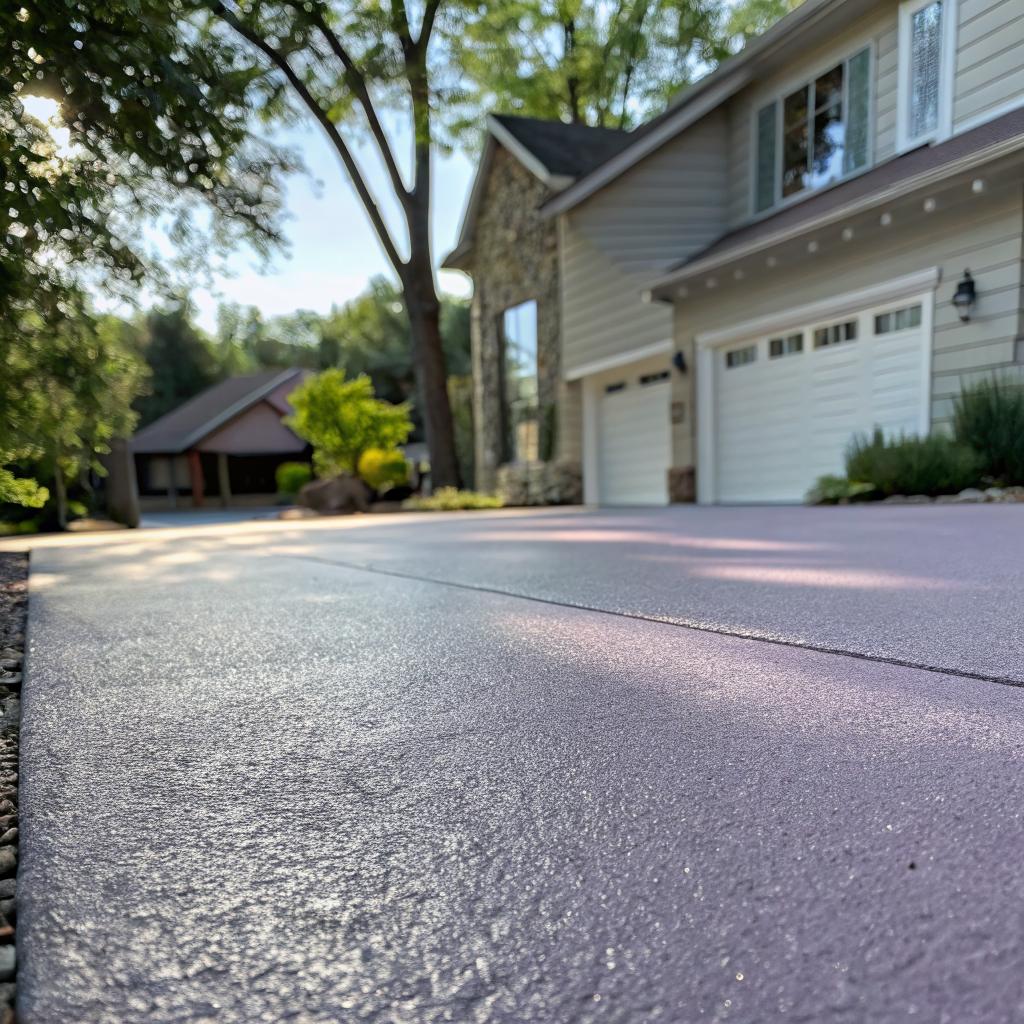
What if I told you that hiring a modern asphalt company could feel a bit like stepping back into your childhood neighborhood, watching someone roll tar across a cracked driveway in slow, careful passes?
That is why a driveway sealcoating company Denver feels retro: the work still looks and sounds almost the same as it did decades ago, even though the tools, materials, and planning sit on top of maps, apps, and quiet, invisible tech. The surface looks old-school, but behind it there is scheduling software, material science, and, sometimes, drones and data. You see a guy with a squeegee. You do not see the spreadsheets, curing curves, or temperature logs.
That mix of old and new is what makes this feel nostalgic, a bit analog, even in a city that keeps talking about smart homes and EV chargers.
You could say driveway sealcoating lives in that strange gap between your memory of a simpler past and your phone buzzing with notifications in your pocket.
Why asphalt work looks like it never changed
Sealcoating is, at its core, a simple idea: protect the asphalt on your driveway from sun, water, oil, and time. If you looked at a driveway being sealed in 1985 and one being sealed this year, the core visual scene is almost the same.
You see:
– Dark liquid
– A crew in work boots
– Big brushes or squeegees
– A driveway that goes from faded gray to sharp black in an afternoon
So when you call a local company, it does not feel like scheduling some futuristic service. It feels closer to asking a neighbor to help paint a fence.
The retro feeling comes from this: the physical ritual of sealcoating has barely changed, while nearly everything else in your life moved onto screens.
That tension is pretty interesting for anyone who cares about nostalgia and technology at the same time.
Let us pull that feeling apart a bit and see why a Denver sealcoating crew can feel like a small time machine on your street.
The sound, smell, and rhythm of analog work
Part of the throwback vibe is sensory. Sealcoating is noisy, messy, and physical in a way many modern jobs are not.
You get:
– The scratch of cleaning brooms
– The low hum or growl of a small machine
– Short shouts between workers over distance
– The smell of asphalt and solvents
– Wet, reflective black turning matte as it dries
There is no quiet touch screen moment here. You can see someone working, sweating, adjusting the thickness by hand.
For people who spend their days on laptops, watching that kind of straightforward, manual work can feel oddly calming. Almost like watching someone restore a piece of wood furniture. It is not glamorous, but it is real.
Sealcoating drags the driveway back to black, but it also drags your attention away from notifications and right back into your own yard.
And that sense of “I can see the progress with my eyes” is something a lot of people miss.
How yesterday’s driveway job lives inside today’s tech culture
On the surface, this is a simple service: a crew comes out, cleans, tapes off, seals, leaves, and the job is done. That looks retro. But behind the scenes, most serious companies work with a quiet stack of tools.
Here is where the nostalgia site angle really shows up. You have an old task living inside newer systems.
| Old-school part | Modern layer behind it |
|---|---|
| Job scheduling apps, site photos, sometimes satellite imagery or street view | |
| Hands-on squeegee work | Materials built from adjusted mixes, lab-tested for weather and curing |
| Paper estimates on the kitchen table | Digital quotes, online payments, auto reminders, review links |
| “Wait a day before driving on it” | Cure time windows based on temperature, humidity data, and product specs |
So why does it still feel retro?
Because all that tech hides behind something that your parents and grandparents would recognize without any explanation: a dark coating on a driveway that makes it look “new” again.
It feels old, not because the industry is stuck, but because most of the progress is invisible to the person standing at the front window watching.
There is also a cultural piece. Asphalt work is one of those things that did not try to become entertainment. There is no “social media moment” baked into it. And that alone makes it feel out of sync with a lot of modern services.
Denver’s specific nostalgia: snow, shovels, and cracked driveways
Denver adds its own flavor to this feeling. The city has freeze and thaw cycles, snowmelt, sun that feels too strong at altitude, and plenty of older neighborhoods where people actually remember their childhood sidewalks.
If you grew up here, you probably remember at least one of these:
– Watching a parent shovel the same driveway over and over each winter
– Little rivers that form in spring along the curb when the snowbanks finally melt
– Chalk drawings that vanished when someone hosed down the pavement
– That one annoying crack that always caught the shovel
So when a crew arrives to seal a driveway, it does not just look like construction. It taps into this long line of seasonal habits: clear, scrape, repair, re-coat, repeat. There is a kind of yearly loop built into how people relate to pavement in a place with real winters.
In older parts of Denver, a fresh sealcoat can make a 1960s ranch home look strangely young for a day or two. Your brain knows the bricks are old, but that dark driveway hints at a newer era. It is almost like your house got a haircut.
What still feels pre-digital about a sealcoating company
To break down why this whole thing feels a bit retro, it helps to look at what did not really change over time.
1. The ritual is physical and slow
Sealcoating is not instant. There is prep, cleaning, taping, application, drying. Traffic must stay off the surface. Kids are told to stay away. Cars get moved to the street.
Even the waiting feels old-fashioned. You do not get an app that shows “63 percent cured.” You just look, maybe touch very lightly, and decide if it feels ready.
In a world trained on same-day shipping and real-time tracking, that slow, physical rhythm stands out. It feels like chores your grandparents would understand better than your phone does.
2. The tools are simple by design
Sure, there are sprayers, tanks, and some clever equipment. But the core tools are pretty straightforward:
- Push brooms and blowers to clean
- Squeegees or spray wands for application
- Crack pour pots and basic hand tools
- Cones, tape, sawhorses
There is no robot walking your driveway. No glowing screen on the side of a machine feeding data in real time. At least not in most residential jobs right now.
If you walked past a job like this in 1990 and again today, you would recognize almost every tool in a second. That visual consistency is a big part of why it feels like it belongs to another time.
3. The results are visible, not virtual
The final product is not a file, an app, or a subscription. It is just a layer of protection on a piece of ground you walk on every day.
You do not “log in” to see if your driveway works. You back your car over it, or let your kids ride a scooter across it, and that is the test.
For people who spend a lot of their time paying for digital things they can barely see, there is something almost refreshing about that simplicity.
Where the tech quietly sneaks in
If you peel back the nostalgic feel, modern sealcoating in a city like Denver is actually shaped by a lot of tech and data. It just hides well.
Smarter materials that look old-school
Sealcoat mixtures today often have:
– Refined asphalt binders
– Additives for better flexibility in cold and heat
– Adjusted solids content for coverage and cure time
– Guidelines built from test data across many climates
You see a dark liquid. The crew sees something fairly tuned to local conditions, including Denver’s altitude and UV exposure.
The paradox is that better materials actually strengthen the retro look. The driveway keeps that deep black appearance longer, so it holds the memory of “newness” from your childhood longer into the future.
Scheduling, routing, and local weather data
Most companies that care about staying alive in a competitive market use at least some mix of:
- Online calendars and CRMs to handle leads
- GPS routing to plan crews across the city
- Weather apps and radar to watch for storms
- Photo logs of before and after work
They might not talk about any of that with you. They just show up inside a time window, work, and leave. To you, it feels like someone simply “drove over” from across town. Again, the tech is invisible.
It is similar to how classic cars sometimes get hidden upgrades like modern brakes. You still see the old shape, but there is new logic underneath.
The nostalgia of maintenance, not replacement
There is something quiet and almost stubborn about taking care of what you already have instead of replacing it outright. A sealcoating company lives inside that mindset.
Why this feels different from most modern services
So many products today nudge you toward replacement:
– New phone instead of battery swap
– New shoes instead of resoling
– New furniture instead of refinishing
Sealcoating sits closer to older habits:
– Sharpen the blade, do not toss the tool
– Patch the jeans, do not buy a new pair
– Refinish the table rather than buy another
You could tear out a worn driveway and pour fresh asphalt or concrete. People do that. But sealcoating says: let us try to protect and extend the life of what is already here.
There is a quiet environmental angle here too, without turning it into a slogan. Less raw material, less hauling, less debris. The work is about preservation, not constant churn.
Denver in particular has pockets of mid-century houses and older streets where people want to keep some of the character of a place while still caring for it. That mindset pairs well with maintenance services.
Where nostalgia and practicality meet
If you strip away the sentiment, sealcoating still has plain, usable benefits. It can:
- Help slow down surface oxidation from the sun
- Make it easier to sweep and shovel
- Reduce water seepage into small cracks
- Improve curb appeal when selling a home
Those are straightforward reasons. No magic. No grand promises.
But the emotional piece rides alongside the practical one. When a driveway looks sharp and cared for, people often feel more grounded in their house. That has nothing to do with tech and everything to do with how humans respond to their surroundings.
How this connects with nostalgia, evolution, and technology
You mentioned that the site where this article lives focuses on nostalgia, evolution, and technology. On the surface, a driveway job might sound too mundane for that. I actually think it fits better than it seems at first glance.
Nostalgia: the driveway as a stage
Think about how often key life scenes happen on or near a driveway:
– Learning to ride a bike
– Chalk drawings with friends
– Washing a first car
– Family photos before school dances
– Moving boxes in and out of houses
Most of that happens on gray, slightly cracked, not-perfect pavement. When a sealcoating crew darkens that whole surface again, it acts like a subtle reset of the set where those memories took place.
You look out and see something that feels familiar and new at the same time. The same shape, same slope, but refreshed. That mix is very nostalgic.
Evolution: slow, quiet improvements, not big leaps
Compared to something like smartphones, asphalt work looks frozen. But if you look closer at how the industry operates over decades, the changes add up:
| Earlier era | More recent approach |
|---|---|
| Simple coal tar or asphalt mixes, fewer additives | Formulas tuned to climates, with studies on durability and safety |
| Scheduling by phone and paper calendar | Digital scheduling, CRM, mapping, text alerts |
| Rough estimates based on quick looks | Standardized measurements, cost histories, and photo logs |
| Patch cracks as they show up | Preventative cycles of maintenance based on expected wear |
It is evolution, but slow and somewhat hidden.
That is different from the attention-grabbing upgrades you see in consumer tech, where everything is advertised. Here the progress is quieter, and maybe that quietness itself feels retro.
Technology: the invisible layer under the analog surface
One reason this work sits in an interesting place for tech-minded readers is that it forces a question: how much tech do we actually want to see?
If a company rolled up with automated robots spraying sealcoat in precise lines and a drone mapping cure progress from above, would that feel better? Or would it make a neighborhood driveway job feel unnatural?
Right now, the industry mostly keeps tech backstage:
– Use apps for weather and routing
– Test materials in controlled environments
– Track job data for quality and cost
– Communicate with customers by phone, text, and email
But once the crew steps onto the driveway, the show looks almost entirely analog. Some people might want more visible tech. Others would say it is enough, or even too much.
There is a tension here between what is possible and what feels right in a residential setting.
Choosing a sealcoating company without overcomplicating it
Since you are probably not just thinking about the philosophy of asphalt, it helps to bring this down to earth a bit. If you are in Denver and thinking about sealcoating, you do not need a massive checklist, but you also do not want to pick blindly.
Here are a few questions that cut through most of the noise.
What to ask before you say yes
- How long have you worked with driveways in this part of Denver?
- What kind of sealer do you use, and why that one for this climate?
- How do you handle cracks or oil spots before coating?
- What is the recommended cure time before driving or parking?
- How often do you suggest re-coating in this neighborhood?
If the answers are vague or full of buzzwords, that is a mild red flag. If they are simple, grounded in local conditions, and honest about limits, that is a better sign.
You do not need them to present charts or talk like scientists. You just want to sense that there is real experience behind the work, not just a truck and a tank.
Recognizing when “retro” becomes “behind”
Nostalgic does not always mean good. There is a point where “old-fashioned” crosses into “out of date” and starts to cost you money.
You might be looking at a company that is too far behind if:
- They cannot explain what product they are using in clear terms
- They give no written estimate or timeline at all
- They ignore weather forecasts and try to work in bad conditions
- They skip any surface prep and go straight to coating
That kind of corner cutting is not charming, it is just risky. The whole point of sealcoating is protection, not a quick cosmetic fix that fails early.
The sweet spot is a crew that works with old-school care and simple tools, backed by modern planning and materials, not one that tries to do it “the way my grandfather did” in every detail despite new knowledge.
Is it strange that asphalt work feels comforting?
Some people feel almost guilty admitting they like seeing a driveway project in progress. It can look disruptive, noisy, and tar is not exactly pretty during application. But there is something steady about it.
You know what is happening.
You know roughly how long it will take.
You know how it will look at the end.
In a world full of vague digital promises and beta features, that kind of predictability can be strangely comforting.
So maybe the retro feel of a driveway sealcoating company in Denver is not a problem to fix. It might be part of its appeal. The work reminds people that not everything has to become an app, a subscription, or a “platform.”
Some things are still just people, tools, and a driveway that will carry you in and out of your house for another stretch of years.
Common questions people quietly wonder about sealcoating
Does sealcoating actually extend the life of a driveway, or is it just for looks?
It is not magic, but it is not just cosmetic either. A good sealcoat helps slow damage from sun, water, and minor chemical spills. That can delay deeper repairs and keep the surface from drying and raveling too quickly. You still need basic care, like fixing bigger cracks and avoiding sharp turning on hot days, but sealcoating gives the asphalt a better chance over time.
How often should a Denver homeowner sealcoat a driveway?
Many contractors suggest every 2 to 3 years, but the real answer depends on traffic, sun exposure, and how well the last job was done. If the surface still looks fairly dark, sheds water well, and has only small hairline cracks, you might wait longer. If it is faded, dry, and chalky, that points toward re-coating sooner.
Is it worth the disruption of parking on the street and blocking the area off?
If you care about the long-term condition of the driveway, usually yes. The disruption is short, often 24 to 48 hours of being careful, in exchange for multiple years of better protection. For people who plan to sell a house, the visual impact alone can help first impressions. For people who plan to stay, it is more about slowing deeper damage that costs more to fix later.
What part of your own driveway memories comes back to you when you see that fresh, dark surface again?
