

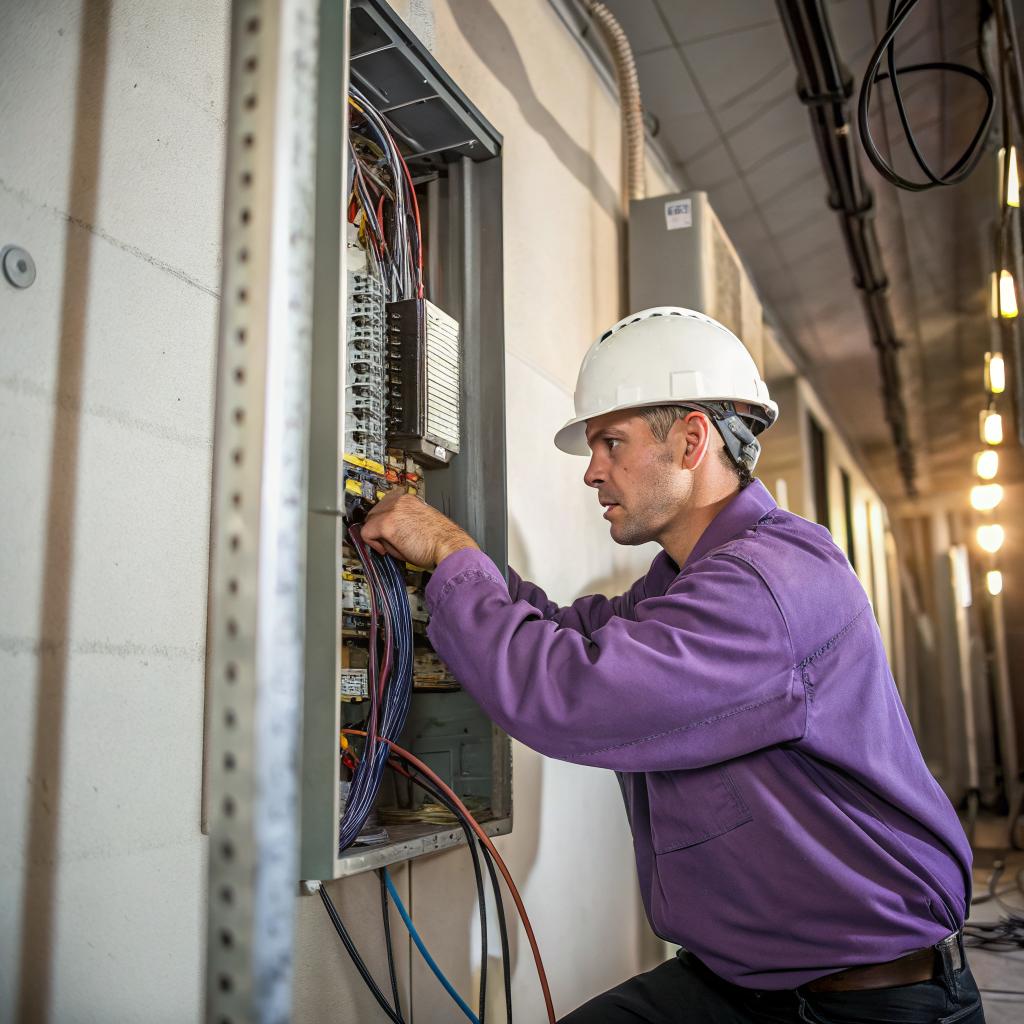
What if I told you that the fastest part of your phone is not the processor, or the 5G antenna, or the cloud servers somewhere far away, but a group of people in worn work boots who spend their days in attics and crawl spaces?
The short answer is this: your gadgets, your Wi‑Fi, your retro game consoles, your smart home, and even the servers that store your nostalgic photos all depend on real-world wiring built and maintained by people like electrician Greensboro NC. Without their work, none of the digital progress we talk about every day would actually function in your house or office.
That sounds a bit dramatic, but think about what happens when the power goes out. Your brand new smart TV turns into dark glass. Your router is a dull piece of plastic. Your laptop battery drains, then quits. Power is not a nice bonus for technology; it is the ground floor. And electricians are the ones who make that ground floor safe, stable, and ready for new tech that did not exist 10 years ago, and maybe will feel nostalgic 10 years from now.
We talk a lot about apps and software updates. We talk less about the panel in the corner of your garage that quietly decides whether your house can handle a VR setup, an EV charger, and a kitchen full of air fryers all running at once. I used to ignore that gray box too, until I heard it hum one night and wondered why it sounded slightly stressed. That is usually when you start to care about wiring.
How electricians fit into our past, present, and future tech
If you are reading a site about nostalgia, evolution, and technology, you probably remember at least one older gadget that felt magical at the time.
Maybe it was:
- A bulky CRT TV pulled out for movie nights
- A Nintendo 64 or PlayStation balanced under that TV
- A desktop computer with a dial‑up modem tone that still lives in your head
All of those had something in common. They plugged into a simple outlet. No planning. No special circuits. Just “find an empty socket and hope your sibling did not unplug the console.”
Today, things feel similar on the surface. You still plug devices into a wall. But under the surface, everything has changed.
We have:
- Multiple screens in every room
- Gaming PCs that draw as much power as old space heaters
- Smart lights, cameras, speakers, thermostats, and door locks
- Electric vehicles charging at home overnight
- Small home servers, NAS drives, and always‑on routers
All of that still runs on copper and breakers and code rules that someone has to understand. That “someone” is usually the local electrician who quietly updates your physical setup every time our digital habits jump to a new level.
Electricians are the bridge between the nostalgic tech we grew up with and the connected future we keep building. Without them, both past and present devices end up as dead plastic when you flip a switch.
If you think of technology as software plus hardware plus power, electricians sit on that third part. It is not glamorous, but it decides what is possible.
From single outlets to smart circuits
Older homes around Greensboro often have wiring that reflects another era. Smaller panels. Fewer dedicated circuits. Maybe even some knob‑and‑tube if the house is old enough and never fully upgraded.
That was fine when:
- A “home office” was a corner of the dining room with one beige computer
- TVs were heavy but basic
- Kitchens had fewer high‑draw appliances
Now it is common to see:
- Two people working remote from the same house
- Online gaming in multiple rooms
- Streaming 4K video while charging phones, laptops, and tablets
- Smart fridges, induction cooktops, and powerful microwaves
Electricians are the ones who look at all that and say, sometimes in a very calm voice: “Your panel is not happy.” Then they fix it before your nostalgia and your new tech collide with a tripped breaker or something worse.
Why Greensboro’s tech habits keep pushing electrical work forward
Greensboro is not Silicon Valley, but it has a quiet tech layer that locals sometimes overlook. Homes mix older construction with newer suburbs. You have college students gaming and streaming, remote workers doing video calls all day, and families turning dens into media rooms.
That mix creates a strange pressure: we want the comfort of older spaces with the power needs of a small data center.
Here is where electricians influence our tech evolution in a very direct way:
- They assess how much load your current wiring can handle.
- They upgrade panels to support more circuits and higher demand.
- They add dedicated circuits for power‑hungry gear.
- They clean up unsafe DIY fixes someone tried years ago.
Every time you add a serious new piece of tech to your home, you are not just changing your gadgets. You are changing the job your electrical system has to do all day, every day.
I think a lot of us underestimate that. We assume that if there is an outlet and the plug fits, we are fine. That was never fully true, and it is getting less true every year.
Tech nostalgia vs modern power needs
There is also a strange nostalgia angle here. Many people still keep:
- Old game systems
- VCRs or DVD players
- Retro stereo equipment
- Vintage computers
You might plug them into the same power strips as your newer equipment. It looks charming, almost like a small museum in your living room.
The problem is that older electronics often run hotter and draw power less cleanly than newer devices. Pair that with high‑draw modern gear on the same line, and your wiring can feel like you mixed two decades of tech rules into one outlet.
Electricians help by splitting loads, adding new circuits, and sometimes suggesting surge protection that respects both eras of your setup.
Where the power actually goes
To make this less abstract, here is a simplified table. It shows how different tech categories often affect your electrical needs in a Greensboro home.
| Tech category | Common examples | Impact on wiring |
|---|---|---|
| Nostalgic media | CRT TVs, VCRs, old consoles, hi‑fi amps | Moderate draw, sometimes poor power factor, heat in older outlets |
| Modern entertainment | 4K TVs, soundbars, streaming boxes, new consoles | Higher combined draw, heavier use, frequent standby mode |
| Home office & gaming | Gaming PCs, dual monitors, laptops, printers, routers | Continuous load on a few outlets, can cause regular breaker trips |
| Smart home gear | Cameras, hubs, smart switches, Wi‑Fi extenders | Low individual draw, but always on, spread across many circuits |
| High‑draw appliances | EV chargers, dryers, ovens, HVAC, space heaters | Large dedicated loads, panel upgrades often needed |
Once you see it laid out like that, the connection feels clearer. Our tech “evolution” is not only about features or screens. It is about the quiet increase in power demand that electricians have to manage.
Hidden tech work: what electricians actually do for your gadgets
When people call an electrician, they usually describe a simple symptom.
“My lights flicker when I start the vacuum.”
“The breaker trips when I run the gaming PC and the microwave.”
“The outlet by the TV feels warm.”
Those are tech problems as much as they are electrical problems. Behind the scenes, a careful electrician is thinking about voltage drop, load balance, panel capacity, and safety codes, all while you are mostly thinking “Can I stop resetting this breaker every weekend?”
Here is how their work quietly supports your technology.
1. Panel upgrades that future‑proof your setup a bit
Older panels were never designed for:
- Two EVs charging in the driveway
- Whole‑house surge protection
- Multiple high‑draw kitchen appliances on at once
- A media room plus a home office running all day
Upgrading a panel might not feel as fun as buying a new TV, but it often decides what tech you can add over the next decade.
Electricians will look at:
- How many amps your panel supports
- How many circuits you currently use
- Which loads are continuous vs short bursts
- What future plans you have: EV, workshop, home studio, etc.
Then they design a layout that gives you some headroom. Not infinite, but enough to avoid that boxed‑in feeling every time you want to add one more device.
If you want your home to grow with your tech habits instead of fighting them, the panel is one of the first places an electrician will look at, even if you are focused on gadgets.
2. Dedicated circuits for power‑hungry gear
Electricians often recommend dedicated circuits for:
- Home theaters or media rooms
- High‑end gaming setups
- Home servers and network gear
- EV chargers and heavy tools
A dedicated circuit means that line has one main purpose, instead of being shared with half the room and maybe the hallway.
This helps in three ways:
- Reduces nuisance tripping of breakers
- Lowers the risk of overheated wires hidden in walls
- Protects sensitive electronics from voltage drops when something large turns on
It is not glamorous work, but it changes how stable your whole setup feels.
3. Grounding and surge protection that guard your memories
We tend to talk about “data backup” in cloud terms. But step back a bit. Before data protection comes physical protection of the devices that hold that data.
Electricians help by:
- Checking and improving grounding systems
- Installing whole‑house surge protection
- Making sure outlets are correctly wired and safe
Why does that matter for nostalgia?
Because those old photos on hard drives, that collection of digital movies, that folder of scanned family documents, and your saved game files all sit on devices that do not handle surges well.
One strong surge can ruin years of stored memories in seconds. That sounds extreme, but it is very common after storms.
So when an electrician installs better grounding or surge protection, they are not just protecting “electronics” in some generic way. They are protecting pieces of your past that live on those devices.
4. Low‑voltage and networking work that quietly runs your life
Some electricians also handle low‑voltage wiring and help with:
- Ethernet runs through the house
- Structured media panels
- Power for access points in ceilings
- Camera and doorbell wiring
You could run everything on Wi‑Fi and extension cords, but the experience is usually worse. Lag, dead zones, messy cables.
A cleaner setup means:
- Better streaming quality
- More stable online gaming
- Fewer dropped video calls
That mix of power plus data wiring quietly shapes how “modern” your home feels to live in every day.
Old houses, new gadgets: a Greensboro story
Imagine a fairly typical Greensboro situation.
A family buys a 1960s house. Solid structure, nice trees, a bit of character. They move in with:
- Two gaming consoles
- Three laptops
- A high‑end gaming PC
- Smart TV in the living room and one in the bedroom
- Mesh Wi‑Fi system
- Smart thermostat, speakers, and a couple of cameras
- One EV in the driveway
They also bring an old stereo system from the 1980s, just because it sounds familiar and good.
At first, everything seems fine. Then winter comes, and they plug in space heaters. The panel starts to complain. Lights dim when the microwave runs. Breakers trip when the EV charges and the dryer runs at the same time.
From their view, it feels like “this house cannot handle modern life.”
From an electrician’s view, it is more specific:
- The panel is near its current limit.
- Some circuits are overloaded while others are barely used.
- Old outlets carry power to both heavy appliances and sensitive electronics.
Fixing this might involve:
- Upgrading the main panel to a higher amp rating
- Running a dedicated circuit for the EV charger
- Splitting the living room and home office onto separate lines
- Adding whole‑house surge protection to defend the new and old gear
After that, the house feels different. Same walls. Same rooms. But the electrical backbone now fits a home that lives in cloud storage, streaming services, and online games, while still playing vinyl records on that older stereo.
That gap between how a house looks and how it behaves is where electricians do their quiet work.
How to think about your own tech setup like an electrician would
You do not need to become an electrician. That would take years and more patience than a lot of us have.
But you can borrow part of their mindset when you plan your next tech move.
Look for warning signs before you add more devices
Before you buy another power‑hungry gadget, ask yourself a few simple questions:
- Do any breakers trip more than once in a while?
- Do lights dim when you run appliances or start heavy equipment?
- Do outlets ever feel warm to the touch?
- Are you relying on multiple power strips chained together?
- Is your panel already filled with tandem breakers squeezed in?
If you say “yes” to more than one of those, the issue is not just “I need more outlets.” The deeper problem is that your system is already close to its limit, and adding more tech might make it worse.
When your breakers keep complaining, they are not just annoying. They are sending you a message about how your tech habits and your wiring no longer match.
Plan tech upgrades in layers
When you think about adding new tech, try to plan in three layers:
- Devices: What you want to buy, like a console, TV, EV charger, or server.
- Circuits: Where those devices will plug in, and whether those lines are busy.
- Panel: Whether the panel has room for new circuits and enough total capacity.
A lot of people only plan at level 1 and maybe part of level 2. Level 3 is where electricians live.
If you are planning a big change like:
- Converting a garage into a workshop or studio
- Building a dedicated home theater
- Setting up a home lab or server rack
- Installing one or more EV chargers
Talking to an electrician early can keep you from running into a hard limit later.
Balance nostalgia gear with modern safety
Old tech can be charming. It can also be rough on older wiring.
If you have a room full of vintage gear, think about:
- Having outlets checked for loose connections or discoloration
- Using a dedicated circuit for a large amplifier or big CRT TV
- Protecting everything with proper surge protection, not just a cheap strip
It might feel a bit strange to pair a 30‑year‑old receiver with modern electrical upgrades, but that is how you keep it working safely for another decade.
Why this matters more as our tech keeps stacking
One thing that sneaks up on people is accumulation. We rarely get rid of as many devices as we bring in.
You add:
- A second monitor
- An external drive
- An extra console
- A better router
- Smart bulbs
- A new streaming box
Each step feels small. The load on your wiring does not feel small when you add them all together.
Greensboro homes built in the 70s or 80s were not designed for that level of constant, layered usage. Electricians see this every day. Panels that looked fine on paper 20 years ago are now packed, with every breaker doing more work than intended.
So if you care about where technology is going, and you enjoy looking back at older devices with some affection, it is worth thinking about how all those pieces stay powered in a real building with physical limits.
Questions people often ask about electricians and tech
Q: Do I really need an electrician just for tech upgrades?
A: Not for every single gadget. Swapping a TV or adding one laptop is fine. But when your tech changes the total load on your home, like adding an EV charger, a workshop, a full media room, or a serious gaming rig, an electrician can keep those upgrades safe and stable.
Q: How do I know if my panel is too old for my current setup?
A: Some signs include frequent breaker trips, limited space for new breakers, visible rust or damage, or a panel brand that electricians often recommend replacing. If your house is older than 30 or 40 years and the panel has never been updated, a checkup is usually worth it.
Q: Is whole‑house surge protection actually worth the cost?
A: For many homes with a lot of electronics, yes. It defends all circuits at once, which is helpful if you have multiple TVs, consoles, computers, and network gear. It does not replace good point‑of‑use protection, but it reduces the risk from large surges that a single strip might not handle well.
Q: Does all this matter if I mostly use wireless devices and cloud services?
A: Yes, because those services still land on real devices in your house: routers, access points, phones, laptops, smart speakers, and more. The more you rely on “the cloud,” the more your home turns into a small hub that needs stable, clean power.
Q: Why should someone who loves old tech care about modern electrical work?
A: Because your old gear is often harder to replace than new gear. Some vintage devices cannot be easily bought new anymore. Protecting them with good wiring, proper grounding, and surge protection gives them a longer, safer life in a very different power environment than the one they were designed for.
If you look around your space right now, with both nostalgic gadgets and modern screens glowing at you, does your wiring quietly support that mix, or is it already trying to tell you it is overloaded?
