

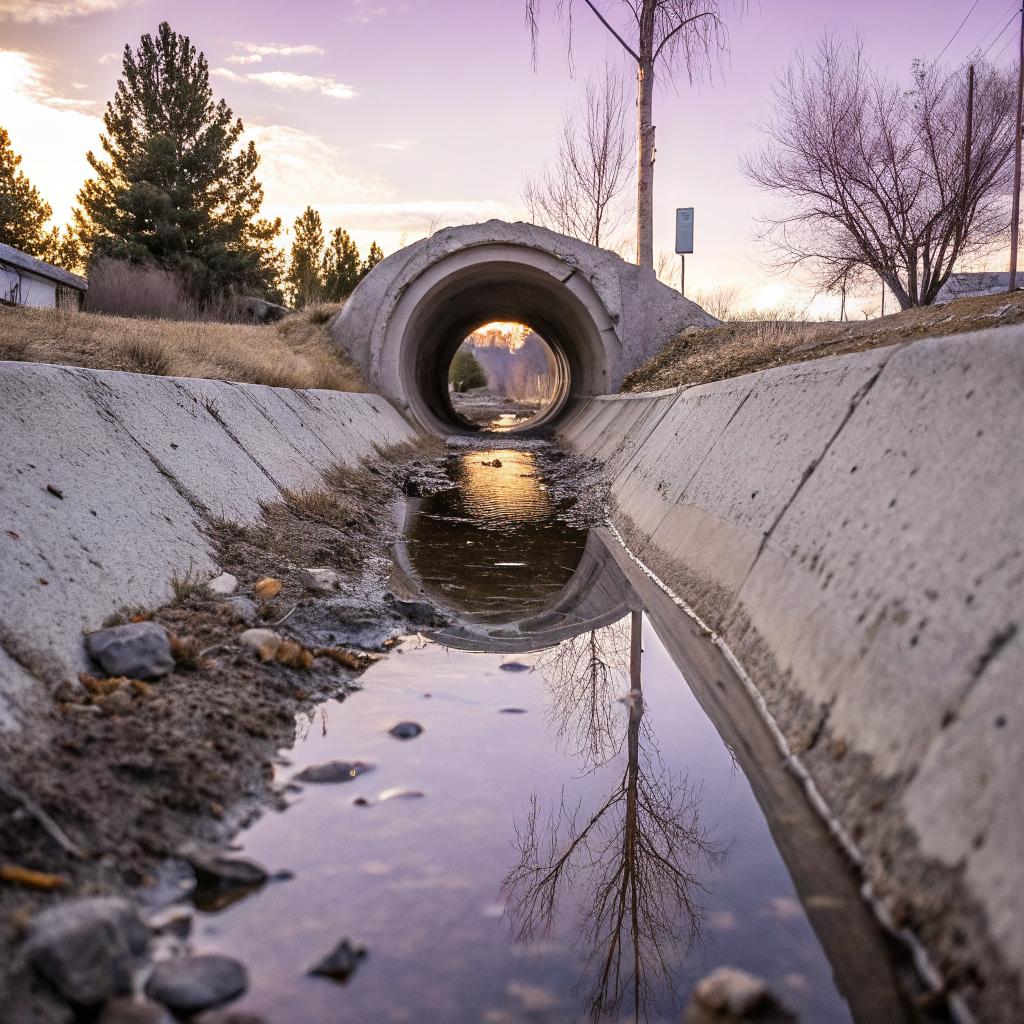
What if I told you that the most surprising tech story in your neighborhood is not in your phone, your car, or your TV, but under your lawn?
The short answer: Arvada sewer repair went from guesswork, trenches, and mud everywhere to cameras, sensors, and targeted fixes that often take a day or less. The work is still messy in spots, but now plumbers see inside pipes in real time, plan repairs like surgeons, and save homeowners thousands of dollars in yard repairs and repeat visits. It is quieter, faster, and a lot more precise than it used to be.
If you grew up in the Front Range, you might remember what sewer work looked like in the 80s and 90s. A truck shows up, a backhoe follows, the yard turns into a rough dirt pit, and everyone just hopes the problem is where they think it is.
Now, companies that handle Arvada sewer repair send a technician with a camera head on a long cable, some smart locating gear, and sometimes even a trenchless pipe system. They can pull up a video feed on a tablet. You watch tree roots waving in some clay pipe that went into the ground before you were born. It feels strangely nostalgic and futuristic at the same time: an old pipe, a modern lens, both sharing the screen.
You do not get a perfect sci‑fi experience, of course. Things still clog. Pipes still crack. Projects still go over budget. But the way we find and fix those problems has changed in quiet, practical ways that fit nicely with anyone who likes to see how technology slowly reshapes normal life.
From shovels and guessing to cameras and maps
If you care about nostalgia and technology, sewer work in Arvada is a weird little time capsule.
For decades, the routine looked like this: a line backs up in a house, the plumber snakes it from a cleanout or a toilet, maybe the blockage clears, maybe not. If not, they dig. And then dig some more.
There was no video feed. No GPS pinpoint. Just experience, rough measurements, and a bit of hope.
Now the starting point is almost always visual proof.
The old way: muscle, mud, and memory
Older plumbers in Arvada will tell you that sewer work used to depend on three main things:
- What the homeowner described
- Where the house sat in relation to the street
- Guessing how the original builder ran the pipe
So if your basement floor drain backed up, someone might say, “The line probably runs straight out to the street, about six feet deep.” That “probably” sometimes led to long trenches across front yards, flower beds, or driveways.
Concrete had to be broken with noisy saws. Dirt piled up everywhere. If the guess was wrong, the trench moved.
No one romanticizes that part of the past. The only mildly charming side was how much of it ran on personal knowledge. A veteran plumber would remember which subdivision had clay tiles, which had Orangeburg pipe, which had odd elbows filled with tree roots from some badly placed ash tree.
There is a certain appeal in that kind of memory-based work. But it failed a lot. It also cost people money. And it tore up properties for no good reason.
The first real shift: sewer cameras
The quiet turning point came with small, rugged cameras that could move through pipes. At first they were clunky and expensive. Now they are standard gear.
A modern sewer camera setup in Arvada usually includes:
- A camera on a flexible rod or cable
- Bright LED lights around the lens
- A monitor or tablet showing live video
- A counter that tracks how far into the line the camera has gone
The technician sends the camera down the line from an access point, and you see the inside of your pipe in real time. It is not cinematic, but for a homeowner who has dealt with repeated backups, it can feel strange to finally see the actual root ball or the crack that caused it all.
The biggest shift in Arvada sewer repair has not been new materials or new machines, but the simple fact that plumbers can now see exactly what is going wrong before they start digging.
That one change does three things:
1. Cuts down on random digging
2. Turns vague guesses into specific diagnoses
3. Lets the homeowner see the problem too, not just take the plumber’s word for it
You might still need a trench. But now it is usually shorter, right where the camera shows a break, not somewhere in the general area.
How trenchless methods rewrote the script
Camera inspections answered the “where” question. The next question was “Do we really have to dig the whole length of the yard to fix one failing pipe?”
That is where trenchless methods came in.
Two big trenchless approaches
In Arvada, you usually see two main trenchless repair options when full sewer line work is needed:
- Pipe bursting
- Cured-in-place pipe (CIPP) lining
Here is a quick side‑by‑side view of what those look like.
| Method | How it works | When it is used | Typical impact on yard |
|---|---|---|---|
| Pipe bursting | A conical head is pulled through the old pipe and breaks it apart while a new pipe is pulled in behind it | Old pipe is badly damaged or undersized; soil allows bursting; access at both ends is possible | Two or a few small pits instead of a full trench |
| CIPP lining | A resin-soaked liner is fed into the old pipe, then cured to form a new pipe inside the old one | Old pipe is mostly intact but cracked or leaking; roots are an issue; alignment is reasonable | One or two access points; most of the yard surface stays intact |
Both methods rely on a pretty modern mix of gear: winches, air compressors, calibration tubes, resin chemistry, and, quite often, curing with hot water or UV light.
It is not magic. These systems can fail if the prep work is rushed, or if someone ignores how fragile an old clay line really is. But when done carefully, trenchless work feels almost like a cheat code compared to the wide-open trenches from 30 years ago.
The strange nostalgia of old pipes and new tech
There is an odd emotional mix here.
On one hand, older clay and cast iron lines feel like relics from another era. You see them on camera and think, “Someone laid that pipe when cars did not have airbags yet, or when nobody owned a smartphone.”
On the other hand, the way we fix those same pipes today is very modern. The technician might send video to the office, store it in the cloud, and generate a digital report with timestamps, snapshots, and GPS coordinates.
I once watched a tech in Arvada mark a break in a line, then pull out a tablet and sketch a quick plan. The homeowner scrolled through the video, zoomed in on a joint, then asked, “Is that crack really that bad?” They talked about wall thickness, local soil, and a choice between spot repair and full lining.
That small moment summed it up for me: a pipe laid before mobile internet, analyzed on a touchscreen.
Sewer repair now lives in this weird middle space where analog infrastructure meets digital planning, and the two need each other more than anyone expected.
Why this quiet evolution matters for Arvada homeowners
You might think, “So what? As long as the toilet flushes, I do not really care how they fix the pipe.”
Fair point. But the details of this tech shift show up in your bill, your yard, and your stress level.
Less destruction, more precision
The biggest daily benefit is simple: less damage.
Old method: guess the location of the failure, dig a long trench, find the break somewhere in that trench, patch or replace, then backfill. Your yard looks rough for weeks.
New method: run a camera, use a locator to find the exact spot, and dig only where needed. Or skip most of the digging with a trenchless option.
For a typical Arvada house, that can mean:
- Keeping mature trees and shrubs where they are
- Avoiding driveway or sidewalk demolition
- Fewer surprises on the final invoice
It is not perfect. Locators can be wrong. Old records can conflict. But generally, the amount of “exploratory destruction” has dropped a lot.
More honest conversations
Before cameras, many sewer discussions were pretty vague. A plumber might say, “You have a collapse somewhere about 40 feet out.” The homeowner had no way to verify that.
Now, with video:
When both sides can look at the same footage of a cracked joint or a root ball, the conversation shifts from “Do I trust this person?” to “What repair choice makes sense for my budget and how long I plan to stay here?”
That does not remove all tension. High quotes are still painful. Some sales tactics are still aggressive. Technology does not fix human behavior. But it helps level the information field.
Some homeowners in Arvada even keep their sewer videos and send them to another company for a second opinion. That would have been almost impossible 20 years ago.
Costs, ROI, and the hidden math
Trenchless work, cameras, and sensing tech cost money. The trucks and tools are not cheap. That cost shows up somewhere.
You might ask: is the tech really saving you anything, or is it just helping companies charge more?
From what I have seen and heard, the answer is mixed but leans positive:
- Camera inspections often prevent repeated “band-aid” snaking visits that never solve the real cause
- Spot repairs and trenchless work can avoid months of landscape recovery and concrete replacement
- More accurate locating reduces wasted labor hours
If you add all of that up over ten or twenty years of living in a house, the quieter, more precise style of Arvada sewer repair usually wins.
There are exceptions. A small, simple dig in soft soil at a shallow depth might still be cheaper than rolling out trenchless gear. In those cases, older methods still make sense. That is why I do not think the past has fully disappeared here. It still shows through, especially on simple jobs.
How technology changed the workday for plumbers
For people who enjoy stories of how jobs evolve with technology, sewer repair in Arvada offers another angle: the technician’s experience.
It is easy to focus only on the homeowner view, but the inside view is interesting too.
From single-task labor to tech-heavy problem solving
In the past, a lot of sewer work relied on physical strength and repetition. Digging. Carrying. Breaking concrete. Moving heavy sections of pipe.
Those things are still part of the job, but the ratio has shifted. A modern sewer tech has to:
- Run and interpret camera systems
- Use locators accurately without interference
- Understand soil conditions, pipe materials, and code changes
- Handle resin mixing, curing times, and pressure checks for liners
Some older workers love the tech. Some hate it. I spoke with one crew leader who said he misses the simplicity of early days, where a shovel and a snake solved most calls. He followed that with, “But I do not miss the back pain or the angry customers who had half a lawn left.”
You can also see small culture clashes. A younger tech might be quick with the tablet and camera menus, while an older one spots a slope problem from a distance. Both skills matter.
Training, mistakes, and the learning curve
It is easy to romanticize “new tech fixes everything.” That is not true here.
New systems brought new failure points:
- Misreading a camera angle and misjudging a break
- Curing a liner wrong and creating a bottleneck
- Damaging a fragile clay pipe with aggressive cleaning in prep
Local companies had to run through trial periods where they figured out what worked in Arvada’s mix of soil and building ages. Downtown bungalows, 60s ranch homes, and newer suburban builds all behave differently underground.
So if you like the idea of evolution in everyday work, sewer repair is a nice example. It did not leap from shovel to sci‑fi. It went through awkward stages. Some methods came and went. Certain products that sounded promising on paper failed badly in real soil.
Regulations, maps, and the slow digitizing of the underworld
There is another quiet part of this story: cities and utilities slowly digitizing records.
From paper maps to GIS
City engineers and public works departments used to depend on paper maps and personal memory. Someone might know, “That block has a weird bend in the main.” If that person retired, that knowledge went with them.
Now many cities around Arvada use GIS systems to map mains, laterals, manholes, and known trouble spots. When a private plumber works on a house line, that data often interacts with city records in some way.
This does not sound exciting. Looking at sparsely drawn lines on a screen rarely is. But it changes decisions:
- Planners can spot areas with repeated failures and plan main replacements
- Everyone can see which homes likely still have older materials
- Repair crews avoid hitting other buried utilities because mapping is tighter
Again, not perfect. Records can be wrong. Legacy maps can have errors that took decades to notice. But compared to the patchwork notes of the past, it is a step toward something less random.
Smart sensors and future hints
Right now, most tech action in Arvada sewer repair lives in cameras, mapping, and trenchless gear. But there is another layer starting to creep in: monitoring.
Some cities around the country have tried sensors in manholes to track flow and blockages. Others use smart covers that alert crews when lines rise toward overflow conditions.
Arvada is not fully covered in smart sewer gear, and I do not think it will be for a while. Budgets and priorities are real limits. But the direction is clear enough. More data, more feedback, fewer surprises.
If that expands, future repairs could be planned before the homeowner even sees a backup. That might sound a bit intrusive, depending on how it is done, but it lines up with a bigger trend. Problems are moving from sudden events to managed risks.
How this all connects back to nostalgia and tech
If you are on a site that talks about nostalgia, evolution, and technology, you might still be wondering why sewer pipes should even be in the conversation.
I think there are a few reasons.
The pipes did not change much, but everything around them did
Your phone from ten years ago is basically junk today. Your streaming options from five years ago look old. But the clay pipe under an Arvada bungalow from 1955 is still there, doing its job, to a point.
Sewer repair is a rare space where very old physical systems now rely on fresh digital layers, without replacing the core entirely.
That mix feels different from typical tech stories where everything gets replaced. Here, tech wraps itself around existing stuff, respects it a bit, corrects it where needed, and then steps back underground.
The forgotten infrastructure is where quiet progress hides
When people talk about big tech changes, they aim high: AI, quantum computing, autonomous cars. Those topics are loud and polished.
But sewer repairs in Arvada show another side. Many of the most useful changes happen in places nobody wants to think about. Dirt, roots, grease, and broken tiles. Not glamorous, just necessary.
There is something grounding about that. Progress does not always look pretty. Often it is a slightly cleaner trench, a more accurate camera, or a cheaper fix for a family with a flooded basement.
Your role as a homeowner or tenant
If you live in Arvada or a similar city, your part in this story is simple but not passive.
You can:
- Ask for a camera inspection before large repair decisions
- Request video footage and keep a copy for your records
- Compare options between spot repairs, trenchless, and full replacement
- Talk honestly about budget and how long you plan to stay in the house
You do not need to be an expert on soil density or resin chemistry. But having a basic sense of what is possible helps you avoid both overkill projects and patch jobs that will fail again.
If you like tech stories, watching a camera inspection of your own sewer can be strangely satisfying. It makes an invisible part of your house visible, and it gives you a story about how the past and present meet under your lawn.
Common questions people quietly have about Arvada sewer repair
Q: Is the high-tech approach always better than old-school digging?
A: Not always. For short, shallow sections in open yards, a standard excavation can still be cheaper and faster. Tech helps most in complex layouts, deeper lines, or situations where you want to avoid major landscape damage. The right choice depends on the layout, pipe material, and your budget, not on how flashy the tools are.
Q: Are camera inspections just a sales trick to push big projects?
A: They can be abused, but in general, cameras protect you more than they pressure you. When you see a clean, round pipe on video, it is hard for someone to claim a collapse. When you see a full blockage, it is easier to accept a repair. If you are unsure, ask for the video file and get a second opinion. The tech cuts both ways.
Q: Will sewer repair keep getting more high-tech, or have we hit a plateau?
A: I think there is more change coming, but not in dramatic leaps. Expect better cameras, smarter mapping, and more use of trenchless methods. Maybe more sensors in public lines. But the core reality stays: gravity, water, waste, and old pipes. Technology will keep smoothing the rough edges of repair, not turning it into something completely different. And maybe that quiet, practical progress is enough.
