

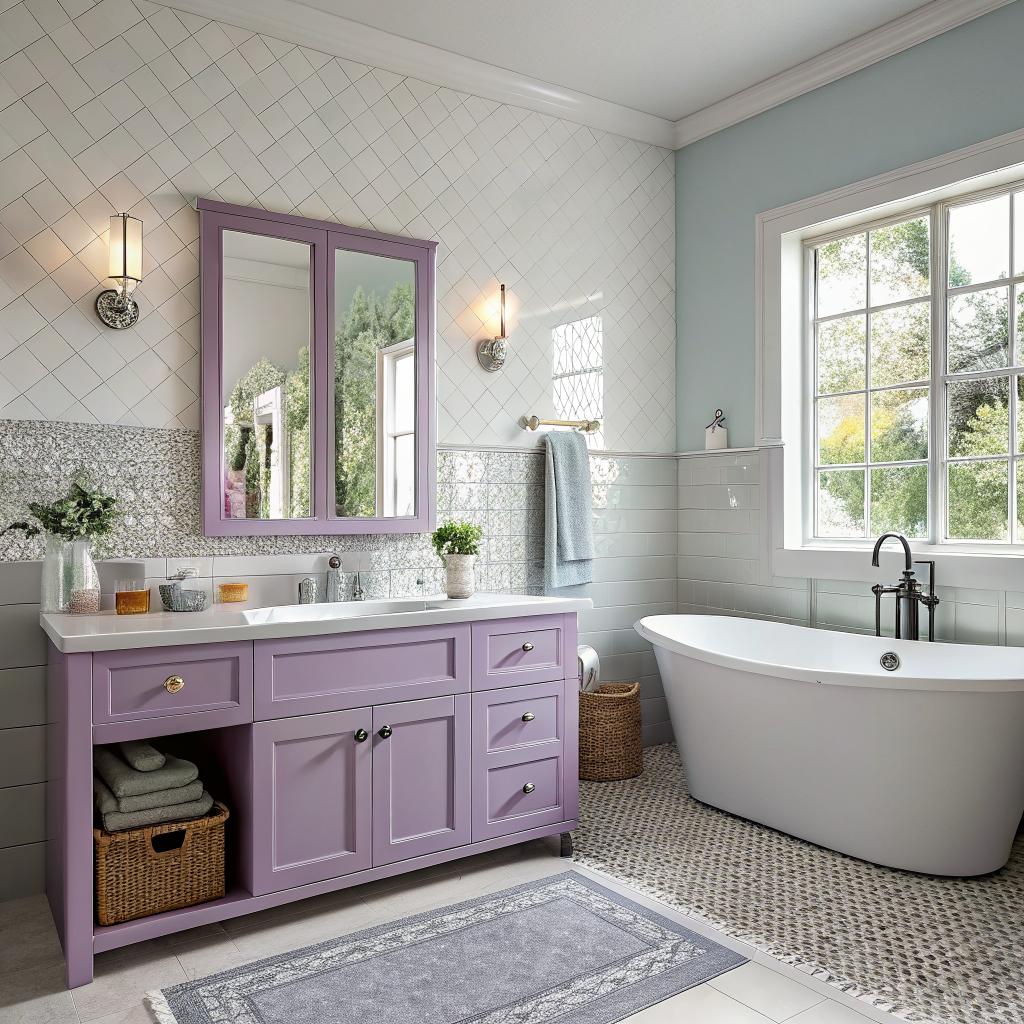
What if I told you that the part of your home most likely to feel like a retro tech museum is not the living room with the CRT TV in the corner, but the bathroom?
For a lot of homes in Mitchell, the bathroom quietly froze somewhere between 1987 and 2004. Beige tile, worn chrome, a fan that sounds like a small airplane. The quick fix is to gut it and go full glossy, all white, all touch screens. But there is a nicer path. You can bring in new tech, keep your water bill under control, and still feel like you are stepping into a bit of vintage sci‑fi every morning. That is what people mean when they talk about Bathroom Remodeling Mitchell meeting retro tech style: modern function, but with a small wink to the past.
The short version is simple: decide on one decade that inspires you, pick 3 to 5 visual cues from that era, then hide the tech under those choices instead of letting gadgets dictate the whole room. Think of it like putting a Raspberry Pi inside a Nintendo shell. The power is modern, the vibe is not. It takes some planning, and sometimes you have to say no to products that feel trendy but do not fit your story, but the result can feel strangely calm and familiar.
Why a retro tech bathroom makes more sense than it sounds
If you care about nostalgia, old devices, and how tech has changed, the bathroom is an odd but interesting place to explore that. Most people obsess over living rooms or home offices. Bathrooms just sit there, functional and boring.
Yet bathrooms tell tech history pretty well. Think about it:
- 1950s: colored fixtures, pastel tiles, built‑in hampers, early plastic accessories
- 1970s: avocado and harvest gold, globe lights, chunky hardware
- 1980s and 90s: big mirrors, Hollywood bulbs, shiny brass, first cheap exhaust fans
- 2000s: builder beige, chrome everything, oversized tubs
When you remodel, you are basically choosing which of those timelines you want to nod to, while still getting good lighting, safe wiring, and surfaces that are easier to clean than what your grandparents had.
A good retro tech bathroom is not cosplay. It borrows just enough from the past so your brain says “familiar,” but your body enjoys modern comfort.
For a site that loves nostalgia and tech, this space is almost like a physical version of that interest. You get to ask: how did we treat “high tech” in the 70s, 80s, 90s, and how can I echo that feeling with smarter, quieter hardware today?
Picking your decade: 60s, 70s, 80s, or early 90s?
You do not have to be strict about this, but picking a main decade keeps the room from turning into a random prop shop.
Here is a simple way to sort the styles:
| Decade vibe | Visual cues | Tech feeling to echo |
|---|---|---|
| 1960s “space age” | Rounded shapes, white and gray, small pops of bright color, simple metals | Early space race, knobs and dials, clean minimal panels |
| 1970s “analog comfort” | Earth tones, orange/brown, curves, globe lights, wood accents | Warm stereo systems, big receivers, chunky switches |
| 1980s “neon and gloss” | Bold color, glass block, stripes, chrome, square forms | Arcades, VCRs, boomboxes, LED numerals |
| Early 1990s “plastic future” | Soft pastels, rounded rectangles, frosted glass, light wood | Game Boys, first home PCs, translucent plastics |
Ask yourself which of those worlds makes you smile without irony. That is your starting point.
If you pick a decade you secretly dislike and try to force it, the room will feel like a theme park set, not a place you want to stand in at 7 a.m.
For example, I tried to imagine living with a full 1970s avocado sink every day. I could enjoy it in a photo, but I knew it would start to bother me after about two weeks. For me, early 90s plastic future was a better fit. Soft corners, light colors, a hint of cheap console design. You will have your own reaction.
Blending tech with nostalgia without turning your bathroom into a gadget shelf
The tricky part is not buying cool tech. The stores are full of smart mirrors, Bluetooth showerheads, and lights that do more than you need. The tricky part is making sure the tech does not fight with the retro mood.
Here are the main areas where old style and new tech intersect:
- Lighting and mirrors
- Controls and switches
- Water fixtures and smart features
- Audio and small screens
Lighting and mirrors: from fluorescent buzz to clean LEDs
If you grew up under a buzzing fluorescent tube over the medicine cabinet, you probably remember the sickly color. The memory is strong, but the light was bad.
You can copy the shape without copying the headache.
Some practical moves:
- Pick LED fixtures that look like old tubes or globe lights but have warm color and quiet drivers.
- Use a framed medicine cabinet with a simple mirror, then add a thin smart LED strip behind it for a faint halo.
- Avoid mirrors with big glowing touch icons on the glass if you want an 80s or earlier feel. Hide the controls on the side.
Think of it as the difference between a retro console with an LED mod inside, and a modern console painted to look retro. One respects the original shape, the other just sticks stickers on.
Controls and switches: the small details that carry the vibe
Old tech had nice physical controls. You turned chunky knobs, pressed real toggle switches, and heard a tiny click. Modern smart homes hide everything in apps. For a retro tech bathroom, you can meet in the middle.
You can:
- Use large, square rocker light switches that echo early computer keys.
- Pick a simple dial-style fan controller that can secretly be smart controlled from a hub.
- Place any voice assistants or smart speakers out of the main sightline and keep one physical control that actually feels good to touch.
You might have to fight the urge to automate every single thing. It is not wrong to want convenience, but too much invisible control starts to feel like a modern hotel, not a personal space with history.
Water fixtures: vintage shapes, modern guts
Here is where performance and style collide most.
A real old faucet wastes water and often drips. A new faucet can look sleek but cold. The better path is a modern faucet body with a silhouette that hints at the past.
For example:
- For a 60s mood, use a simple cylindrical faucet with a straight spout and a single lever, in brushed nickel or soft chrome.
- For a 70s mood, go for a wider spout with rounded edges, maybe in a muted brass finish, but with a current low-flow aerator.
- For an 80s mood, choose squared lines, blocky handles, and a shine that reminds you of a stereo faceplate.
Shower controls can follow the same logic. The tech that limits temperature and pressure can be as new as you want. The visible trim can belong to your chosen decade.
If the water experience feels clunky or weak, the nostalgia will not save it. Form can nod to the past, but function needs to feel like now.
Materials that echo old tech without falling apart
Bathrooms never stop dealing with moisture. This is where actual vintage materials can fail. Old particle board, early plastics, cheap laminate fronts. They did not age well.
But their look is easy to copy with better options.
Tile, plastic, and fake wood that still feel honest
Notice how older tech often mixed plastic, metal, and fake wood in very direct ways. Think of old radios or TVs. Modern materials can echo that without faking age.
Some combinations that work:
- White square tile with darker grout, plus a small band of color at eye level, like a stripe on an old Walkman.
- Textured laminate that looks vaguely like wood speaker cabinets, but on flat drawer fronts, not where it will soak.
- Small hex or penny tile on floors to mimic older craft work, but in a simple, neutral scheme so it does not feel busy.
For a more tech-minded look, you can bring in simple metal trims at the tile edges. Think tidy, like the casing of a gadget, not ornate.
Color choices that feel nostalgic but not silly
This is where people overdo it. They see a photo of a bright turquoise tub and decide to paint everything teal. The first week is fun. Then the hangover starts.
A better approach is to pick:
- One main neutral (white, light gray, or a soft beige)
- One support neutral (darker gray, muted brown, or charcoal)
- One accent color from your decade (avocado, orange, dusty pink, soft blue, etc.)
Use the accent in towels, small tiles, maybe one cabinet, or the bath mat. Not everywhere. Recall how many retro devices had just a band of color or a single colored logo.
A tiny example: an 80s inspired bathroom with white walls, gray floor tile, and a single stripe of bright blue tile across the wall at shoulder height. Maybe a small shelf in the same blue. It looks like the line on a game console, not a kids toy store.
Smart features that feel like they came from retro sci‑fi
If you enjoy tech, it can feel strange to hide it. You might want a smart mirror that reads the weather, a scale that syncs to your phone, colored lighting, and a voice assistant in the corner. All of that is possible. The question is how to make it feel like part of the room, not a catalog.
Lighting scenes like old control panels
With basic smart bulbs or smart switches, you can create scenes tied to moods. That part is common. To make it fit a retro tech bathroom, name and use the scenes like old device modes.
For example:
- “Boot up” for morning, bright white light over the sink, slightly warmer in the shower.
- “Cartridge load” for evening baths, lower warm light, maybe a single color accent at the tub edge.
- “Maintenance” for cleaning, maximum brightness, fan on, mirror demister active if you have one.
Simple names do more than you might think. They make the tech feel playful and connected to the nostalgia, not an app store default.
Audio that respects the room
Wet rooms are tricky for electronics. You are better off with small, moisture‑rated speakers in the ceiling or one compact unit on a high shelf.
Still, audio is where retro tech interest really shows. There is something about listening to chiptunes or synthwave while brushing your teeth under a faint neon strip that feels oddly coherent.
Some practical pointers:
- Use one central speaker and keep the volume low. You do not need surround in a bathroom.
- Keep the controls simple: a small wall controller that looks like an old volume dial, or voice control when you need it.
- Resist putting screens in the shower wall. Fog and glare will get annoying faster than you think.
If you want a real retro touch, you could mount an old but nonfunctional cassette deck or radio in a safe spot as a visual piece, with the real audio gear hidden. Your eyes see the past, your ears hear the present.
Modest monitoring instead of total surveillance
The smart home market pushes heavy monitoring: humidity graphs, water usage in real time, presence sensors and so on. Some of that can be useful, but bathrooms are personal. It might be wiser to keep it simple.
Reasonable examples:
- A humidity sensor that triggers the fan and cuts it when levels drop.
- A leak sensor under the vanity that sends a quiet alert.
- A water usage tracker for the whole line, if you are watching bills or local limits.
Again, the aim is to feel like a thoughtful mix of old and new. An 80s stereo with modern internals, not a data center disguised as a tub.
Planning your retro tech bathroom in Mitchell step by step
At this point, the ideas might start to feel crowded. Colors, fixtures, tech, nostalgia, budget. It helps to break the process into more grounded steps.
Step 1: Photograph what you have without filters
Take clear photos of your current bathroom from every angle. Do not tidy too much. You want to see the real layout, the honest problems.
Then answer a few blunt questions:
- What actually fails every day? (Lighting, fan, storage, water pressure?)
- What already has a hint of character you like? (A window, a weird angle, an older tile pattern?)
- What do you never use? (Jacuzzi jets, extra sink, built‑in shelves?)
Your answers here matter more than any mood board. They tell you where function must lead, and where style can play.
Step 2: Pick one decade and three anchors
Now choose your decade vibe and write down three anchors from it. Anchors are physical things you will commit to, such as:
- Round globe lights over the mirror
- Colored stripe tile line
- Squared chrome hardware
- Laminate vanity in a light wood tone
- Wall phone niche kept as a feature (if you have one)
Do not pick more than five anchors. If you do, you risk crossing the taste line into costume.
Step 3: Decide which tech you actually want to live with
This is where a lot of people go too far. Ask yourself:
- Will you actually use a voice assistant in the bathroom, or are you adding it because you can?
- Do you need color changing lights every day, or once a month?
- Would a simple dimmer and a timer switch handle 90 percent of the use cases?
Write down a short list of tech priorities. For example:
- Fast, bright, flattering light in the morning
- Quiet but strong ventilation
- Simple audio source for background music
- Safe electrical layout for any future add ons
Once you have that, it is easier to ignore shiny products that would complicate the space.
Step 4: Rough layout first, decor later
Before you pick exact tile or paint, sketch or plan the layout. Where will the shower go, where is the toilet, can the vanity change size, is there room for storage without blocking movement?
If you like retro gear, you probably know that good design starts from the circuit and board layout, not the case color. Bathrooms work the same way.
You might find that a small change, like moving the door swing direction or shrinking the tub, suddenly opens up a cleaner wall that can take your retro lighting pattern. That is better than forcing decor into a bad layout.
Stuff that often goes wrong when people chase retro style
Since you asked me to push back when things are off: some common mistakes really do ruin this concept.
Overcommitting to authentic fixtures
Hunting for original 1970s sinks or 80s light strips sounds attractive. The problem is parts, maintenance, and basic performance.
Real vintage pieces:
- Often need custom plumbing work
- May not meet current code in Mitchell
- Can chip, peel, or rust much faster than modern equivalents
There is nothing wrong with one or two authentic items if you are prepared for fuss. But for sinks, toilets, and anything with moving water, I think it is smarter to buy new with retro styling.
Ignoring accessibility and comfort
Some old bathrooms were frankly hostile places for anyone with mobility issues, kids, or taller people. Low counters, high tubs, sharp corners.
If you go too far copying them, you might get an Instagram moment but a daily annoyance.
Examples of where you should favor comfort:
- Shower entry should be easy, especially if you plan to stay in the home for years.
- Lighting should be bright enough for aging eyes, regardless of style.
- Floor surfaces must be slip resistant, no matter how pretty a gloss tile looks.
You can still look retro with a slightly higher toilet, a low threshold, and grab points that match your hardware color. Early sci‑fi sets already liked clean bars and rails, so it does not actually break the mood.
Letting the remodel drag forever
There is a strange trap with themed projects. You keep thinking you will find a more perfect shade of tile, a rarer light fixture, or a cooler gadget. The bathroom sits half finished while you browse and tweak.
At some point, you need to ship, like a software release. Set a clear final list of changes and freeze it. Better a 90 percent perfect retro tech bathroom you can use, than a theoretical ideal on mood boards while you shower in a plastic stall.
A quick comparison: fully modern vs retro tech bathroom
To make this more concrete, here is a simple comparison. None of these are absolute, but they show the tradeoffs.
| Feature | Typical “all modern” bathroom | Retro tech style bathroom |
|---|---|---|
| Lighting | Recessed cans, backlit mirror, cool white | Visible fixtures shaped like old tubes or globes, warm to neutral LEDs |
| Controls | Touch panels, app control, few physical buttons | Simple switches and dials with optional smart layers behind them |
| Color | Lots of white, gray, black accents | Neutral base with one or two nostalgic color accents |
| Tech vibe | Like a spa or high end hotel | Like stepping into an updated scene from your favorite old movie or console era |
| Upgrades over time | Replace panels and screens as they age | Swap small gadgets, keep core style for longer |
Neither approach is “right,” but if you value nostalgia and the story of tech, the retro tech version probably gives you more long term satisfaction.
Budget, trade offs, and what to do yourself
Bathroom remodel costs can spike fast. Custom tile, new plumbing runs, structural changes. Add smart gear and it can drift away from what you planned to spend.
You can keep more control if you divide tasks into three groups:
1. Things worth paying pros for
I would not suggest saving money on:
- Plumbing moves or drain work
- Electrical circuits, especially around wet zones
- Waterproofing behind tile and in showers
These parts are not glamorous, but they keep the room safe and dry. A leak inside a wall will care very little about your perfect 80s color band.
2. Things you can handle with patience
If you are comfortable with basic tools and are willing to read guides slowly, you might take on:
- Painting walls and ceilings
- Installing simple hardware like towel bars and hooks
- Mounting non electrical mirrors and shelves
- Swapping out switch plates for ones that match the retro look
These tasks also give you small wins along the way. A new switch plate that looks like an old console can make the whole plan feel real, even while you are waiting on tile delivery.
3. Things to add slowly, not all at once
Many tech add ons can wait. You do not need every gadget on day one.
Reasonable items to phase in:
- Smart bulbs in existing fixtures once you live with the space a bit.
- Audio gear after you see how sound behaves in the room.
- Decor items like framed retro schematics or posters once you know where steam gathers.
This also protects you from buyer regret. You might think you want color changing shower lights, then realize neutral white is more restful and you only want color on the mirror strip.
Small touches that connect bathroom design to your wider retro tech interests
Since you are reading a site about nostalgia, evolution, and technology, there is a good chance your hobbies reach beyond plumbing. You might collect old game systems, film cameras, or audio gear. Linking those interests to the bathroom can be subtle but satisfying.
Some examples that do not feel forced:
- A framed exploded diagram of a cassette player or early computer on the wall opposite the mirror, out of direct splash zones.
- A small shelf with three or four vintage items like an old pager, film canister, or floppy disk, treated purely as visual icons.
- Towels that match the color scheme of a favorite console or operating system startup screen, without printing logos.
You can also carry one design cue across rooms. If your living room has a small neon line behind the TV, echo that with a softer line under the bathroom vanity. The house then feels like a single project about technology, not bits of fandom scattered randomly.
Frequently asked questions about retro tech bathrooms in Mitchell
Q: Will a retro tech style bathroom hurt my resale value?
A: It depends on how loud you go. Most buyers in Mitchell will accept, and often enjoy, a bathroom with a clean layout, good light, and neutral base colors. If your retro touches live mostly in fixtures, hardware, and paint, they can be changed later with less effort. If you tile everything in neon triangles, yes, some buyers will hesitate. So keep the permanent parts calm and let the removable parts carry the stronger theme.
Q: Can I get energy saving features and still keep a retro mood?
A: Yes, and this is where the concept works quite well. LED lighting, low flow fixtures, and smart fans do not have to look futuristic. They can sit behind very plain, even old fashioned shapes. You get lower bills and better comfort, while your eyes mostly see a familiar, nostalgic scene.
Q: What if I like more than one decade of tech style?
A: That is normal. Many of us have memories that jump from 70s tape decks to 90s game consoles. The key is to pick one decade as the base for the bathroom, then let small accessories hint at others. For example, a 70s inspired color scheme with one framed early 90s console poster. Or an 80s tile pattern with a tiny 60s style plant pot. If you try to split the core elements equally between decades, the room can feel confusing rather than layered.
What decade would you center your own bathroom on if you had to pick only one for the main structure?
