

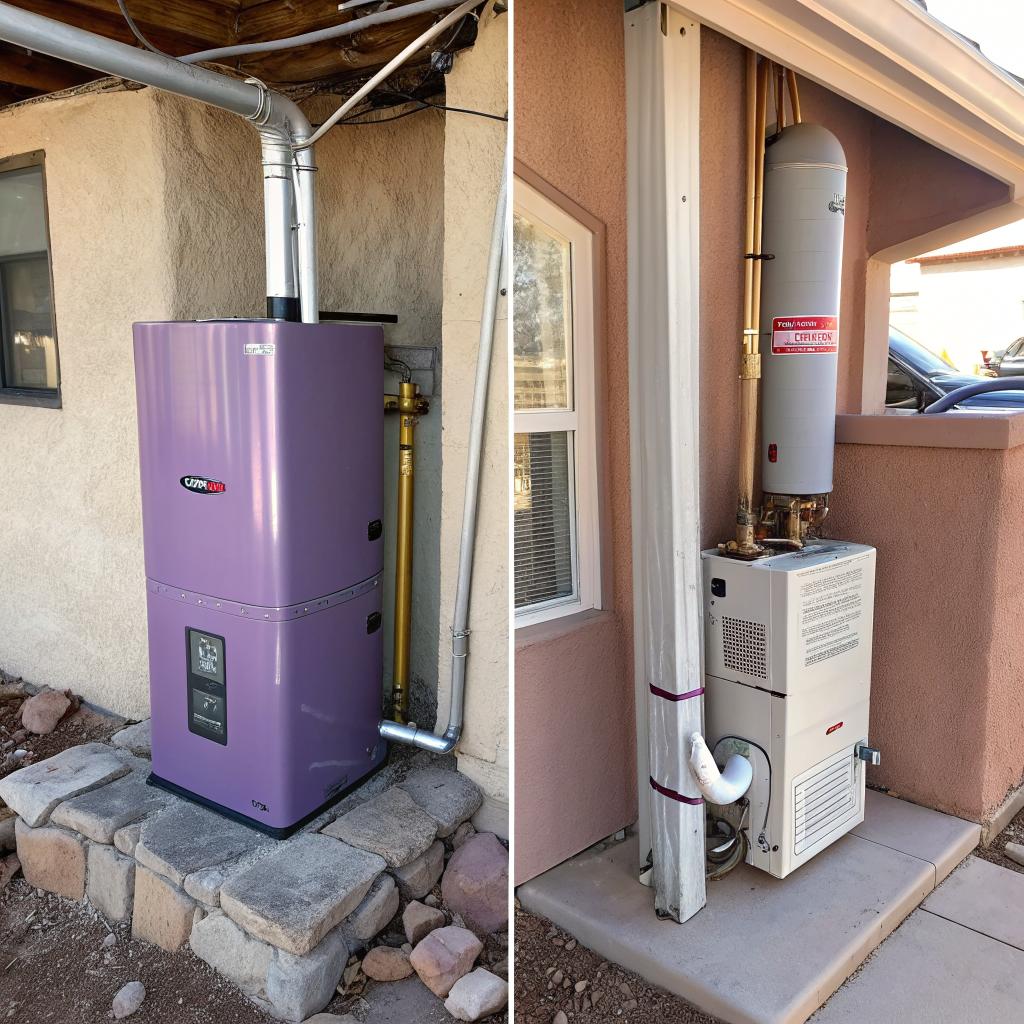
What if I told you that swapping out a tired 1980s furnace in Albuquerque can cut many winter gas bills by 25 to 40 percent, and at the same time bring your home closer to the smart-home future you see in tech blogs? Not by moving to some sci-fi pod in the desert, but by upgrading what quietly sits in your garage or closet.
Here is the short answer: if your furnace is more than 15 to 20 years old, needs repeated repairs, or still uses a standing pilot light and a basic wall thermostat, then a modern, high‑efficiency, smart‑ready unit is almost always worth it. A professional furnace replacement Albuquerque NM can lower energy use, make your home more comfortable, and give you access to smart controls you can manage from your phone. The trick is choosing the right size, fuel type, efficiency rating, and smart features for your home and your habits, not just picking the biggest or fanciest one.
I know that sounds very direct, maybe even a bit blunt. But heating is one of those parts of a house where vague answers cost money every month. So let us walk through it in a calmer way, and tie it into something you probably care about if you read nostalgia and tech content: how things used to work, how they work now, and what is actually worth upgrading.
You might love the charm of a mid‑century vinyl record player, but I have never heard anyone say, “I really miss my 1974 furnace that blasted heat for 10 minutes then went silent and left me freezing.” Heat is one area where retro is better as a memory than as daily reality.
From pilot lights to phone apps: how furnaces grew up
If you grew up with a beige metal furnace that kicked on with a whoosh and a faint gas smell, you know the “retro” style of heating. Simple. Loud. Hot in one room, chilly in another. And usually with a mercury thermostat on the wall that you nudged a few degrees and then waited.
Most older Albuquerque homes still have one of three broad furnace “eras” hiding in a closet or garage:
- Old single‑stage gas furnaces with standing pilot lights
- Mid‑age single or two‑stage units with electronic ignition
- Newer condensing, high‑efficiency furnaces ready for smart controls
That first group, the fully retro ones, are the most expensive to run. Many of them sit at around 60 to 70 percent AFUE. AFUE is a basic rating that shows how much of the fuel the furnace turns into heat for your home. So a 70 percent AFUE unit wastes about 30 percent of the energy you pay for up the flue.
Modern units reach 95 percent or even 98 percent. That is not marketing fluff. That is a direct line to your monthly bill.
Old furnaces throw a huge share of your gas bill straight outside; newer ones keep most of that heat in your living room instead of the Albuquerque night sky.
And then there is control. Retro furnaces are either on or off. Newer equipment can modulate, which just means they can run at lower outputs when your home only needs a bit of heat. They do not run full blast, stop, cool down, repeat. They glide.
For people who like to see the arc of technology, the shift is pretty clear:
| Feature | Retro furnace (1970s–1990s) | Modern smart‑ready furnace |
|---|---|---|
| Ignition | Standing pilot light, always burning | Electronic ignition, sparks only when needed |
| Efficiency (AFUE) | 60–80 percent | 90–98 percent |
| Stages | Single stage, on or off | Two‑stage or modulating |
| Controls | Basic thermostat, no remote access | Smart thermostat, app control, schedules |
| Comfort | Hot‑cold swings, noisy | More even temps, quieter |
| Diagnostics | Guesswork, trial and error | Error codes, system data for faster repair |
Some people worry that all this tech adds complexity. That is not wrong in a way. There are more boards and sensors now. But the trade‑off is better control, better safety, and a lot more information when something goes wrong.
When a furnace in Albuquerque stops being “charmingly retro”
There is a line where nostalgia is fine for music and movies, but not for gas appliances. If you are not sure whether your furnace has crossed that line, a few signs can help.
Your furnace is older than your favorite game console
If your furnace is older than your first PlayStation, that is already suspicious.
Gas furnaces usually last around 15 to 20 years in Albuquerque. Dry air and dust do not do them many favors. Some limp along longer, but the odds of cracks, blockages, or failed parts rise a lot after that point.
Once a furnace passes 20 years, you are not just stretching its life; you are rolling dice with higher energy use and, in some cases, safety.
A quick test: if you have no idea when it was installed, look for a label on the inside of the front panel. The serial number often includes a date code. Or you can search the brand and model online. It is not exact, but it gives you a rough age.
Your gas bill tells a different story than your thermostat
Many homeowners in Albuquerque assume gas bills are just “high” in winter. But two neighbors with similar homes can have very different bills based on furnace age and duct quality.
If your bills keep creeping up even though your use has not changed much, that furnace might be losing ground internally. Heat exchangers, burners, and fans all get tired.
Some people keep trying to fix old units over and over. That can make sense for a while. But there is a tipping point where repair costs over three to five years start to match a chunk of a new unit.
Hot upstairs, cold downstairs, and the fan never stops
Let me guess: one room in your home is always too warm while another needs blankets. Or you have to run ceiling fans just to move warm air around. That is partly an airflow issue, but also a control issue.
Old single‑stage units dump a lot of heat quickly, shut off, and then let it drift. Newer modulating units can run longer at lower power, which keeps air mixing and temperatures more even.
Is it perfect? Not always. Duct design and insulation still matter. But the change from retro to smart‑ready controls helps a lot with those old “cold room” complaints.
Retro, mid‑range, and smart: types of replacement options
If you decide your old unit has crossed the line, the next question is often, “So what do I replace it with?” That is where a lot of people freeze, because the market is full of brands, models, and marketing claims.
It might help to think in three broad categories, not hundreds of model names:
- Standard efficiency single‑stage furnaces
- High‑efficiency two‑stage furnaces
- High‑efficiency modulating smart‑ready furnaces
Standard efficiency: the “better than the 70s” option
These usually sit around 80 percent AFUE. They still use a metal flue and may be a bit cheaper upfront. They turn on to full power, heat the home, and turn off. Pretty similar to the older style, just somewhat more refined and more reliable.
They can pair with programmable thermostats and some smart thermostats, but they do not adjust their own output. If you want simpler tech and your budget is tight, they can be a step up from very old units.
High‑efficiency two‑stage: a practical middle ground
These units often run around 92 to 96 percent AFUE. They can run on a low stage for mild days and a high stage for colder nights.
They need PVC venting rather than a metal flue, because they cool the exhaust more. That can mean slightly more install work, but it also means you keep more heat inside the home instead of losing it outside.
They work nicely with smart thermostats and can smooth out temperature swings.
Modulating smart‑ready: fine control for tech people
Modulating units can adjust power output in many small steps. Some run between 30 and 100 percent of capacity. When paired with a smart thermostat that understands their language, they can maintain very steady indoor temperatures, even through Albuquerque’s sharp day‑night swings.
For someone who likes data, these systems can give you:
- Run time history
- Energy use estimates
- Error codes and alerts
- Remote control and scheduling
But they cost more. That is where you need to be a bit skeptical of your own tech enthusiasm. Do you care enough about ultra smooth control and app graphs to pay more upfront? Some people do. Some do not.
The “best” furnace is not the fanciest model; it is the one that fits how you actually live, not how a brochure assumes you live.
Albuquerque’s climate and how it shapes furnace choices
Albuquerque has a mix of winter traits that make furnace sizing and choice a bit more interesting than people think:
- Cold nights that dip below freezing
- Sunny, milder days
- Low humidity
- Occasional wind that sneaks through cracks
That pattern leads to an odd problem. Many old furnaces in the city are oversized. Builders and installers often picked bigger units “just to be safe.” So the furnace blasts the home with heat, overshoots the setpoint, shuts off, and you get wide temperature swings.
Modern sizing takes into account:
- Square footage
- Insulation levels
- Window quality and orientation
- Air leakage
- Duct layout and losses
If a contractor walks in, glances around, and says, “You have a 100,000 BTU unit now, let us put in another 100,000,” that is a red flag. At least ask how they reached that number.
A right‑sized modern unit in Albuquerque often ends up smaller than the old monster it replaces. That can feel counterintuitive. But if the new one runs more steadily and has better control, it can heat more comfortably than an oversized furnace that keeps short cycling.
Smarts, nostalgia, and how much tech is enough
Since the site you are posting on leans toward technology and nostalgia, it is worth pausing on what “smart” really means for a furnace, and where the retro tech still wins.
Smart thermostats: nice to have, not magic
Smart thermostats can:
- Learn your schedule over time
- Allow remote control from your phone
- Track runtime and estimated savings
- Integrate with voice assistants
They can also be overhyped. A basic digital programmable thermostat, set properly, already captures a lot of the savings. The “learning” features tend to help people who never bothered to set programs.
If you enjoy data, remote access, and integration with other smart home gear, a smart thermostat is fun and handy. If you are more private and prefer less connected equipment, a simple digital unit still works very well with modern furnaces.
Retro tech that still makes sense
Despite all the modern options, some older ideas remain smart:
- Simple, manual fan settings to circulate air
- Basic, reliable room thermostats for spaces you do not visit often
- Mechanical dampers in ducts to balance airflow between rooms
You do not have to put sensors in every room and tie them to a cloud account just to feel comfortable. And I think some people overcomplicate it.
The real step change from retro to smart is less about phone control and more about the furnace’s ability to modulate, self‑monitor, and burn fuel more cleanly.
Money side: what furnace replacement really saves
Let us talk numbers for a moment, not in a marketing way, just as rough math.
Say you have an older 70 percent AFUE furnace, and your winter gas use for heating runs about 600 dollars per season.
If you move to a 95 percent AFUE unit, simple math suggests you could cut fuel use by around 26 percent. That is about 156 dollars per year in energy savings, assuming prices and usage stay similar.
Is that exact? No. Actual savings depend on:
- How you set the thermostat
- Insulation and air sealing
- Duct quality and leaks
- Weather patterns
But you get the idea. Over 10 years, that could be over 1,500 dollars in reduced gas use, and often more. Add reduced repair costs and less risk of mid‑winter breakdowns, and the new unit starts to look less like a luxury and more like long‑term maintenance.
There is also the quiet mental weight of wondering if the old furnace will fail during the coldest weekend. Hard to price that, but when it actually fails at 2 a.m., people stop asking if replacement was worth it.
How a good Albuquerque installer thinks about your furnace
There is a difference between “putting in new metal” and actually improving how a home feels.
When a contractor is serious about the work, they tend to follow a few clear steps. They might not use these exact headings, but the process usually includes:
1. Assess the home, not just the old unit
That means they:
- Measure or confirm square footage
- Look at ceiling heights
- Check windows and doors
- Look at the attic and crawlspace if possible
- Inspect ducts for damage or leaks
They might perform a Manual J load calculation or a similar sizing method. You do not have to know every detail of that, but you can ask, “How did you size this unit?” and listen for more than “We matched what you had.”
2. Talk about how you actually use the space
Do you work from home all day? Travel often? Use space heaters in a certain room because it never feels warm enough? All of that shapes which furnace and controls make sense.
This is where a bit of self‑honesty helps. For example:
- If you almost never use schedules on other devices, a simple programmable thermostat might be enough.
- If you love setting up routines, scenes, and automations, a more advanced smart thermostat will fit you better.
3. Plan the venting and duct work
High‑efficiency units often need PVC venting and a condensate drain. In older homes, that can require some careful routing.
Ducts also matter more than people expect. A high‑efficiency furnace pushing air through leaky, undersized ducts will not feel as good as the brochure suggests.
A thoughtful installer will at least:
- Seal obvious duct leaks with mastic or proper tape
- Check return air size so the furnace can breathe
- Confirm there is proper clearance around the unit
4. Set up controls and show you how to use them
Even the best smart system will disappoint if it is left at default settings.
Good installers:
- Connect the thermostat to the furnace correctly, with all features enabled
- Walk you through basic schedules
- Explain simple rules: lower the setpoint a bit at night, do not crank it up 10 degrees at once, etc.
If they rush out the door and leave you staring at a confusing thermostat, that is not really a complete job.
Retro memories, modern comfort: finding your balance
People who enjoy nostalgia often like the idea of “things were simpler back then.” And in some ways, they were. You lit the pilot at the start of the season, maybe changed a filter if someone reminded you, and that was that.
But we remember the good and forget some of the bad:
- Gas smells when the burner lit
- Drafty hallways
- Cold floors in the morning
- The surprise of the furnace not starting the first cold night
Modern systems trade some of that simplicity for better control and information. Sometimes that extra complexity can feel like a burden. Software updates, Wi‑Fi issues, apps that change their interface every year.
If you prefer a “set it and forget it” setup, you can still have that, even with newer furnaces. You can choose a more basic thermostat and avoid deep app settings. The furnace itself will still be modern inside, with safer burners, better ignition, and higher efficiency.
You do not need to turn your heating system into a science project unless you want to.
Common questions people in Albuquerque ask about furnace replacement
Q: Is a high‑efficiency furnace really worth it here, where winters are not as extreme as some states?
A: I think so, for most homes, but not in every single case. Albuquerque still has a defined heating season, and night temps can drop fast. A move from 70–80 percent AFUE to 90–95 percent AFUE often pays back over the life of the unit.
If your current furnace is already mid‑efficiency and in good shape, and money is tight, it might be smarter to spend on duct sealing and insulation first. Those often give quick returns. But if your furnace is clearly old and tired, a high‑efficiency unit is usually the better long‑term path.
Q: Can I keep my old thermostat with a new furnace?
A: Often yes, but you might not get all the benefits. Many new furnaces can connect to older 2‑wire or 4‑wire thermostats and still function in basic heat mode.
If you want two‑stage or modulating control, advanced fan control, or detailed diagnostics, a more modern thermostat that speaks the same “language” as the furnace can help. You can go with a smart thermostat or a more basic digital model that supports those stages.
Q: How long does furnace replacement usually take?
A: Simple swap jobs can finish in a day. More complex ones that add new venting, duct adjustments, or zoning can take two days or a bit more.
The part that people often forget is planning. Getting quotes, checking references, and deciding on the right model can take longer than the actual physical work. Rushing that part usually leads to regret, not saved time.
Q: Are smart thermostats safe if I care about privacy?
A: Smart thermostats send data to cloud services. That means some information about your home temperature and schedule sits on someone else’s servers. If that bothers you, it is not overthinking it. You are just cautious.
You can still enjoy a modern furnace with a non‑connected digital thermostat. You lose remote control and some graphs, but you keep your data inside the walls. It is a trade‑off. Many people accept it, some do not. Both choices are reasonable.
Q: Could I repair my old furnace instead of replacing it?
A: You can, and sometimes that is the right short‑term choice. A minor repair on a 12‑year‑old unit that has otherwise worked well is different from a major part failure on a 24‑year‑old furnace.
A rough rule many techs quietly use: if a repair costs more than 20 to 30 percent of a new unit, and the furnace is near or past its expected life, replacement starts to look smarter. But again, that is not a law. It is a guide. If money is tight one year, a repair might buy you time to plan a better replacement later.
Q: I like retro gear. Can I keep some of the old feel while still upgrading?
A: In a way, yes. You can keep the mechanical, tactile aspect of heating by choosing a simpler wall thermostat, maybe one with a clean analog look but digital guts. You can focus on quiet comfort rather than screens and apps.
Inside, the furnace will be modern, safer, and more efficient. Outside, your daily interaction can feel closer to the old days. That mix of old feel and new function is probably the healthiest place to land, instead of clinging to a truly old, unsafe, or wasteful appliance just for nostalgic reasons.
