

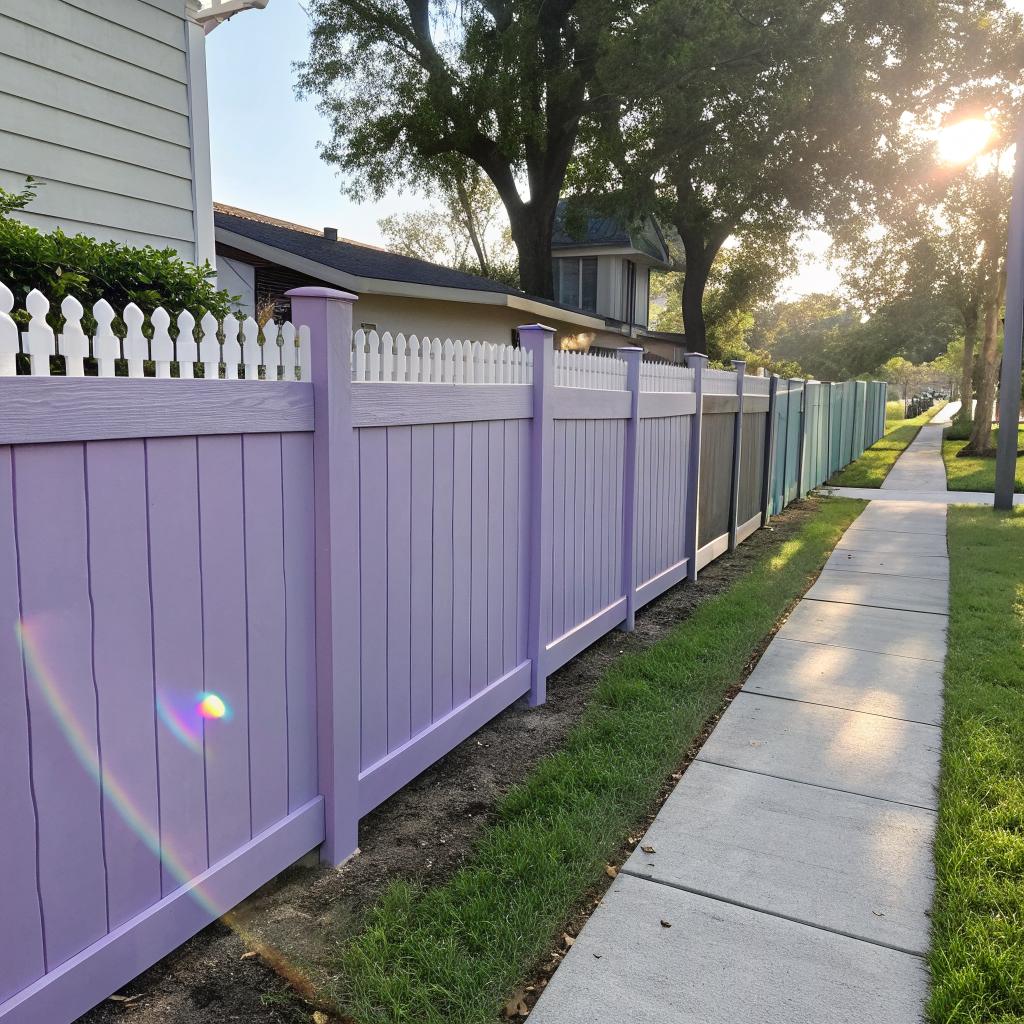
What if I told you that the most interesting story about technology is not in your phone, but in the fence around your yard?
Here is the short answer: in Houston, fence repair is no longer just about replacing broken boards. It has turned into a quiet upgrade path from nostalgic white picket fences to Wi-Fi connected gates, sensors, and cameras. If you call a local pro for fence repair Houston today, there is a good chance you are standing at a crossroads between fixing what you grew up with and stepping into something that feels one step away from a sci-fi movie.
That sounds dramatic, but the reality is simpler.
Your fence used to mean privacy, a place to lean while you talk to your neighbor, or a line where the dog stops. Now it can also be a place where your security camera lives, where a smart lock controls who gets in, and where your phone pings when someone opens the gate.
So the real question is not “wood or metal” anymore. It is “how much of the past do you want to keep, and how much of the future are you ready to bolt to it?”
The quiet shift from nostalgic fence to smart gate
When people talk about tech, they usually go straight to phones, cars, or maybe VR headsets. Fences sound old, almost boring. But if you zoom out and think about your childhood street, that mental picture probably has a fence in it somewhere.
Maybe it is a low white fence from old movies. Or a chain-link fence from a school yard. Or a tall wooden wall around a backyard pool. That mental image is nostalgic by default.
Now compare that to a modern Houston neighborhood where the driveway gate slides open by itself, cameras watch the sidewalk, and deliveries arrive inside the gate through a code or an app. Those are two different worlds that still share one thing: a line in the ground that says “this is mine.”
So when someone calls for fence repair in Houston, they are not only fixing damage. They are also forced to make a choice:
Do you restore the fence to what it was, or do you quietly upgrade it into part of a small, personal security system?
That is where nostalgia, evolution, and technology collide in a very visible way, right at the edge of your yard.
Why fences in Houston break faster than you expect
Houston is not kind to fences. Long summers, heavy rain, clay soil that shifts, and the occasional storm that tries to move half the yard a few inches to the left. That mix ages fences quickly.
Wood swells, dries, and cracks. Metal rusts. Posts tilt as the soil heaves. Compared to a cooler, drier city, you repair or replace parts more often.
I talked to a neighbor who once said, half joking, “If the fence survives a Houston summer and a hurricane season, it deserves a medal.” He was not wrong.
From a tech angle, that weather pattern does something interesting. It speeds up the rhythm of decisions. You have more chances, every few years, to choose if you stay with a basic fence or move toward something smarter, one repair at a time.
You do not replace a whole fence every time. But each broken post, leaning section, or failing gate opener is a decision point.
Every repair is a small vote: keep the fence as a passive boundary, or let it join the network of devices that already run your home.
Old fences, new upgrades: where nostalgia meets gadgets
Here is where it gets slightly tricky. You might like the look and feel of an older style fence, but still want the comfort of tech. That tension is common, and it is not just about aesthetics. It is about identity.
You might think:
– “I like that my home feels warm and old-fashioned.”
– “I also want to see who is at the gate from my phone.”
Those ideas do not cancel each other out. A lot of people quietly mix them.
Ways people blend classic fences with modern tech
- Keeping a wooden picket or privacy fence, but adding a smart lock to the side gate
- Keeping a wrought iron front fence, but adding a small camera at the driveway gate
- Repairing a manual sliding gate, then adding a motor and remote control later
- Keeping a nostalgic “front porch” feel, but placing motion lights at the gateposts
At first, these additions feel like small gadgets. Over time, the fence itself feels different. It reacts. It informs you. It connects to your routines.
The interesting part is that the visual nostalgia can stay almost untouched. From the street, someone might still see a simple wooden or iron fence. The smart part sits quietly in the hinges, the locks, and the posts.
From picket fence to smart gate: a short timeline
If you look at the history of home fences in a simple way, the story is not complicated, but it is very human.
| Period | Common fence style | Main purpose | Tech level |
|---|---|---|---|
| Mid 20th century | Picket fences, low wood or chain-link | Mark property, light privacy, keep kids/dogs in | None, fully manual |
| Late 20th century | Taller wood privacy, ornamental iron, masonry | More privacy, status symbol in some areas | Manual gates, occasional low-voltage lights |
| Early 2000s | Mix of wood, vinyl, metal, subdivisions with uniform fences | Privacy, noise buffer, HOA standards | First wave of powered driveway gates, simple keypads |
| 2010s to now | Same materials, plus composite panels | Security, privacy, aesthetics, resale value | Smart locks, Wi-Fi cameras, app-controlled gates, sensors |
We still use boards, posts, and concrete, but the “brain” around the fence has changed. Where you used to have a latch, you can now have a motor. Where you had a peephole or no visibility at all, you might now have a camera with night vision.
So in a way, the “picket fence dream” did not die. It just learned to send notifications.
Fence repair in Houston as a doorway into home tech
If you own a home in Houston and you call someone to fix a leaning fence, you might think you are just buying lumber and labor. That is one way to see it, and it is not wrong.
But there is another way to see that call.
You are already spending money on the edge of your property. You already have disruption in the yard, people with tools, and materials out. That is exactly the time when small upgrades are cheapest and simplest.
Typical repair moments that invite tech upgrades
- A sagging driveway gate that needs new hinges or a full rebuild
- A rotting wood post at a side gate that keeps sticking or dragging
- Repeated break-ins or tampering with a back fence board
- Pets getting out through gaps or lifting under the fence
Each of those has a basic fix. Replace the hinge. Pour a new post. Add a board. Nail in a metal plate near the bottom.
But next to each basic fix, there is a modest tech choice:
– While fixing the gate, add a motor and remote.
– While re-setting the post, run a small conduit for power.
– While closing the gap, add a sensor that alerts you if the gate is open.
– While reinforcing the pet area, add a camera pointed at the weak spot.
You do not need to go from zero tech to full smart fortress. You can upgrade like you upgrade a computer: one part at a time, as things wear out.
Old habits vs new habits at the fence line
There is a subtle psychological piece here. A classic fence fits with older habits:
– You walk up and latch the gate by hand.
– You peek through a gap to see who is outside.
– You trust that “if it is locked and tall enough, it is fine.”
A smart gate nudges your habits in a different direction:
– You check your phone before opening the door.
– You open the gate with a code or remote instead of a key.
– You review a motion alert log when something feels off.
Neither habit set is perfect. Some people feel more secure once they add these tools. Some feel strangely watched in their own yard, even though the camera is pointing out, not in.
I sometimes catch myself thinking both “this is safer” and “this is a bit over the top” in the same moment. That mild contradiction is probably normal. We are still adapting to homes that constantly talk back to us.
A fence used to be quiet by design. Now it can send you messages in the middle of the night, which is both comforting and slightly unsettling.
What fence repair in Houston actually looks like now
It is easy to sink into theory, but the day-to-day reality is more practical. You might just have broken pickets from a storm. Or a metal panel that rusted through near the ground.
Let us look at how the actual repair process has changed, not just the fence itself.
From “cheap and quick” to “staged upgrades”
Years ago, the conversation around a damaged fence was usually:
– “How fast can you fix it?”
– “What is the cheapest option?”
Now, the questions sound a bit different:
– “Can we fix this part and prepare for a motor next year?”
– “If I am replacing the gate, what do I need for a keypad later?”
– “Can I get wires hidden so I do not see them after we add cameras?”
This shift is subtle. You are still dealing with boards and steel. But you are also planning for circuits, Wi-Fi reach, and power supplies.
It turns a one-time repair into something like a small roadmap for your property line.
Common materials and how they play with tech
Different fence materials handle gadgets differently. Some work very well with tech. Some resist a bit.
| Material | Pros for repair | Tech compatibility | Common use in Houston |
|---|---|---|---|
| Wood | Easy to replace boards, posts can be swapped section by section | Holds cameras, sensors, and small boxes well, but needs sealing around hardware | Backyard privacy, side yard dividers, older neighborhoods |
| Wrought iron / steel | Long lifespan, but rust repair can take more work | Perfect for motorized gates, keypads, and integrated locks | Front yards, driveways, higher-end builds |
| Vinyl | Low maintenance, damaged panels often replaced fully | Hardware mounting needs care to avoid cracking; hidden wiring is trickier | Subdivisions, HOAs that like uniform appearance |
| Composite | Sturdy, resists warping, repairs less frequent but more specialized | Good for mounting devices, but planning for wire runs is important | Newer builds, modern style homes |
Wood is nostalgic, cheap to repair, and very flexible for small tech. Iron pairs naturally with motors and locks. Vinyl and composite give a clean look but ask for more planning when you want to hide cables and boxes.
So the repair conversation is not only “what failed.” It is also “what material are we committing to for the next decade of gadget experiments?”
Security, nostalgia, and the feeling of home
This is where people often feel a bit torn. A tall, solid fence feels private, but it can also feel closed off from the street. A smart gate with a camera can feel safe, but also slightly clinical, like a mini office building.
You might remember growing up on a street where kids leaned over short fences, talking. Now you look at a row of 7-foot privacy fences and you see less interaction.
So where does technology sit in that emotional mix?
How smart fences change behavior on the street
A few things tend to happen when more homes add tech to their fences and gates:
- Deliveries move from front porches to inside gated areas.
- Visitors get used to ringing a video intercom instead of calling from the street.
- Neighbors sometimes hesitate to knock, unsure if they are on camera.
- Reports of theft or trespassing become more visual, less word-of-mouth.
This can make a street feel safer, but also more cautious. The fence, which used to be a place to lean and chat, becomes more of a controlled access point.
There is no single “right” balance here. Some people prefer the old, open feel and accept more risk. Others want the control, even if it means fewer casual chats at the gate.
You might change your mind over time too. At 25, you might want openness. At 45 with kids, you might want predictability. At 70, you might want convenience and remote access.
Memories attached to old fences vs attraction to new tech
I know one family who refused to replace their worn picket fence for years because “it is in all the kids’ birthday photos.” When a storm finally took it down, they faced a decision: recreate the old look or update it.
They ended up choosing a similar style, but with:
– Steel posts hidden behind the wood for longer life
– A simple keypad on the side gate
– A camera tucked in the corner where the fence meets the house
From the street, visitors hardly notice the change. But for the family, the fence now interacts with their daily phones-and-deliveries routine.
That story sums up what many Houston homeowners are doing: preserving the emotional shape of the past while slipping modern layers behind it.
You do not have to choose between memory and tech. You can keep the photo in your head and still let the gate open with a code.
Costs, tradeoffs, and realistic expectations
Talking about smart gates without talking about money would feel dishonest. Repairs already cost something. Adding tech adds more.
The good news is that not every upgrade is expensive, and not every fence needs to become a gadget hub.
Typical cost layers in a modern fence or gate repair
You can think in three rough layers:
- Structural: posts, rails, concrete, panels, welding
- Mechanical: hinges, latches, rollers, gate tracks
- Electronic: motors, locks, sensors, cameras, wiring
Most Houston fence repairs start with structural fixes. The post rotted, the concrete cracked, the metal rusted through. If you are thinking ahead, that structural work is the base for any future electronic layer.
For example:
– When you reset posts for a driveway gate, you can align them for future motors.
– When you pour new concrete, you can set in conduits or junction boxes, even if they sit empty for now.
– When you replace a gate frame, you can choose tube sizes that match common motor brackets.
This planning keeps you from paying twice later.
Not every fence needs to be smart
It is easy to feel pressure to put tech on every part of your house. Some of that pressure comes from marketing, some from neighbors, some from honest safety concerns.
But it is alright to say:
– The front driveway gate gets a motor and camera.
– The side yard gets a simple, sturdy manual gate.
– The back fence just needs to be strong, with no gadgets.
In other words, you can let some parts of the yard stay fully nostalgic while other parts move into the connected world.
This mixed approach often fits real life better than an all-or-nothing mindset. It is closer to how people actually adopt tech: slowly, piece by piece, where it feels the most useful.
How to think about your own fence in Houston
If you stand in your yard and look at your fence right now, you might see simple damage: a broken picket, a rusty spot, a latch that sticks.
But behind those issues are a few deeper questions:
– What do you want your yard to feel like at night?
– How much do you want your phone involved in your front gate?
– How do you balance privacy with staying connected to the street?
Those questions matter more than brand names or model numbers. The tech choices come after.
Questions to ask yourself before the next repair
You might find it helpful to write down honest answers to things like:
- Do I want to see visitors before they reach my front door?
- Do I care if my fence and gate look “old-fashioned” or “modern”?
- How comfortable am I with cameras around my home?
- Do I prefer physical keys, or do I like codes and apps?
- Am I planning to stay in this house for many years, or not?
Those answers can guide choices such as:
– Wood vs metal vs composite, at least in visible areas
– Manual latch vs mechanical closer vs smart lock
– Simple repair vs partial rebuild to support future motors or cameras
If you skip this thinking, you might still get a solid repair. But you may miss chances to line up your fence with how you live the rest of your life, which now often runs through your phone.
Small examples from Houston yards
To make this a bit more concrete, here are a few simple scenarios that mirror real life. They are not extreme, and they show how nostalgia, evolution, and tech mix in quiet ways.
The classic wood fence with a modern twist
A homeowner with a 20-year-old wooden privacy fence sees more gaps, warping, and loose posts. They like the look of wood and do not want metal facing the street.
What they choose:
– Replace the worst sections with new wood, but use steel posts wrapped in wood sleeves.
– Add a self-closing hinge and key lock to the side gate, plus a future-proof strike plate for a possible smart lock.
– Run a low-voltage cable path along the top rail, hidden, for motion lights added a year later.
Result: from the street, it still looks like a normal wood fence. From inside the home, the fence quietly supports better lighting and stronger security options.
The aging manual driveway gate that joins the network
A family has a manual sliding metal gate that has been stuck so many times they stopped closing it at night. The wheels are worn, the track is bent, and the latch is annoying.
What they choose:
– Rebuild the gate track and wheels for smooth rolling.
– Add a motor kit and remote controls.
– Add a small Wi-Fi bridge and phone app control.
– Tie in a basic camera facing outward from the gatepost.
Result: they start using the gate daily again, because it stopped being a chore. They did not radically change the look of the fence, but the way they interact with their driveway changed completely.
The “almost no tech” choice that is still modern
Another homeowner dislikes cameras and smart locks. They want a simple, strong fence that will last through storms.
What they choose:
– Replace a rotting backyard fence with taller, thicker wood boards and steel posts.
– Use heavy-duty hinges on the gate, with a mechanical closer.
– Install good lighting near the back door and along the path to the gate, controlled by a basic timer.
Result: no apps, no Wi-Fi, but still an upgrade from a weak fence. The “tech” in this case is just better hardware and lighting. It still reflects a modern understanding of safety without crossing the line into constant connectivity.
Questions people often ask about fences, nostalgia, and smart gates
Does adding tech to a fence always make a home feel less warm?
Not always. It depends on how visible the tech is and how you use it.
If you bolt big, industrial devices to a charming old fence, it may feel harsh. If you hide wiring, pick subtle devices, and focus on the edges that need help most, the overall feel of the home can stay warm. Many Houston homes keep their front yard style and tuck cameras into less obvious corners.
Is it worth upgrading a fence if I might move in a few years?
Sometimes yes, sometimes no. If your current fence is failing, a good repair with light upgrades can still add resale appeal. A working, powered driveway gate, for example, often attracts buyers.
On the other hand, heavy investment in highly personalized tech might not pay off if the next owner rips it out. A balanced approach is to fix structure properly, prepare for tech (wiring, boxes, layout), and only add devices you know you will use while you live there.
Can I keep an “old movie” style picket fence and still be safe in a big city like Houston?
You can, but you may have to accept some tradeoffs. Low fences are more about visual charm and light boundaries than strong security. To compensate, people often:
– Add better door and window security.
– Improve outdoor lighting.
– Use cameras facing the street, even if the fence is short and decorative.
So the safety might come from the house and small devices, while the fence stays mostly nostalgic. That mix can work, as long as you are honest about what the fence itself can and cannot do.
Is a smart gate really that different from a garage door opener?
Functionally, it is not that different. Both are barriers you can open remotely, both can tie into your phone, and both have sensors to avoid closing on objects.
The difference is symbolic. A garage door hides your car. A smart gate marks the edge of your world to everyone walking or driving past your house. That gives it a slightly larger emotional role. It says “this is where my space starts,” and now it says it through motors, signals, and sometimes a camera lens.
So when you repair or upgrade your fence and gate in Houston, you are not just patching wood or welding steel. You are deciding what kind of threshold you want between your memories of home and the connected world that waits outside.
