

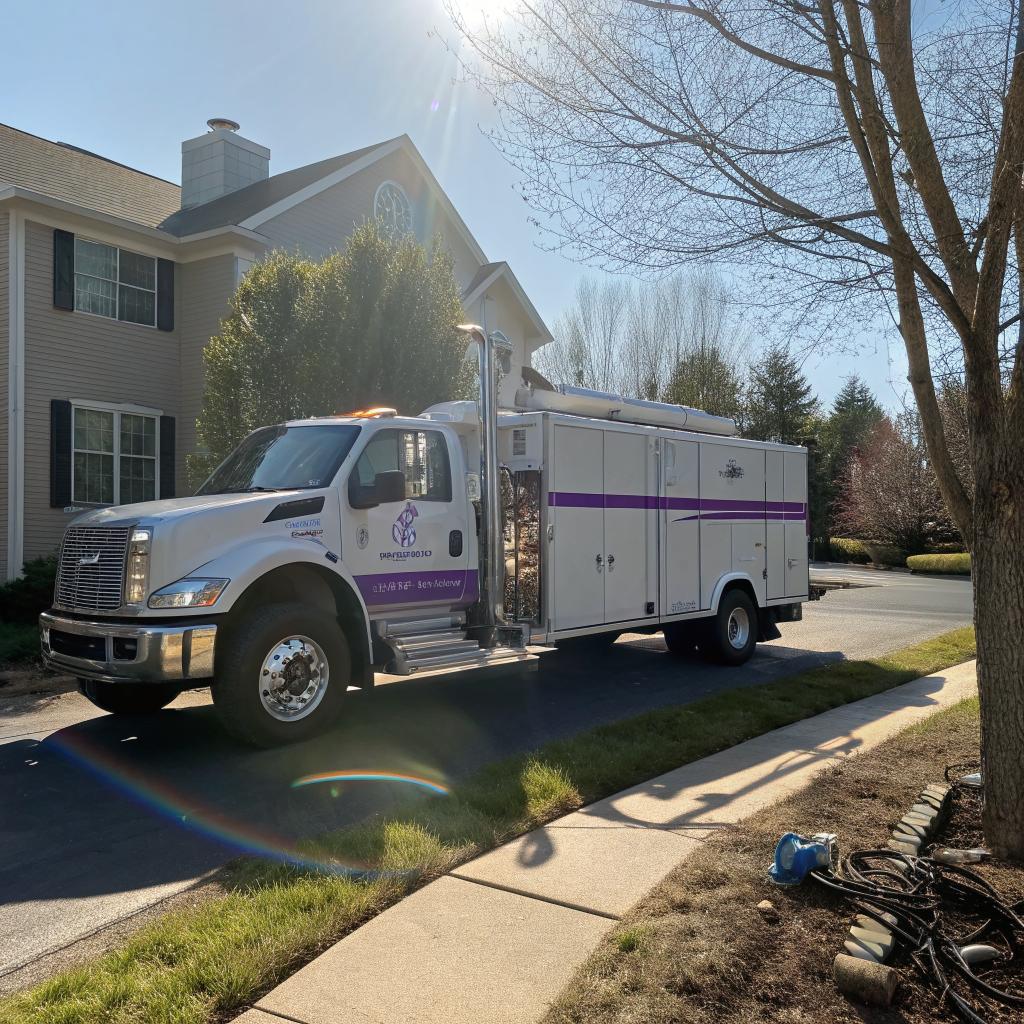
What if I told you that the biggest change in plumbing over the last 40 years is that plumbers now spend more time looking at screens than swinging wrenches?
That is basically what happened with Arvada drain cleaning. The short answer is simple: old-school guesswork and heavy tools slowly gave way to cameras, sensors, hydro jets, and software. Plumbers went from listening for clogs through walls to watching them in high definition on a monitor. Pipes stayed the same; the way we see and clean them is what changed.
I think it helps to walk through that change step by step. Not just for plumbing nerds, but for anyone who likes to see how a very ordinary service turns into something quite different once tech sneaks in, piece by piece, over a few decades. Some of it feels nostalgic. Some of it feels almost too digital for something as messy as a drain. But that tension is what makes it interesting.
From coat hangers to cameras: how it started
If you grew up in Arvada before the 1990s, you probably remember how simple drain problems felt.
You had three basic options:
- A plunger
- Some kind of liquid chemical cleaner
- A plumber with a heavy steel snake and maybe a loud machine in the truck
There were no live video feeds of your pipes. No locator beeps. No apps. The plumber would ask a few questions, maybe listen to a pipe, and then say something like, “I think the main line is blocked out near the tree.”
This was part skill, part instinct, and part guess.
Old drain cleaning in Arvada was mostly about feel and sound, not about what you could see inside the pipe.
A typical service call in the 1970s or 80s looked like this:
1. The plumber arrived with a basic set of hand tools.
2. They asked where the drains were backing up.
3. They tested a toilet or sink, listened to gurgling, checked a cleanout if there was one.
4. They fed a steel cable into the drain and used a motor to spin it.
5. If the water drained afterward, the job was “done.”
No one really knew:
- What exactly caused the clog
- How much of the pipe wall was coated in grease or scale
- If there were cracks forming or roots slowly creeping in
People accepted that as normal. Pipes were underground and mysterious. You only thought about them when something failed.
Now, compare that to a modern visit where a tech rolls in with a camera, a locator, and a hydro jet. You see the inside of your pipe like a tiny underground documentary. It almost feels too transparent.
The nostalgia of “mystery plumbing” vs tech comfort
For a site about nostalgia, it is tempting to say the old way had more character. And in a way, it did.
There was:
- More guesswork
- More “let us see what happens”
- More reliance on a plumber’s ear and experience
There is something oddly satisfying about someone solving a problem with only a few tools and some know-how. But that approach also meant:
- More repeat clogs
- Higher risk of hidden damage
- No permanent record of what the pipe looked like
The charm of the old way came with a cost: you often only discovered big problems when they were already expensive.
So the shift in Arvada was not only about new gadgets. It was about moving from mystery to proof.
You no longer have to take the plumber’s word that roots are in your sewer line. You can watch the roots on the screen yourself.
There is a small tradeoff, though. When you bring screens and data into any trade, you lose a bit of that feeling that the work is almost “craft magic.” The job becomes more like diagnostics. More like an inspection with numbers and images, less like a guessing puzzle.
Some people like that. Some miss the older style. Both views are fair.
The tech timeline: how Arvada drains changed decade by decade
To see the pattern clearly, it helps to break it down by rough eras. This is not exact, and local shops moved at different speeds, but the steps are similar.
The analog days: snakes, augers, and chemicals
Before video gear and high-pressure water became common, drain cleaning in Arvada looked almost the same for decades.
Typical tools:
- Hand augers for small sink and tub lines
- Motorized cable machines for main sewer lines
- Plungers and simple air pressure tools
- Harsh chemical cleaners on the homeowner side
The process focused on:
- Punching a hole through the blockage so water could run again
- Short-term relief rather than long-term prevention
There was little talk about the overall health of the pipe system. The tech could not see the full picture, so the visit was about getting you functional again, not about planning the future.
In many older Arvada homes, that is why deeper problems with orangeburg pipe, clay joints, or root intrusion went unnoticed for years. There were clues, but no direct evidence.
The first big shift: sewer cameras arrive
Once sewer cameras started to reach local companies, the job changed almost overnight.
A camera system could:
- Travel down the pipe while sending video back to a small screen
- Record the inspection for later review
- Help measure distance to a problem point
Now, instead of saying, “I think you have roots,” the tech could say, “You have roots here, about 34 feet out, between your house and the sidewalk,” and show you the exact moment the camera passes them.
Here is how the difference looks side by side:
| Old approach | Camera-based approach |
|---|---|
| Guess clog location based on symptoms | See clog location in live video |
| No visual proof of pipe condition | Recorded video of cracks, roots, and buildup |
| Hard to plan long-term repairs | Clear evidence for repair vs cleaning decisions |
| Customer must trust experience alone | Customer can judge with their own eyes |
It also changed the conversation at the kitchen table.
Before cameras, a plumber saying, “You might need to replace this line,” felt vague and maybe a little scary.
With a camera, the same plumber could pause the video on a big crack or sag in the pipe and say, “Here is the problem. This section is holding water, and it will keep catching debris.”
It is not perfect, but it is less abstract. In a town where older clay pipes and tree roots come up often, that clarity matters.
The pressure era: hydro jetting replaces brute force
The next major jump came with high-pressure water jetting.
Instead of relying only on rotating steel cables, techs started using hoses that shoot water at very high pressure through the pipe, peeling away grease, scale, and soft blockages.
The difference in practice:
- Cable machines break clogs but can leave residue on the pipe walls.
- Hydro jets clean much more of the pipe interior in one pass.
Techs in Arvada learned that some lines, especially those full of kitchen grease or restaurant waste, responded much better to water jets than to any cable tool.
Hydro jetting turned cleaning from “poking at the clog” into “washing the whole pipe,” which changed how long the line stayed clear.
This also opened a new kind of service conversation:
- One-time emergency cleanup after a bad backup
- Scheduled maintenance jetting for lines with regular buildup
For people who own older rental properties or small commercial spaces, that regular schedule became almost like an oil change. Not very nostalgic, but predictable.
Digital tools: locators, software, and records
Once cameras were in play, it was only a matter of time before locators and digital record systems followed.
Some of the common tech now baked into Arvada drain cleaning:
- Electronic locators that track the camera head from above ground
- Mapping tools that plot pipe paths on a simple diagram
- Cloud storage for inspection videos and reports
This means:
- A tech can mark the exact spot in your yard where a problem sits.
- A future repair crew can dig only where needed, instead of guessing.
- Homeowners can keep a history of their pipe condition over time.
Some companies also use scheduling and CRM software to track:
- How often your main line backed up
- What kind of buildup was found each visit
- Which sections of pipe are watching for future issues
This is the part where plumbing starts to feel oddly like tech support.
You still have the physical work in the field, of course, but behind it sits a quiet layer of records and logs. A far cry from scribbled notes on a carbon copy invoice in the truck.
How this changes your actual experience as a homeowner
So far this might sound like a tech timeline on paper. But it matters day to day in Arvada for a few concrete reasons.
Here are a few practical differences you can feel.
1. Fewer “mystery” clogs
With cameras, repeat clogs are not just brushed off.
If the same drain backs up three times, the tech can compare videos:
- Did the clog come from the same area?
- Is there a low spot in the pipe catching debris?
- Are roots returning faster than expected?
Instead of shrugging and saying, “Old houses do this,” the tech can adjust the plan. Maybe switch from basic snaking to hydro jetting. Or recommend a repair at a very specific spot instead of “maybe the whole line.”
2. Clearer decisions between cleaning and replacement
There is a big difference in cost between another cleaning and a pipe replacement.
Before cameras, some replacements happened too late, after a major failure. Some happened too early, out of fear.
Now you can see:
- Long cracks spreading through the pipe
- Sections where the pipe has collapsed
- Joints where roots keep entering
You might not love what you see, but at least it is clear.
Arvada has many houses from the 1960s, 70s, and earlier, each with its own pipe materials and age. That mix makes visual evidence even more helpful.
3. Less damage during repairs
Once a camera and locator show the exact trouble spot, repair work can be more surgical.
Compare:
- Older approach: dig a long trench and hope you find the break, or open walls in several spots.
- Modern approach: mark the spot, expose a smaller area, and fix only what is broken.
Smaller excavations mean:
- Less labor
- Smaller impact on yards, driveways, or landscaping
- Fewer surprises once the ground is open
It is not always perfect, but locating tech reduces guess holes.
4. More preventative talks, fewer late-night panics
This part feels the most “un-plumbing-like” in a way.
With clearer data, a tech in Arvada can say:
“You are not in a crisis yet, but your main line shows heavy scale and early root growth. If you schedule a good cleaning every 18 months, you can probably avoid major backups.”
That conversation used to be rare. Now it is normal.
You can treat drains more like you treat your car maintenance. Not romantic, but comforting.
Of course, some people still wait until there is water on the floor before calling. Old habits stay.
Old habits that tech did not completely erase
For all the new tools, some patterns have not changed much in Arvada.
People still reach for chemicals first
Hardware shelves still hold bottles that promise to melt clogs.
The reality:
- Chemicals can harm older pipes over time.
- They do nothing for roots, cracks, or collapsed sections.
- They often give short-lived relief while deeper issues remain.
Yet many people try them first, partly from habit and partly from hope. It feels easier to pour something and wait than to call.
The tech evolution did not erase that instinct. It just gives better backup when those DIY attempts do not last.
Experience still matters, not just equipment
It would be easy to say cameras and software solved everything. That is not quite right.
A tech still has to:
- Interpret what they see on the screen
- Judge whether a crack is urgent or watchable
- Choose the right cleaning method for the material and age of the pipe
Two plumbers with the same tools can still reach different opinions.
So, even in a very tech-shaped version of Arvada drain work, there is room for judgment calls, and sometimes disagreement. That human layer did not go away. It just shifted from guessing where the clog is, to interpreting what the camera shows.
The rhythm of service calls is oddly familiar
Even as equipment evolved, a modern visit still has a shape that would feel familiar to an older plumber:
- Arrive, listen to the customer
- Test fixtures to see how the system responds
- Pick a cleanout or access point
- Run a tool through the line
- Verify flow has returned
The main change is that “run a tool through the line” now might mean camera, hydro jet, locator, and recording, not just a cable.
So the surface experience for you as a homeowner is not wildly different. You still tell the story of what happened, watch a tech work, and hope the water drains when they leave.
How nostalgia, evolution, and tech all meet in one drain
What makes this topic fit a nostalgia and tech theme is that drain cleaning sits right at the edge of two worlds.
On one side:
- Heavy iron, clay, and PVC pipes
- Physical clogs from hair, grease, roots, and scale
- Hands-on work with tools, dirt, and water
On the other side:
- High resolution video inside pipes
- GPS-like locators that beep above ground
- Digital records, diagrams, and repeatable maintenance plans
You get this strange mix where an old Arvada ranch house with plumbing from the 1960s is being diagnosed with a ruggedized camera system that feels like it could live on a Mars rover.
For people who remember the “call a guy with a snake and hope” days, watching the inside of their sewer line on a little screen can feel almost surreal.
Drain cleaning went from a hidden, guess-filled chore to something you can watch like a live broadcast from beneath your own yard.
At the same time, some homeowners still want that older style interaction: “Just get it flowing; I do not need to see the video.” Others want every second recorded on a USB drive.
So even as the tech marched forward, the human expectations stayed mixed, and in some ways, stubborn.
What this evolution might mean for the future
Trying to predict where Arvada drain cleaning goes next is tricky, but some trends are already visible.
Smarter monitoring, less surprise
As sensor prices fall, it would not be surprising to see:
- Smart traps that can detect slow flow or early blockages
- Building systems that flag unusual drain behavior before a backup
- Alerts sent to both homeowner and plumbing company when something changes
Drains could move closer to how smoke detectors or security systems work: quiet most of the time, but ready to warn before serious damage.
You might not want that level of constant awareness about pipes, and I understand that. There is something to be said for not knowing every little thing that could go wrong. But the tech path points in that direction.
More trenchless repair, less excavation
Once drain cleaning cameras showed where damage lives, the next question was obvious: can we fix it without digging everything up?
Trenchless repair methods already exist and are spreading:
- Pipe lining that coats the inside of a damaged pipe
- Pipe bursting that replaces old pipe by pulling new through
These methods depend on accurate inspection, measuring, and planning. So the better the tech, the easier it is to design these no-dig solutions.
For a city with older infrastructure and mature trees, that combination will likely grow.
More data, more accountability
With recorded footage, stored reports, and timestamps, there is less room for vague promises.
A company that says it cleaned your line but did not clear the full blockage will have trouble defending that if a camera run shows what was left behind.
On the other side, a company that does thorough work can show clear before and after images.
This shifts drain cleaning from “trust me” to “here is what happened.” Not perfect, not always comfortable, but more concrete.
Why this history matters when your sink is backing up right now
You might be reading this while your kitchen sink is slowly filling with gray water, thinking, “I do not need the history lesson; I just want this fixed.”
That is fair.
Still, knowing how Arvada drain cleaning evolved can help you ask better questions when someone shows up at your door, like:
- “Are you planning to use a camera, or just a snake?”
- “Can I see what the inside of the pipe looks like?”
- “Do you store video of the inspection so I can refer back to it?”
- “Based on what you saw, should we plan maintenance, or is this a one-time thing?”
Once you see that cameras, hydro jetting, and records are normal tools now, it feels less strange to ask for them. You are not asking for special treatment. You are just asking for the modern version of a very old service.
There is nothing wrong with a simple snake job if that is all the line needs. But knowing your options lets you avoid paying over and over for the same short-term fix.
Common questions about modern Arvada drain cleaning
Q: Do I really need a camera inspection every time there is a clog?
Not every single time.
For a small, isolated problem in a sink or tub that has never given you trouble, a simple cleaning can be enough.
A camera becomes much more helpful when:
- You have repeated clogs in the same drain.
- Multiple fixtures are backing up at once.
- Your home is older and you do not know the pipe condition.
- You are buying or selling a house and want proof of pipe health.
Think of the camera as a way to stop guessing when things keep going wrong, not as a tool you must use for every slow sink.
Q: Is hydro jetting safe for my pipes, or can it cause damage?
High-pressure water sounds harsh, so the concern is understandable.
A well-trained tech will:
- Check your pipe material and age first.
- Adjust pressure based on the condition of the line.
- Avoid jetting in areas where the pipe is already badly broken.
In many cases, hydro jetting is safer for the long term than repeated cable use, because it removes buildup instead of just punching a hole through it. But in very old or fragile lines, the tech might choose a gentler approach, or use jetting only after inspecting with a camera.
Q: If tech is so advanced now, why do clogs still happen at all?
Because water, waste, grease, hair, and tree roots are not going away.
Tech helps find and manage problems faster, and often before they grow, but it cannot stop:
- Someone flushing wipes regularly
- Grease cooling and sticking to a pipe wall
- Tree roots seeking moisture in tiny pipe cracks
What it can do is shorten the time between cause and discovery. Instead of living with slow drains for years and guessing, you can get a clear answer early, with a clear plan.
So, no, tech did not make Arvada drains perfect. It just made the hidden parts a little less hidden, which might be the most human sort of progress there is: not magic, just better sight.
