

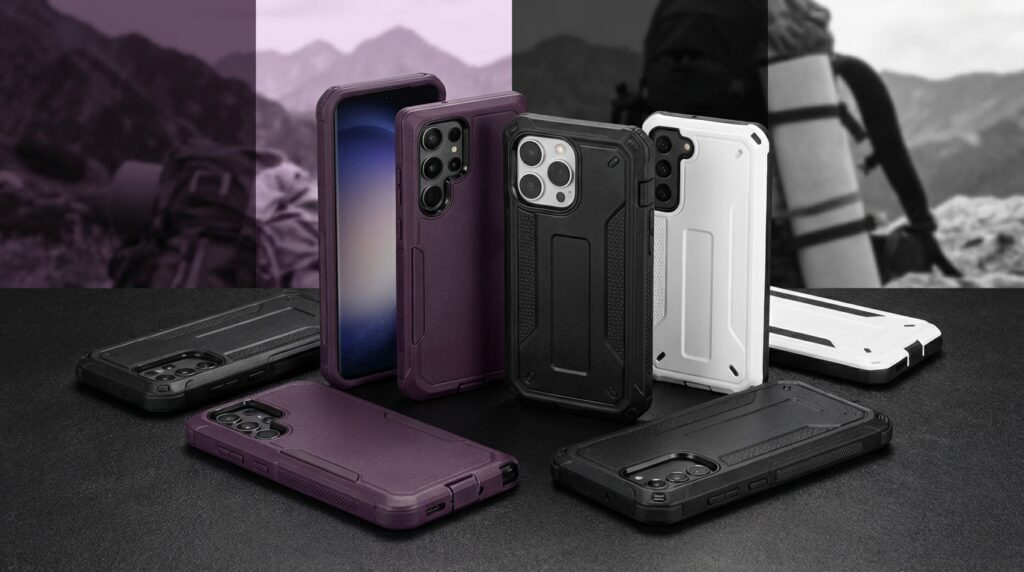
“The hollow clack of a Nokia 3310 hitting the kitchen tiles, bouncing once, twice, like it was made of rubber instead of plastic and indestructible dreams.”
You remember that kind of confidence, right? That blind belief that your phone could fall off a second‑floor balcony, skid across a parking lot, and still boot up Snake in under a second. Fast forward to the phone in your pocket now, with its triple camera bump, bright OLED, and a body made of glass pretending to be metal. One slip out of your hand in a parking garage, and suddenly your “daily driver” turns into “emergency data recovery project.”
That is where rugged cases step in. They exist because phones stopped being bricks and turned into investments. Thousand‑dollar slabs of silicon and glass with insurance policies and financing plans. Back then, your biggest worry was swapping a scratched faceplate. Now you think twice before even sliding your phone across a table.
Today, rugged cases are not just about making your phone look like it survived a sci‑fi movie. They are about balancing two things: real‑world protection and all the tech we now expect to use every day. Wireless charging. MagSafe. UWB tags. NFC payments. Camera bumps the size of 2005 point‑and‑shoots. The case can not just be “tough.” It has to be tough without turning your flagship into a plastic brick that ruins everything it is good at.
“Retro Specs: Nokia 3310, 2000. Weight: 133 g. Screen: 84 x 48 pixels. Case: Your pocket. Drop rating: ‘Just throw it, it is fine.'”
Back in 2005, “rugged” usually meant the phone itself. Think Nokia 5210 with the rubber shell, or the Sony Ericsson phones with dust caps over every port. If you did use a case, it was probably one of those belt‑clip holsters that squeaked when you sat down, or a clear TPU cover that yellowed in three weeks.
Now, in 2025, rugged cases are small engineering projects. Multi‑layer shells, impact dispersion corners, built‑in mag rings, raised bezels tuned to camera layouts, and drop tests that sound like stunt work. The tech around them advanced too. Screens got thinner. Bezels shrank. Frames went from plastic to metal to glass sandwiches. That pushed case makers to get smarter.
You can feel it when you pick one up. The way a good rugged case adds weight, but not too much. The way the buttons still have that satisfying click instead of turning into mush. The slight ridge around the camera you only notice when your phone lands face down on a restaurant table and survives that one tiny grain of salt.
Maybe it is nostalgia talking, but I still judge modern rugged cases through the mental filter of that old 3310 bounce test. If I can not imagine my phone taking a bad fall and coming away with nothing but a smudge, the case is not doing its job. The twist now is that we also expect these cases to keep wireless charging fast, pockets clean of dust, and phones looking something close to flagship, not budget walkie‑talkie.
Why Rugged Cases Matter More in 2025
Smartphones got smarter, but they also became more fragile in real‑world use. Ceramic shields, gorilla glass, fancy alloys: they all help with small drops and scratches. Then you see a phone slip from knee height, hit the corner on concrete, and the whole front looks like a cracked car windshield.
Here is why rugged cases moved from “nice extra” to “protect your investment” in 2025:
Phones Cost More, and So Does Repair
In 2005, if you shattered a flip phone screen, you could often replace the front housing from a mall kiosk for not much money. Now, that front glass is fused to a high‑refresh OLED with curved edges, weird adhesives, and under‑screen sensors.
Front glass repair on a current flagship can cost as much as an entire mid‑range phone. Camera glass replacement is not far behind. Even if you have carrier insurance, you are still looking at deductibles, time without your device, setup headaches, and sometimes re‑provisioning eSIMs.
The math is harsh. A good rugged case plus a screen protector is usually cheaper than one repair. If you keep your phone for three or four years, that upfront cost spreads out nicely.
More Glass, Bigger Cameras, Higher Risk
Remember those tiny VGA sensors on early camera phones? Now we have:
– Large camera bumps that stick out.
– Multiple lenses with big glass elements.
– Sensors that need clean, scratch‑free surfaces.
Every millimeter of protruding camera makes your phone wobble on a table and increases the risk that the first thing meeting the ground in a fall is the lens ring. Rugged cases focus heavily on that area now: raised camera housings, reinforced rings, and sometimes even sliding covers.
Then there are edges. Thin bezels look good, but they also leave very little buffer between display and impact. That is why you see rugged cases with chunky front lips and corner air gaps. It is not just “extra plastic.” It is a controlled crumple zone, like cars use around passenger cabins.
Modern Use Cases Need Real Protection
We take phones where we used to take dedicated gear:
– Hiking and camping where you used to pack a Garmin.
– Job sites where someone used a rugged PDA or walkie.
– Cycling, mountain biking, skateboarding, skiing.
– Workshop and garage projects with metal shavings, dust, and oil.
And you still expect to pay with your phone, use GPS, record 4K video, and answer Slack. A rugged case lets a single device do all that without you wrapping it in bubble wrap every time you leave your desk.
“User Review from 2005: ‘Dropped my Sony Ericsson in a puddle, took the battery out, dried it on a radiator, works fine. Try that with your touchscreen brick.'”
The phones changed. The world around them did not. Gravity still wins. Pavement is still hard. Water still seeps into small gaps. That is why the rugged case market in 2025 is not a niche for construction workers anymore; it is for anyone who walks down a staircase with their phone in hand and a backpack that keeps sliding off one shoulder.
Then vs Now: How Protection Evolved
The contrast between old hardware and current flagships shows why rugged cases exist at all.
| Spec | Nokia 3310 (2000) | iPhone 17 Pro (2025, example) |
|---|---|---|
| Weight | 133 g | ~200 g |
| Body material | Thick plastic shell | Glass front/back, metal frame |
| Screen size | 1.5″ monochrome | 6.3″ OLED, high refresh |
| Screen protection | Recessed, small window | Edge‑to‑edge glass |
| Camera | None | Triple rear camera bump |
| Repair cost (screen) | Buy a new phone | High, often 30-50% of device cost |
| Typical case | Rare, sometimes a clip holster | Rugged case with drop rating, MagSafe, raised bezels |
| Drop risk | Small, brick‑like body, grippy | Big, slippery glass, heavy |
The 3310 was nearly self‑protected. Small, chunky, and surrounded by shock‑absorbing plastic. When it hit the ground, energy spread across the shell. Your hand also wrapped most of the device; less surface exposed.
Now you are holding a slim slab, more screen than anything else, with slippery coatings designed to slide into pockets. Drop that at the wrong angle, and you transfer impact straight to the display assembly. The protective part of the phone shifted from the body to the case.
What Makes a Case “Rugged” in 2025
Not every thick case deserves the rugged label. Some are just big. A real rugged case in 2025 tends to share a few design traits.
Multi‑Layer Construction
Most serious rugged cases use at least two layers:
– A softer inner layer (TPU, silicone blend) to absorb shock.
– A rigid outer shell (polycarbonate, sometimes reinforced) to spread impact.
Some add air pockets at the corners, metal inserts around buttons, or a separate frame that clicks over the main body. That layered structure is what lets a case convert a sharp impact at one point into a slower, spread‑out shock the phone can survive.
Drop Ratings That Mean Something
You see ratings like “12‑foot drop tested” or MIL‑STD‑810H references. The standard people talk about, MIL‑STD‑810, started as a military testing guide for environmental stress. Phone cases mostly borrow the drop‑test parts: repeated drops from certain heights and angles onto hard surfaces.
The trick is this: many brands quote the standard, but run their own internal versions of it. Labs, rigs, and test setups can vary. As a rule of thumb:
– Look for consistent messaging across product lines, not random inflated numbers.
– Look for actual test method descriptions, not just buzzwords.
– Higher drop height claims usually come with thicker corners and chunkier lips. If the case looks slim but promises wild numbers, be skeptical.
Raised Lips and Camera Protection
You know that moment when your phone slides across a table, screen first, with a little grit underneath? That is where raised edges pay off.
– Around the screen: A few millimeters of lip that keep the glass off flat surfaces.
– Around cameras: A raised ring or frame around the whole camera island.
In 2025, the camera area is almost its own product category. Some rugged cases add metal camera rings. Some have separate glass or plastic covers. Some add small ribs to stop the phone wobbling and spinning when it is on a desk.
Button Feel and Port Protection
The best rugged cases thread a very thin line:
– Buttons should still click, not turn stiff or squishy.
– Ports should be accessible, even with larger cables.
– Some lines add port covers for dust and sand.
If you work on a job site, ride off‑road, or do woodwork, those port covers help keep fine dust out of your speakers and microphones. For casual city use, they can be overkill and slightly annoying. This is where personal use patterns matter more than any spec sheet guess.
Compatibility with Wireless and MagSafe‑Style Systems
By 2025, wireless charging and magnetic accessory systems are not fringe features anymore. Rugged cases need to:
– Have the correct magnets if they support MagSafe or similar ecosystems.
– Keep enough backplate thickness for impact protection but not so thick that charging slows down or accessories fall off.
Some brands build metal plates or rings inside the case for car mounts. Bad designs can interfere with NFC payments or wireless charging. Good ones balance thickness, magnet placement, and antenna clearances.
This is one area where the cheapest rugged cases tend to cut corners. They bulk up the back, then wireless charging becomes flaky or MagSafe wallets drop off when you shove your phone into your jeans.
Best Rugged Case Types for 2025 Use Cases
There is no single “best rugged case” for everyone. There are archetypes that match how you live with your phone.
Daily Carry: Slim Rugged Cases
These are for people who want strong protection without turning their phone into a mini tablet. Think:
– Two‑layer designs with air pockets at corners.
– Drop ratings around 10-12 feet.
– Raised bezels, but not huge.
– MagSafe or similar magnet systems built in.
The focus here: protection against everyday drops. Kitchen counter, car door, pocket slips, subway mishaps. If you are not taking your phone into harsh environments but you are not gentle with it either, this is the sweet spot.
They are heavier and chunkier than “barely there” shells, but still pocketable. In hand, they have grip ribs or textured backs to reduce those slow‑motion “phone sliding out of my palm” events.
Field and Job Use: Heavy‑Duty Rugged Cases
If your phone lives:
– On construction sites
– In warehouses
– In trucks and tractors
– On ladders and scaffolding
You want something more extreme:
– Thick sidewalls and corners.
– Front frames or built‑in screen protectors.
– Port covers for dust, oils, and debris.
– Holster options for belt carry.
– Higher drop claims, and more visible reinforcement.
You will trade slimness and sometimes wireless compatibility here. Some heavy‑duty models still support wireless charging, but the extra layers can reduce speed or alignment tolerance. If you use car vent chargers or desk stands a lot, this is a detail worth checking before you commit.
Outdoor and Adventure: Rugged Plus Grip
For hikers, cyclists, skiers, and climbers, grip and attachment points matter as much as pure impact resistance.
Good features for that group:
– Lanyard or wrist strap holes.
– Extra‑grippy backs and sides.
– Non‑slippery coatings that still fit in pockets.
– Water‑friendly materials that do not soak or warp.
Your risk profile shifts outdoors. You are less likely to drop onto tile, more likely to fall onto rock, dirt, or gravel. Sometimes the phone will slide, tumble, or bounce. A rugged case with hard outer plastic can slide on rock; a rubberized case might grip and stop after a short skid. Both have pros and cons depending on what is around the impact zone.
“Retro Specs: Sony Ericsson K750i, 2005. 262K color screen. 2 MP camera. Mini‑joystick that died in pockets full of dust. ‘Rugged’ mod: keeping it in an old sock in your backpack.”
Compare that to a 2025 flagship with a proper rugged case, clipped to your backpack strap with a carabiner. You can pull it off, check offline maps, take a high‑res photo of the trail, and clip it back without worrying about that one rock waiting to meet your bare screen.
Materials That Matter in Rugged Cases
The way a case feels in hand is not just style. It is a side‑effect of the materials and structure that protect your phone.
TPU, Rubber, and Silicone Blends
Most shock absorption comes from:
– TPU (thermoplastic polyurethane): flexible, tough, and less sticky than pure silicone.
– Rubber or silicone blends: softer, more grippy, often used for corner pads or outer ribs.
These materials:
– Deform on impact, then spring back.
– Help prevent micro‑cracks in your phone’s frame.
– Kill small vibrations and bumps.
The downside: some blends attract lint and pocket dust. A good rugged design uses textured zones for grip, with smoother panels where your phone slides in and out of pockets.
Polycarbonate and Hard Shells
The rigid part of a rugged case is usually:
– Polycarbonate: lightweight, impact resistant, holds shape.
– Sometimes reinforced with glass fibers or special resins.
This shell:
– Spreads impact forces across a larger area.
– Protects against sharper objects.
– Gives structure to clips, kickstands, and holsters.
You will feel this as the “exoskeleton” of the case. Often, it is where you see color accents, patterns, and brand logos.
Metal Inserts and Accents
Some 2025 rugged cases use:
– Aluminum button covers for a sharper click.
– Metal camera rings for extra scratch protection.
– Magnetic metal plates for mounts.
Metal is strong, but it can interfere with wireless signals if placed badly. Good designs keep metal away from antenna zones and wireless charging coils. When you see a rugged case with huge solid metal backs, start thinking: NFC, charging, and reception might suffer.
Protecting Your Investment: Beyond Just Drops
Rugged cases help with more than screen‑shattering falls.
Grip and Drop Prevention
Protection starts before the fall. A naked glass phone can feel like a bar of soap. A rugged case:
– Adds bulk, which can improve control.
– Adds texture and patterns that lock to your fingers.
– Reduces sliding on angled surfaces.
There is a balance. Too grippy, and the phone drags on pocket fabric, feels sticky, and collects lint. Too smooth, and you are back to “soap bar” territory. Some of the best 2025 models use micro‑texture: you only feel it when you press, but it bites into your skin just enough.
Scratch and Scuff Resistance
That rear glass finish you love? Keys and sand love it too.
– Rugged cases take those daily micro‑scratches.
– The raised bezels protect your screen and camera from tables, floors, and bar tops.
– Annoying cosmetic wear stays on a replaceable accessory, not on your phone body.
This matters for resale. When you sell or trade your phone after two or three years, a clean body and camera glass can increase what you get back.
Weather and Environment
Many phones in 2025 come with some form of IP rating for water and dust, but real use pushes those limits.
– Port covers on rugged cases help keep fine dust and metal shavings from getting deep into ports.
– Raised speakers and mic cutouts reduce the chance of mud packing straight into them.
– Some cases even improve water handling by preventing droplets from pressing buttons when it rains.
This is not the same thing as waterproofing your phone. That still relies on the seals inside the device. The case’s job is to reduce how much junk reaches those seals in the first place.
Balancing Protection and Usability
The real challenge with rugged cases in 2025 is not just protection. It is whether you still like using your phone with one on.
Pocketability and Weight
Add a rugged case to a modern Pro‑sized phone, and you can push past:
– 230-260 g weight.
– Noticeable thickness gains, especially around the camera.
For many people, that is still fine. For smaller hands or tight jeans, it can become annoying. Some people end up taking their cases off at home or in the office, which creates risk spikes. The phone is most vulnerable precisely when you are relaxed and not thinking about it.
If you are already using big phones, consider:
– Slightly slimmer rugged lines for daily carry.
– Heavier “field” cases that you swap on for travel, work, or weekend trips.
Think of it like swapping tires on a car for winter. One phone, different “shoes” depending on conditions.
Screen Protectors and Case Fit
In 2025, many users pair rugged cases with:
– Tempered glass screen protectors.
– Film or hydrogel protectors for curved displays.
The problem: some cases have lips that push into certain protectors and cause lift or bubbling. Some screen protectors are so edge‑to‑edge that rugged cases simply do not fit over them.
Practical angle:
– Look for brands that sell case + screen bundles tuned for each other.
– If you buy separately, check for comments or notes about “case compatibility” on the screen protector side.
The goal is a tight fit that locks your phone in place without stressing the glass protector.
MagSafe and Accessory Ecosystems
In 2025, more Android phones copy the MagSafe concept, shipping with behind‑the‑glass rings or third‑party magnet systems. Rugged cases either:
– Add their own magnet arrays for strong alignment.
– Stay neutral and focus on raw protection.
If you rely on things like:
– Magnetic wallets
– Car mounts
– Snap‑on battery packs
Then magnet strength and placement matter. Thick rugged backs weaken magnet pull. Better brands solve this with tuned magnet arrays and thinner center zones over coils.
You want a case that:
– Still locks firmly to chargers and stands.
– Does not spin or slide easily when bumped.
– Does not overheat the phone by insulating it too much during charging.
Longevity: How Long Should a Rugged Case Last?
Rugged cases take hits so your phone does not have to. That means you should expect them to age.
Signs Your Case Needs Replacing
Over time you might see:
– Deep gouges or cracks in the hard shell.
– Stretched or loose corner edges that pull away from the phone.
– Yellowing or hardening of soft materials.
– Warped lips that no longer sit flat.
These are your cues. Those knocks that left marks in the case would have gone into your phone. At some point, the case loses its ability to handle future hits. Think of it like a helmet; after certain impacts, it does its job once and you retire it.
Cleaning and Maintenance
Cases trap dust and fine grit between them and your phone. If you never take the case off, those tiny particles can:
– Rub light marks into the phone’s sides.
– Affect wireless performance if they block vents or microphones.
Simple routine:
– Every few weeks, pop the case off.
– Wipe the inside with a microfiber cloth.
– Clean your phone edges and camera island.
– Check for loose areas or damage.
Takes a minute, can save you from weird “muffled mic” issues and creeping cosmetic wear.
Why Rugged Cases in 2025 Feel Different From 2015
Back around 2015, rugged cases often felt like:
– Bulky, harsh rectangles.
– Thick plastic with sharp seams.
– Button covers that turned tap‑to‑wake into “press hard and hope.”
In 2025, even rugged models evolved. Better CAD tools, more precise mold work, and stronger materials gave case makers room to shape protection more intelligently.
Modern designs use:
– Scalloped sides that match finger curves.
– Channel‑like structures inside corners that flex on impact.
– Buttons that rest on tuned hinges, not just tall lumps of rubber.
You notice it the first time you snap a good rugged case on your phone. The click as it seats around the frame. The way the camera lip lines up perfectly with each lens. The subtle grip under your index finger when you hold it in landscape for video.
“User Review from 2005: ‘Bought a clear case for my Motorola V3. It squeaks, yellows, and makes it harder to flip one‑handed. Took it off after 3 days. Lesson learned.'”
Back then, cases were often afterthought accessories. Now, with phones costing as much as laptops, rugged cases are almost part of the purchase decision itself. People factor them into budgets, check compatibility before buying their phone, and treat them like part of the tech stack, not just decoration.
The last shift is mental. In 2005, your phone felt like an appliance. Now, in 2025, it feels closer to a pocket computer, camera, and key to your digital life. That changes how you think about risk.
You are not just protecting glass. You are protecting access to banking, 2FA apps, smart home controls, family photos, and your work life. A fall on concrete is no longer just a “cracked phone” moment. It is a potential interruption to all of that.
That is why rugged cases stopped being something only climbers and contractors cared about. They became normal, everyday armor for the device most people use more than any other.
