

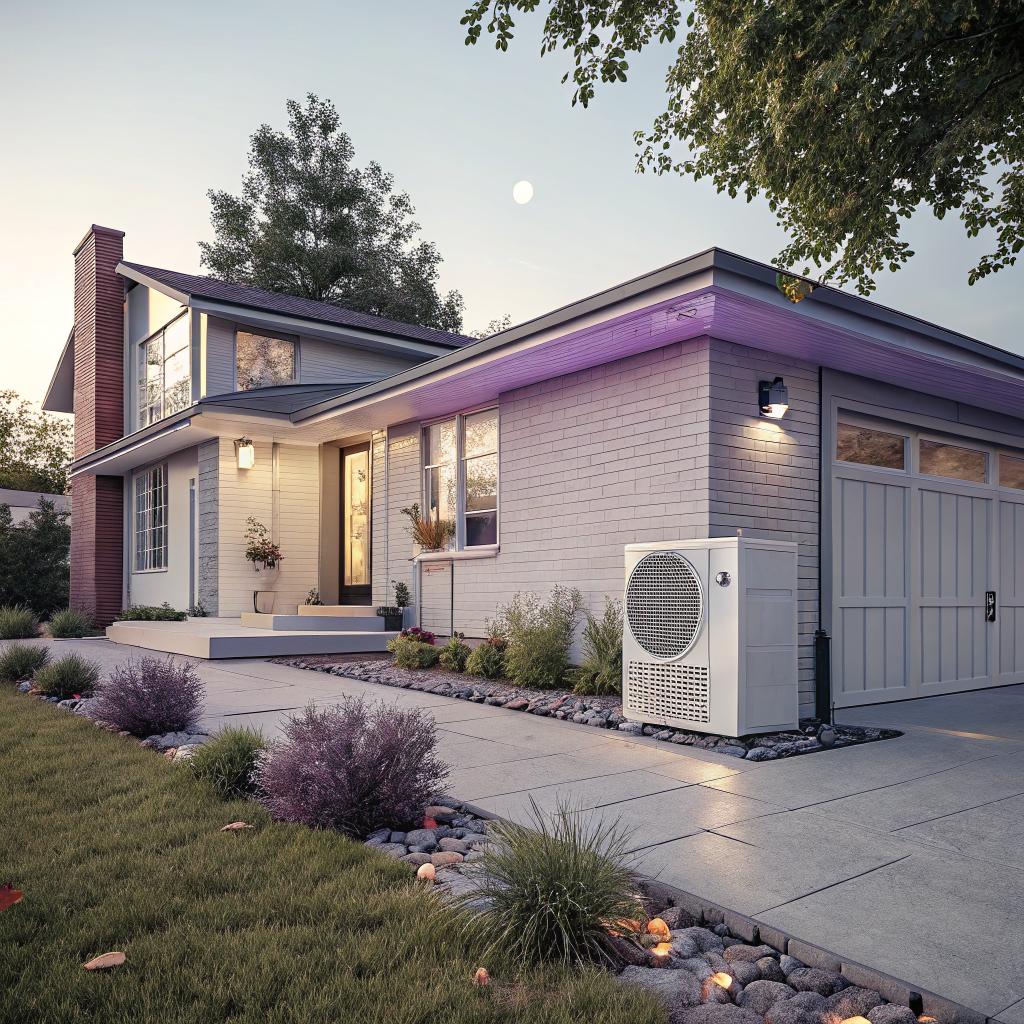
What if I told you the same kind of tech that once quietly powered early electric cars and 1970s Japanese homes is now one of the smartest ways to heat and cool a retro style house in Denver, without giving up that analog look you like?
The short answer: you can keep your mid century lines, your chrome, your wood paneling, and still have a quiet, all electric comfort system if you pair a well planned heat pump with local experts who actually understand older homes. That usually means working with focused providers like Denver Heat Pump Services, planning ahead for insulation and electrical, and accepting that the best setup sometimes hides in walls, soffits, or old chases rather than sitting center stage like a shiny vintage thermostat.
Why a “retro future” home and a heat pump fit surprisingly well
A lot of people picture heat pumps as this very modern thing. Touchscreen thermostats, inverter compressors, variable speed fans. And yes, that is all true.
But the idea behind a heat pump is actually old. Move heat instead of making it from scratch. Pull it from the air outside, raise or lower the temperature, and move it inside. Or reverse the flow in summer.
There is something very retro about that. It feels like the kind of quiet engineering an early NASA engineer would sketch on paper.
If you like nostalgia, chances are you like objects that feel designed, not just thrown into an app. A good heat pump setup matches that idea. It works in the background, it is efficient, and it does not shout for attention. You do not have big vents blasting air like a plane engine. When everything is sized well, it just hums.
If you care about the look of your home as much as the comfort, a heat pump trades big, hot, visible hardware for smaller, quieter pieces that can hide in the architecture.
So in a strange way, a heat pump can feel closer to the quiet optimism of 1960s tech than a rumbling gas furnace from the 1990s.
But what about Denver’s cold winters?
This is the first objection. Fair. Denver has dry air, winter nights that drop fast, and the occasional deep cold snap.
Older heat pumps struggled with that. Many people still remember the first generation gear that lost capacity in the cold and blew cool air when you needed heat most.
Modern cold climate units are different. Many can pull useful heat from outdoor air down near 0°F, sometimes lower. They do not break physics, but they get closer to the edge of it with better compressors, smarter defrost cycles, and better refrigerants.
Are they perfect for every house? No. That is where planning comes in. A retro future home is often a mix of old walls and new windows, maybe some insulation work, perhaps an updated panel. You do not just drop a heat pump into that mix and walk away.
You look at:
- How much air leaks out of the home
- The real heat load on a typical January night
- How much heat you want if the temp drops below normal design conditions
- What backup or hybrid setup makes sense, if any
The short version is: heat pumps work in Denver, even with cold snaps, but you need the right sizing and, sometimes, a backup plan that fits your style and budget.
Designing a retro future home: comfort as part of the aesthetic
You are probably not just chasing comfort. You also care about how the house feels as an object. The way the light hits a wood cabinet. The sound of the space. That “time traveled but still modern” vibe.
Heat pumps fit that better than people think, especially in Denver where you can use dry air and sunny winter days to your advantage.
Here are a few ways a heat pump can match that retro future mix of old and new.
Keeping the look: hiding the hardware
You do not have to put a big ceiling cassette in the middle of your living room. There are low profile options that tuck into soffits, closets, or even under windows if you plan it that way.
If you plan the comfort system at the same time as you plan the visual details, you can almost erase the equipment from view and keep the vibe focused where you want it.
Some choices that work well for older or design heavy homes:
- Ducted mini splits that use short runs of small ducts behind walls or in dropped ceilings
- Floor consoles that sit low and can echo the shape of vintage radiators
- High wall units in secondary spaces where appearance matters less
- Outdoor units set around the corner, screened with slats or landscaping
If you like the idea of visible tech, you can also lean into it. A slim indoor unit can read as a piece of industrial hardware, almost like the hi-fi gear from the 1970s. Some people even match wall colors or surround it with simple millwork to make it feel intentional.
The sound of the house matters
Old forced air systems can be loud. Those big gusts when the burner kicks on. The click of the relay. It is nostalgic, but not always pleasant.
Heat pumps, especially variable speed ones, tend to run longer at low speed. So instead of loud bursts you get a more steady, gentle airflow. In many cases you only hear a soft fan sound.
For a retro future home, that change in background noise is a big deal. Your turntable, your projector, or even just quiet reading time benefits from a calm sound floor.
Some people are surprised the first week. They expect the room to get hot, then cool, then hot again. With a heat pump, the swings are smaller. The comfort is in the stability, not the drama.
Electric-only living and the “future past” feeling
Moving off gas, or at least reducing it, gives the home a certain future-leaning character. Not in a flashy way. Just in the knowledge that every system in the house feels like part of a common electric backbone.
If you grew up thinking the future meant silent electric cars, induction cooktops, and clean lines, an all electric heat pump fits that mental picture. Even if you still keep a gas stove or a small gas backup, you are shifting the center of gravity of the house toward electricity.
For a lot of people, the appeal is not just lower emissions or lower bills, but the feeling that the home is quietly prepared for the next few decades of energy change.
How Denver’s climate shapes your heat pump choices
Denver is a bit odd. It is not the frozen north, and it is not a mild coastal city either. You get:
- Large swings between daytime and nighttime temperatures
- Strong sun, even in winter
- Low humidity most of the year
- Occasional intense cold snaps
That mix affects what kind of heat pump system works best and how you should think about performance, not just the nameplate specs.
Dry air and comfort perception
Because the air is dry, people often feel cooler at the same thermostat setting. Moisture on the skin evaporates faster. That can make a 68°F room feel more like 65°F.
A heat pump lets you adjust gently. Instead of setting big jumps in temperature, you nudge the setpoint and let the system hold that setpoint more steadily. You can even use humidity control in some systems, which changes comfort without always shifting the air temperature much.
An odd side effect: many people with heat pumps in Denver end up choosing slightly lower winter setpoints than they did with gas, once they learn they prefer a stable, slightly cooler room over big swings.
Cold snaps and backup heat
You do not have to choose between “pure heat pump” and “all gas.” There is a middle path: hybrid or dual fuel setups. And there are also pure electric systems that use smart controls and a backup electric heater only when needed.
A simple comparison helps. This is a rough example, not a quote.
| Setup type | How it works in Denver winter | Pros | Tradeoffs |
|---|---|---|---|
| Cold climate heat pump only | Handles most days, may use built-in electric heat in deep cold | All electric, simple utility bill, fewer moving parts | Needs good insulation and air sealing, may cost more upfront |
| Hybrid: heat pump + gas furnace | Heat pump runs until a set outdoor temperature, gas helps below that | Very reliable comfort in extreme cold, flexible fuel choice | Two systems to maintain, more complex controls |
| Ductless multi-zone | Covers areas room by room, performance depends on model | Great for additions or partial retrofits, no big ducts | Multiple indoor units on walls, more cleaning of filters |
You might like the simplicity of an all electric setup, but feel nervous about rare deep cold events. Or you might actually like the idea of keeping a small, well maintained gas unit as a sort of “analog backup” behind the modern system.
There is no single answer that fits every retro future house. You balance comfort, aesthetics, budget, and your feelings about fuel types.
Working with a heat pump service company in Denver: what actually matters
If there is one part of this that is less glamorous, it is this part. The tech is cool. The photos of sleek indoor units are cool. The actual experience you have in January often comes down to who sized it, who installed it, and who you call when something feels off.
So how do you pick a heat pump company for a home where you care about both comfort and design?
Ask for real load calculations, not just rules of thumb
For a retro future home, rule-of-thumb sizing is the enemy. Old houses can be leaky or surprisingly tight, depending on how many projects they have seen. Add modern windows, extra insulation in the attic, or new siding and the guesses become even less reliable.
You want a company that will do a manual calculation for heat loss and gain, based on your exact house. That might include:
- Measuring window areas and directions
- Asking about wall construction and insulation levels
- Looking at attic and basement conditions
- Checking duct layout and leakage if ducts exist
If someone looks around for two minutes and says “you will probably need a 3 ton heat pump,” that is a bad sign. Over sizing is common, and with heat pumps it means shorter run times, more cycling, and less quiet comfort.
Discuss how the system will look, not just how it will run
Many HVAC conversations ignore design. That is a mistake if you actually care about your space.
You can and should ask questions like:
- “Where will the indoor unit sit in this room and what will I see when I walk in?”
- “Can we run ducts through this closet or soffit instead of dropping the ceiling in the hall?”
- “How loud will this be near the listening area or the workspace?”
- “What is your plan for the outdoor unit so it does not dominate the patio?”
Good companies will bring options, even if some add cost or involve more careful routing. Sometimes they will say “this part will be visible.” That is fine. The point is you are deciding together instead of being surprised.
Maintenance in a dust-and-sun climate
Denver has dust. Pollen. Smoke some seasons. A heat pump has coils and fans that want to stay clean.
You do not need to obsess. You do need a simple plan:
- Clean or replace filters on the schedule the installer suggests
- Keep outdoor units clear of debris and plants
- Have a pro check refrigerant levels and electrical connections on a regular rhythm
If a company can explain a simple maintenance path in plain language, you are more likely to actually follow it. That does more for comfort and longevity than any fancy marketing claim.
Retrofitting older Denver homes: real constraints and smart workarounds
Retro future homes are rarely blank slates. You might have plaster walls, low crawl spaces, awkward roof lines, maybe some previous “creative” renovations.
So when someone says “heat pumps are easy, you just hang a few units,” they are skipping the hard part. The hard part is fitting new equipment into a body that was not built for it.
Preserving original details while upgrading comfort
Maybe you have coved ceilings, original wood trim, or a brick wall you like. Cutting into that for ducts can feel wrong.
Some strategies that often work better:
- Use existing chases from old chimneys or plumbing runs where possible
- Run ducts or refrigerant lines in closets, then patch and paint
- Use small-diameter duct systems that can snake through tighter spaces
- Combine one or two ductless units with a small ducted zone where it shows less
There is usually a way to keep the “bones” of the house intact while still getting quieter, more precise comfort.
Electrical panel and wiring realities
Many older Denver homes still have 100 amp or even smaller service. Heat pumps are more electric load. If you also want an induction cooktop, EV charging, and maybe some workshop tools, the math can get tight.
A good heat pump company will at least look at:
- Your current panel size and breaker availability
- Major electric loads that could run at the same time
- Options for soft start and load management, where appropriate
Sometimes you do need a panel upgrade. Other times, careful planning avoids it. This is where your “future home” vision helps. If you know you want an EV charger in three years, you mention it now, not later.
Oddly, this is also where nostalgia plays a role. Some people actually like the clean look of a new panel and wiring runs done neatly, like a tidy mid century lab. It feels like a respectful update rather than a patch.
Comfort, energy use, and the numbers behind your bills
Let us talk about money and energy, without hype. You can love design and still care quite a lot about your utility bills.
Are heat pumps cheaper to run in Denver?
Often they are, sometimes they are not. It depends on:
- The cost of electricity versus gas from your utility
- How tight your home is
- How much cooling you need in summer
- How low winter temperatures go and for how long
One simple way to think about it: a good heat pump can deliver 2 to 3 units of heat energy for every 1 unit of electric energy you pay for, in mild to moderate cold conditions. A gas furnace is closer to 0.9 to 0.98 units of heat per unit of gas energy.
That ratio drops in the deep cold, but for most of Denver’s winter you are still getting more heat per unit of electricity than a space heater or baseboard would give.
If your house is drafty and poorly insulated, both systems will cost more. A leaky retro house does not magically become cheap with any equipment. A small investment in air sealing often pays faster than buying a bigger heat pump.
If your budget is tight, spending part of it on sealing and insulation and part on a right-sized heat pump usually beats spending it all on a large heat pump to fight a leaky shell.
Summer comfort and shoulder seasons
People often focus on winter, but Denver summers can be hot with strong sun and large day-night swings.
Heat pumps handle cooling and heating in one unit. The better models adjust their output so they do not constantly overshoot the setpoint. That matters on those days when it is 90°F at 3 pm and 60°F by midnight.
You may find you run the system gently most evenings instead of blasting AC for a few hours. The house keeps a more even temperature, which is good for comfort and for the state of your furniture, instruments, and other things you care about.
Blending nostalgia with tech: small touches that make it feel right
There is a strange tension here. You want modern comfort and control, but maybe you also like the feel of a vintage thermostat or the look of an analog gauge.
You can mix both, if you are a bit hands-on.
Thermostat choices that fit the vibe
You do not have to use a glossy, app-driven thermostat if you do not want to. You can pair a heat pump with:
- Simple digital thermostats with a clean, almost vintage look
- Hidden smart controls in a closet, with a traditional looking dummy plate in the main room
- Wall controls placed away from feature walls, so they do not fight your art or shelves
If you do like tech, you can still keep it low key. A smart thermostat that mirrors data to your phone lets you leave the wall unit simple. That can help maintain the retro feel while still giving you fine control.
Visible components as design objects
Sometimes hiding everything is boring. A few homeowners actually highlight parts of the system.
For example:
- Painting drywall around a wall cassette in a contrasting color so it reads like a deliberate panel
- Framing an access panel for a duct chase with clean trim so it looks like part of the architecture
- Using cable trays for visible refrigerant lines in a basement studio for that “exposed tech” look
This is where the “retro future” phrase actually helps. Old visions of the future did not hide their tech. They presented it. If you like that, you can work with your installer to make at least some parts of the system visually honest instead of pretending they do not exist.
Common doubts and honest answers
At this point you might still have a few nagging questions. Or worries. That is normal, and ignoring them would be dishonest. So here are a few that tend to come up around Denver heat pump projects, especially for design minded homes.
Will a heat pump actually keep my older home warm in a cold snap?
If the house is extremely leaky and badly insulated, any system will struggle. In that case, a heat pump will run hard and might need backup heat more often.
If the house has decent windows, some insulation, and air sealing, a good cold climate heat pump sized correctly can absolutely keep you warm. On very rare nights, backup heat may kick in. You might pay a bit more for those hours, but the overall season cost can still be fair.
So the honest answer is: for most retro homes that have had some upgrades, yes. For untouched, drafty homes, not without envelope work or a hybrid setup.
Is it really worth the hassle of changing from my gas furnace?
Sometimes yes, sometimes no.
It is worth it if:
- Your current system is near the end of its life anyway
- You already want better cooling or zoning, not just heat
- You care about moving most of your home energy use to electricity
- You like the idea of steadier, quieter comfort
It might not be worth it if:
- Your gas furnace is fairly new and reliable
- You barely use AC and your bills are low already
- You have no plans for other electric upgrades and your panel is very limited
In those cases, you could plan ahead, improve the envelope, and be ready for a future switch instead of rushing now.
Can a heat pump fit my idea of a “nostalgia, evolution, technology” home?
Yes, if you treat it as part of the design, not just a piece of equipment.
You respect the old parts of the house, you upgrade the comfort intelligently, and you let the visible parts of the system either blend or speak, but not just sit there awkwardly.
If you do that, the house feels like something that remembers where it came from, but is quietly wired for the future.
And maybe that raises one last question you can answer for yourself:
What piece of your home do you want to feel completely modern next winter, and what piece do you want to stay pleasantly stuck in time?
