

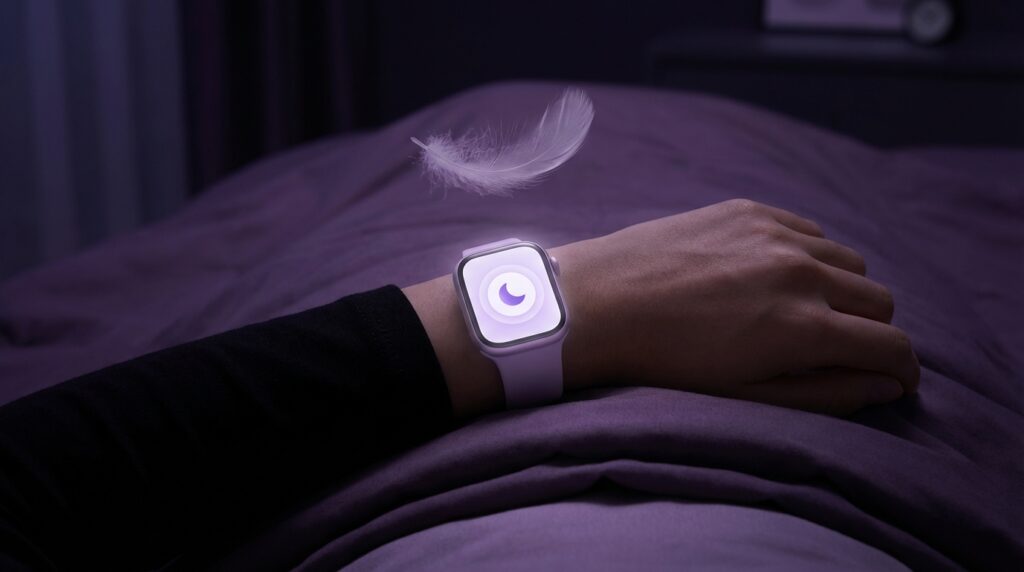
“The faint buzz on your wrist at 6:30 a.m., the blue-tinted screen glowing in the dark, and that tiny cartoon moon telling you that you ‘slept 5 hours 12 minutes’ like it knew you better than your own pillow.”
You remember that glow, right? It felt like magic the first time a gadget tried to rate your sleep. Back then, it was probably a chunky Fitbit with a rubbery strap and a screen that looked like it came off a 2004 microwave display. Now you are looking at featherlight smartwatches that promise full sleep cycles, HRV graphs, SpO2, and even “readiness scores” in a package that weighs less than that metal Casio you wore to high school.
That gap between the clunky early trackers and the barely-there smartwatches you can wear all night is exactly where things get interesting. Sleep tracking went from “guessing based on how much you moved” to “we tracked your pulse wave, skin temperature, and blood oxygen at 30-second intervals.” And the wild part is that all of that tech now fits into a watch so light you forget it is there until the alarm taps your wrist.
“Back in the day, the ‘sleep mode’ on a phone was just ‘turn off the ringer and hope your ringtone does not wake you from the other side of the room.’ Now your watch is literally plotting your REM cycles in real time.”
If you are hunting for the lightest smartwatches for sleep tracking, weight is not just a spec. It is comfort. Long-term comfort, like: can you leave this thing on for 8 hours every night for months without ripping it off at 3 a.m. because the strap edge is digging into your wrist? That is the real test.
So before we talk specific models, it helps to remember what “wearing tech to bed” used to mean, and why shaving a few grams off the hardware suddenly matters a lot more than whether your watch opens TikTok.
The weight problem that started in your pocket, not on your wrist
Picture this: you are lying in bed with a Nokia 3310 on the nightstand. That thing felt like a brick: 133 g of plastic and battery packed into a body that could probably crack tile if you dropped it just right. It did not track sleep. It tracked how many times you beat Snake.
Then smartphones showed up. Thinner, bigger screens, way more glass, more sensors. We traded durability and that dense “I could hammer a nail with this” feel for capacity and touch screens. Phones got smarter, but bedtime got worse: bright screens in your face, notifications at 1 a.m., blue light everywhere.
Wearables were the corrective move. Instead of your phone screaming at you from across the room, your wrist just taps you gently. Instead of you staring at brightness level 80, your watch passively tracks data while you are unconscious. The problem was that first-gen devices were not really built for sleep.
Large bezels, hard silicone straps, plastic backs that felt sticky when you got warm. You could feel the watch on your wrist every time you rolled over. Some people pushed through the discomfort because the graphs in the morning were addictive. Others gave up and left the watch on the nightstand, turning that fancy “24/7 tracking” into “11/7, minus evenings and nights.”
Weight became the silent feature that marketing pages barely talked about but your wrist cared about every single minute.
From chunky to featherlight: how watches went where phones could not
When you sit at a desk, an extra 10 or 15 grams on your wrist is not a big deal. When you are trying to sleep, those grams add up. The strap pulls just a bit more, the watch leaves a tiny imprint on your skin, or you wake up with that “I slept on my arm wrong” feeling.
Early Android Wear watches and some of the first full-color smartwatch models were thick and often above 50 g without the strap. Great for notifications and music control, not so great for wearing 8 hours under a blanket.
Then came the health-first wave: smaller batteries but at the right balance, plastic or aluminum bodies, low-power OLED screens, and sensors that did more with less energy. That let brands focus on comfort and all-night wear, especially around sleep.
You started to see devices in the mid 20-something gram range, even dropping below that for some models. And that is when the conversation shifted from “does it track sleep” to “can I forget I am wearing it,” which for sleep is the whole game.
“User Review from 2005: ‘My watch glows in the dark and has an alarm. Why would anyone need more than that?’ User Review from 2025: ‘If my watch does not give me a sleep score and a stress rating, did I even sleep?'”
Now we have tiny power-efficient chipsets, stacked sensor modules, and strap designs that focus on night comfort instead of only daytime sport. And for sleep tracking, you really want that sweet spot: very light, very stable on the wrist, and accurate enough to give data that feels believable.
Then vs now: how far we have come in weight and brains
To put this change in context, look at how far we have gone from classic bricks like the Nokia 3310 to ultra-capable wrist computers like the imaginary top-end iPhone-compatible smartwatch of today.
| Nokia 3310 (circa 2000) | iPhone 17 + modern sleep-focused smartwatch | |
|---|---|---|
| Device weight | 133 g (phone only) | ~190 g phone + ~25 g watch |
| Sleep tech | Alarm clock, basic ringtone | Sleep stages, HRV, SpO2, temperature, snore detection (via phone) |
| Display | 84 x 48 monochrome | OLED 120 Hz phone + low-power OLED/Memory-in-Pixel watch |
| Sensors | None for health | Accelerometer, gyroscope, optical heart rate, SpO2, skin temp, ambient light |
| Battery mindset | Charge once every few days, nobody cared about graphs | Charge cycles planned around sleep tracking and morning wear |
| Comfort at night | Phone on table, nothing on body | Watch worn all night, tuned for low weight and soft contact points |
You went from nothing on your wrist at night to a full health lab there. The only way people accept that trade is if the device feels light, breathable, and basically invisible during sleep.
What “lightest” really means for sleep tracking
When brands say “lightest,” they usually quote weight without strap, or with a specific strap material. That small detail can make a real difference.
For sleep tracking, three factors matter more than the marketing copy:
1. Watch body weight
2. Strap material and design
3. How stable the sensor stays on the underside of your wrist
A 21 g body with a thick heavy metal strap might feel worse than a 28 g body with a soft weave band. So when we talk about the lightest smartwatches for sleep tracking, we are looking at systems: body plus strap plus how it hugs your wrist at 3 a.m.
There is also the comfort vs accuracy trade. Loosening the strap to make it feel lighter can cause the sensor to misread your heart rate, especially when you move around. Tightening it too much can leave marks and cause that “get this thing off me” urge at night.
Sleep tracking wants snug but not tight, light but not so loose that it slides. Think of it like those early candybar phones: if you held them too tight for Snake, your hand got tired. Hold them just right, and you could play for an hour.
The lightest smartwatch tiers for sleep
I am going to break things down into three rough tiers based on typical weight ranges you will run into when you shop. I will keep this focused on real-world models and behaviors, not just lab numbers.
Tier 1: Featherweight sleep specialists (around 20 g to low 30 g)
These are the watches that you genuinely forget are on your wrist when you lie down. They often use plastic or lightweight polymer cases, super thin straps, and energy-sipping displays.
Common traits in this tier:
– Weight (with standard strap): roughly 22 g to 32 g
– Case materials: polymer, fiber-reinforced plastic, some aluminum
– Display: smaller, lower resolution compared to flagship general-purpose watches
– Battery life: several days to a week or more, depending on brand
You might see:
– Slim fitness bands rebranded as smartwatches
– Running watches that lean toward plastic shells
– Devices with smaller screens that look almost like upgraded 2010-era trackers
The main reason people love this tier for sleep is simple: comfort. You can sleep on your side, back, or on your arm without feeling like a chunk of metal is pressing into your skin.
Light watches also move less when you shift, which helps readings stay stable. A heavy watch can rock or twist slightly on motion, causing small gaps between sensor and skin.
The tradeoff: you might not get big fancy screens or the full suite of apps you would have on a heavier all-purpose smartwatch. But for pure sleep, featherweight is often the sweet spot.
Tier 2: Balanced all-day smartwatches (mid 30 g to high 40 g)
This tier is where most “normal” smartwatches live: Apple Watch-type devices, midrange Android watches, and many general-purpose wearables.
Traits:
– Weight (with strap): roughly mid 30 g to 45 g
– Case: aluminum, some stainless steel options
– Display: bright, high-resolution color touchscreens
– Battery: usually 1 to 4 days depending on brand and usage
These watches are not the lightest, but the weight can still be fine for sleep, especially if you pick the right strap.
You get richer features: app stores, voice assistant, NFC, phone calls, and more detailed visual sleep graphs on the watch itself, not just in the app.
For sleep-focused buyers, the trick is to pick the lightest versions in this tier: smaller case sizes, aluminum rather than steel, and fabric or silicone straps that vent heat.
You might feel these more on your wrist at night, especially if you are sensitive. For some people, this tier is the perfect compromise: light enough, but fully featured.
Tier 3: Heavy multi-sport / luxury smartwatches (50 g and up)
These watches bring the most hardware: big cases, metal bodies, extra screen protection, and large batteries. Great for long hikes, rough sports, or people who want a “real watch” feel.
Traits:
– Weight: 50 g and above, some climbing toward 70 g or more
– Case: stainless steel, titanium, sometimes with thick bezels
– Display: large color screens, sometimes always-on with high brightness
– Battery: longer for GPS-heavy use, but weight rises with capacity
For sleep tracking, this tier is tougher. Some users can sleep with them fine, especially if they are used to larger mechanical watches. Others feel them constantly. Side sleepers often end up pressing a sharp crown or button into the back of their hand or the mattress.
The tech inside is usually very strong for sleep data, but the physical experience is the limiting factor. People often end up using a ring or lighter band at night and the big watch during the day.
Retro specs vs now: what used to be “fine” versus what we expect today
“Retro Specs:
– Backlight: Indiglo-style glow
– Alarm: Single tone, no vibration
– Sleep features: Your own guess, based on how tired you felt at school.
Modern Sleep Specs:
– Optical HR sensor with multiple LEDs
– SpO2 sensor
– Accelerometer + gyroscope
– Vibration alarm that only your wrist feels.”
Weighted against that past, pretty much any modern smartwatch looks advanced. But when you narrow the field to “lightest for sleep,” a few behavior-level features jump out:
– Gentle vibration alarms vs loud sound alarms
– Night modes that dim the screen and stop wrist-raise activation
– Continuous overnight tracking at low energy draw
– Material choices that feel kind on skin over hours of contact
You are not just comparing grams. You are comparing how the watch behaves between midnight and 7 a.m.
Key features that matter once the watch is actually on at night
Display control
A bright OLED that fires up every time you roll over can feel heavier than the actual grams on the spec sheet. Your brain notices light even through your eyelids.
Look for:
– “Sleep mode” or “Bedtime mode” settings
– Options to disable wake-on-wrist-raise entirely while sleeping
– Low-brightness always-on screens that dim aggressively at night, or complete off
The lightest smartwatches for sleep usually offer some way to silence the screen. That reduces how much you are aware of the device.
Sensor comfort
Under the watch, you have the real work: the sensor cluster. That little raised bump of LEDs and lenses can feel like a pebble on your skin if the design is poor.
Better sleep-friendly watches usually:
– Smooth the edges around the sensor “island”
– Spread weight with gentle curves across a wider surface
– Use skin-friendly coatings so you do not get irritation where sweat lingers
When a brand cares about night wear, you can feel it. The back is less sharp, and the sensor shape disappears into your wrist after a while.
Strap quality and design
A 24 g case on a stiff, non-flexible strap can feel worse than a 30 g case on a soft, woven band.
Things that help for sleep:
– Fabric or nylon loops that can be micro-adjusted
– Soft silicone with enough holes or texture to avoid trapping heat
– No giant metal clasps on the underside that dig into your skin
Sometimes, the cheapest fix is to buy the lightest watch body you like and then swap to a third-party strap optimized for bed. You might lose a bit of style but gain a lot of comfort.
Accuracy vs comfort: the eternal wrist debate
Sleep tracking is always based on models. The watch never really “sees” your brain waves; it guesses your stages from movement, heart rate, sometimes HRV, oxygen saturation, and skin temperature.
Lighter watches can be more comfortable but sometimes carry smaller batteries. That might push brands to sample sensors less often to save power. Heavier watches with bigger batteries might sample more frequently and deliver more detailed graphs.
There is a balance:
– Too light plus too loose: comfort wins, tracking slips
– Too heavy plus very tight: tracking good, comfort loses
The sweet spot for most users:
– Light to mid-light watch that can be worn fairly snug without feeling like a clamp
– Enough battery to keep nightly tracking active without charging anxiety
If you find yourself constantly turning off features to make it through the night, you might have picked a watch that is doing more than you actually need for sleep.
Daily life vs night life: how weight feels over 24 hours
During the day, you want at least some presence. A watch that feels like nothing might feel insecure or cheap while you are awake. At night, the scale flips: the less aware you are of it, the better.
This is where smartwatches differ from the old-school digital watches of the 90s and early 2000s.
Those Casio and Timex models lived in a narrow weight band, often around 30 g to 45 g, with plastic bodies and simple LCDs. You could forget them at night because they were low profile and the only sensor they had was a tiny piezo buzzer for the alarm.
Modern smartwatches add:
– Larger glass screens
– Multi-sensor modules
– Bigger batteries
To keep the weight reasonable, brands trim:
– Bezel size
– Unnecessary metal
– Mechanical buttons in favor of touch controls in some cases
The end result is that a well-designed sleep-focused smartwatch can still feel close to that old digital watch in hand, even with way more going on inside.
Comparing old-school sleep “tracking” to modern wrist science
“User Review from 2005: ‘Slept 6 hours, I think.’
User Review from 2025: ‘My watch says 6 hours 18 minutes, 1 hour 12 in REM, HRV a bit low, readiness score 68. Kind of feels about right, maybe it was just nostalgia talking, but I miss not knowing sometimes.”
Back then, your sleep report was “am I tired or not.” Now you get charts.
The interesting part is how your brain handles that data. A slightly heavy watch that breaks your sleep once per night is worse than a super light one that might misclassify 10 minutes of REM as light sleep.
Comfort is not a vanity feature here. It directly affects the thing you are trying to track: sleep quality.
So even when a heavier watch promises more sensors, the lighter one can still “win” if it lets you sleep deeply and consistently.
Battery, charging habits, and the weight tradeoff
Heavy watches often mean bigger batteries. Bigger batteries mean longer times between charges. That sounds great, but for sleep tracking, battery is more about timing than pure capacity.
People tend to:
– Wear the watch during the day
– Sleep with it at night
– Charge it in short windows, usually morning shower or evening downtime
A light smartwatch that charges fast and lasts 3 to 5 days can fit into that flow better than a heavier one with slightly longer life but slower charge speed.
You do not need a 30-day battery for nightly sleep tracking if you can easily drop it on a charger during breakfast. And shrinking the battery a bit helps lower weight, which helps comfort.
So the “lightest for sleep” watches often:
– Hit a middle ground in battery size
– Focus on fast top-ups
– Optimize displays and sensors to sip power gently overnight
Weight reduction is not just about case material. It is about responsible battery sizing in the context of real usage.
How brands quietly pitch “lightest” without saying it out loud
If you read spec sheets, you will notice that some manufacturers quietly promote the light models with words like “slim,” “thin,” or “built for 24/7 wear.” The weight number is there, but never the headline.
The subtext is, “You can sleep in this without hating it.” They know a lot of users have tried sleeping in a big steel watch and bailed.
Things to watch for in descriptions:
– “Designed for all-day and all-night wear”
– “Comfortable enough to sleep in”
– “Breathable strap for overnight use”
When these phrases show up next to numbers in the 20-30 g range, you are in the right territory for lightest sleep watches.
From ringtones to resting heart rate: how our expectations changed
Back to the soundscape for a second.
Remember the classic Nokia ringtone chirping at 7 a.m. from across the room? That was how your tech woke you up. Loud, abrupt, and public. You had to reach for a heavy device and probably got blinded by a bright screen just to shut it off.
Now, your smartwatch can be almost silent. No bright flash in your face, just a small, rhythmic vibration right on the skin. You feel it before you fully hear it. Your partner does not wake up. Your phone stays face down.
We shifted from “alarm as event” to “alarm as personal nudge.” That change only works when the device doing the nudging:
– Is close to your body
– Is comfortable enough that you keep it there at night
– Is light enough not to bother your sleep through the night
Your old phone could blast music from across the room at any weight. Your modern sleep watch needs to be featherlight and polite.
Lightest smartwatches and the psychology of forgetting
There is a mental layer here that spec sheets do not talk about. The best sleep tracker is the one that fades into the background, both physically and mentally.
Heavy watches make you “aware” of them. Your brain registers the tug on your skin when you roll over or the cold feel of metal when the sheets move.
Light watches give your brain fewer signals. Less tug, less temperature difference, less pressure point. Over a week or two, you stop “checking” the watch with your mind at night. It just exists there, gathering data.
That psychological invisibility is where the whole point of weight reduction lands. When you wake up, you get all the charts and numbers, but the process of collecting them did not feel intrusive.
If you remember your watch three times in the night, that is already too much presence.
Then vs now: alarms, comfort, and expectation
Let us line up the bedtime and wake-up experience from the early 2000s versus a light smartwatch-centered setup now.
| Then: Nokia-era bedtime | Now: Light smartwatch bedtime | |
|---|---|---|
| Device location | Phone on table, watch maybe on a dresser | Phone charging away from bed, watch on wrist |
| Wake-up method | Loud ringtone or beeping alarm | Silent vibration on wrist, optional soft sound |
| Sleep tracking | None or basic “bedtime reminder” | Full sleep stages, HR, HRV, breathing, sometimes temperature |
| Weight on body at night | Usually nothing | ~25 g to 35 g lightweight smartwatch |
| Comfort concern | Lights and noise | How the watch feels on the skin, strap tightness, case thickness |
We turned the wrist into a health dashboard, but pulled it off only because watch makers shaved weight and focused more on comfort than the phone world ever had to.
Where sleep tracking might go next (and what that means for weight)
Look at the trendlines:
– Sensors get smaller while gaining capability
– Chips get more power-efficient
– Displays learn how to sip power
– Batteries slowly improve
Everything points to lighter devices with equal or more function. The gap between a “band” and a “watch” already blurred once; it will keep shifting.
You might see:
– More watches adopting ring-level lightness while keeping larger screens
– Hybrid modes where the watch body hands off heavier processing to the phone to keep its size and battery slim
– Multi-sensor setups where a very light watch works with a tiny extra device for advanced sleep studies at home
If history is any guide, weight will keep dropping in the sleep-focused end of the market, not rising. Users vote with their wrists: they keep what feels good enough to forget.
“Retro Specs, future edition:
2005: ‘Digital alarm watch, water resistant, glows.’
2025: ‘Lightweight smartwatch, 23 g, tracks sleep, stress, HRV, and oxygen. Soft strap. Silent alarms.’
2035: Who knows, maybe your pillow will do half the job.”
For now, though, the rule holds: if you want a smartwatch that tracks your nights as well as your days, start with the weight number, then check how the strap, sensors, and screen settings support that quiet goal.
The lightest smartwatches for sleep tracking are not just the ones with small grams on a spec sheet. They are the ones that can stay on your wrist all night, every night, and eventually become just another silent part of your bedtime routine, like dimming the lights or flipping your phone face down.
