

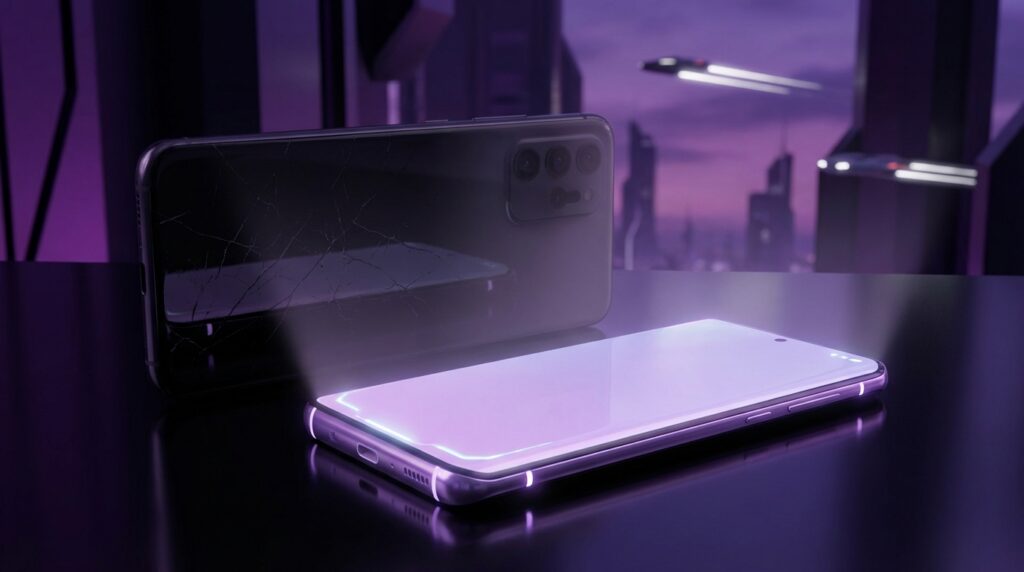
“The buzz of a fluorescent store light, the cold metal dummy units on the display table, and that one phone everyone whispered about because it ‘beat the iPhone for half the price’.”
You remember that feeling, right? Standing in a cramped carrier store, poster after poster screaming about megapixels, quad-core chipsets, and “limited-time offers.” Somewhere between the rows of plasticky budget phones and the glass case with the iPhone and Galaxy sat something strange. Not cheap, but not premium-priced either. A phone that promised flagship specs without flagship cost. The sales rep called it the “flagship killer” with a grin like he had a secret.
Fast forward to your current home screen. Maybe you are scrolling on a top-tier iPhone or a Samsung Ultra, or maybe you are on a mid-range device that does almost everything right. The prices have gone up, the names got longer, and the hype cycles collapsed into each other. Now the question hits harder than any promo tagline: in 2025, is the whole “flagship killer” idea dead, or did it sneak into something else and change its name?
The memory of that first “flagship killer” pitch makes this question feel heavier. You were promised rebellion in a box. Same processor as the big brands, nice screen, good camera, no bloat, and a price that made your wallet breathe for a second. It felt like cheating the system. Today, phones that promise similar value look different, come with different compromises, and often do not even use that phrase anymore. Maybe it was just nostalgia talking, but that old promise feels quieter now.
The Rise of the Flagship Killer: When Specs Punked Status
Before we ask if the concept is dead in 2025, we need to remember what it actually was, not what marketing tweets turned it into.
The original “flagship killer” pitch was simple: take the hardware and performance of a premium flagship phone, strip away the expensive branding and retail layers, and sell it for a lot less. That was the whole deal. No vague mission statements. Just raw value.
Think about the early OnePlus days. You had a sandstone-textured phone that gripped your palm just right, not too slippery, not too glossy. The display was not as bright as today’s OLED panels, but it felt sharp enough that text did not look fuzzy. The weight sat in that sweet zone: dense enough to feel serious, but not like a metal brick in your pocket. It shipped with top-tier Snapdragon chips, enough RAM to laugh at heavy multitasking, and software that felt light compared to the bloated skins competitors shipped.
It did not feel like a cheap phone. It felt like a flagship that had skipped a few line items on an executive budget sheet.
The idea worked because, at the time, premium phones clearly outpaced mid-range devices. You had a noticeable gulf:
– Flagships: the best processors, best cameras, best screens, and longer support.
– Mid-range: weaker chips, worse screens, softer cameras, short software life.
In that world, a “flagship killer” made sense. It tried to give you flagship hardware with a mid-range price tag. It hacked the price-performance curve by attacking brand and distribution margins instead of core components.
Retro Specs: The 2014 OnePlus 1 Hype
“User Review from 2014: ‘I paid half of what my friend did for his Galaxy, but my OnePlus 1 loads games faster and the battery lasts longer. The camera is decent, the screen is crisp, and CyanogenMod flies. I feel like I’m getting away with something.'”
That feeling of “getting away with something” defined the flagship killer. You were not just buying a phone. You were buying into a kind of tech rebellion. Less marketing, more silicon.
What Made a Flagship Killer a Flagship Killer?
To see if the idea is dead, we need to be strict about what qualifies. Not every cheap phone with a big screen counts.
Here is what used to define a real flagship killer:
1. Top-tier processor of that year
Snapdragon 800-series or equivalent. No “almost there” chip. If Samsung or LG or HTC had their best phones on Snapdragon 801, the flagship killer had that chip too. That was non-negotiable.
2. At least one flashy flagship-level feature
Maybe it was 3 or 4 GB of RAM when others had less. Maybe it was fast charging before it became normal. Maybe it was a high-refresh screen before that trickled down. Something that let fans say, “Look, it does this better than the big guys.”
3. Aggressive pricing
Not “a bit cheaper.” We are talking 30 to 50 percent less than the big-brand flagship at launch. That gap was the whole hook. You could not call yourself a flagship killer if you were 10 percent cheaper.
4. Limited compromises outside camera and polish
Cameras could be slightly behind, brand prestige was definitely behind, and build polish might lag a bit. But general performance, daily UX, and updates needed to feel close to flagship tier. If the device felt sluggish or cheap in your hand, it broke the promise.
Retro Specs: The “Flagship Killer” Checklist
“Pitch from around 2015: ‘Same Snapdragon chip, more RAM, no carrier bloat, clean software, and half the price. You give up wireless charging and the big camera logo, that is it.'”
That formula was clear. You traded marketing and small luxuries for raw performance and safe pricing.
The Market Shift: Flagship, Mid-range, and the Blurry Middle
So what changed between that era and 2025?
The ecosystem of phones did not stand still. Premium phones moved up in price. The mid-range closed the performance gap. And everyone started making “almost flagships” with weird names like “Pro+”, “FE”, “Lite”, and “Neo.”
Now, the difference between a 300 to 500 dollar phone and a 1000+ dollar one often sits in camera algorithms, build materials, IP rating, and long-term support, not raw speed.
Take your average mid-range Android phone in 2025:
– It probably has an OLED screen.
– It likely ships with 120 Hz refresh rate.
– The processor can run social apps, streaming, and most games without choking.
– Cameras are fine in daylight and decent in low light with software help.
– Fast charging is almost a given.
The original flagship killer used to say: “Performance like a flagship, cost like a mid-range.” But now mid-range phones already pull pretty close to flagship performance in practical use, especially for most users.
That shrinks the original advantage.
Then vs Now: The Numbers on Paper
To ground this, let us stack a classic legend against a modern top-tier device and see how the terms changed. We will not obsess over exact model years, but this comparison nails the feel.
| Spec | Nokia 3310 (2000) | iPhone 17 Pro (Flagship-class 2025) |
|---|---|---|
| Display | 1.5 inch monochrome, ~84 x 48 px | ~6.3 inch OLED, ~120 Hz, ~2500+ nits peak, ~2K resolution |
| Storage | None, T9 SMS storage only | 256 GB to 1 TB NVMe-class storage |
| RAM | Just enough for SMS and Snake | 8 GB to 12 GB |
| Battery | 900 mAh removable | ~3300 to 4000 mAh, sealed |
| Camera | None | Triple camera array with computational imaging, 4K/8K video |
| Connectivity | 2G GSM | 5G, Wi‑Fi 7, UWB, NFC |
| Launch Price (approx, adjusted) | Low-end, mass market | High-end premium |
The jump from a Nokia brick to an iPhone-class flagship feels wild. But the more relevant comparison for “flagship killer” is inside the same era.
If we compare, say, a 2025 mid-range “almost flagship” Android phone to that same iPhone 17 Pro, the story is less dramatic:
– Both have 120 Hz OLED.
– Both have multi-camera setups.
– Both play games smoothly.
– Both last through a day of use.
You start seeing that the flagship killer category has been squeezed from both sides:
– Top-end flagships pull further up with camera tech, ecosystem lock-in, and longer support.
– Mid-range phones keep getting “good enough” where it matters.
Did Brands Kill the Flagship Killer by Stealing Its Playbook?
Here is the twist: the concept did not just fade. Big brands studied it, cloned parts of it, and folded it into their own product stacks.
You see it with lines like:
– Samsung FE (Fan Edition)
– Apple older generation models sold at reduced price
– Xiaomi “Poco” and “Redmi” sub-lines
– OnePlus Nord series
– Realme and similar players
These phones:
– Use mid-high tier chips (like Snapdragon 7 or slightly toned-down 8 series).
– Carry big screens with high refresh rates.
– Include fast charging.
– Sit at 400 to 700 dollars instead of 1000+.
So the original “flagship killer” formula of top specs, lower price, and online-only buzz got diluted. It turned into product segmentation. Where you once had a renegade model mocking expensive flagships, now you have structured pricing ladders.
No one model stands in the middle of the room shouting “I am the flagship killer” anymore. Instead, you get quiet, calculated options: “for most users,” “for creators,” “for gamers,” “for value buyers.”
Retro Specs: Store Shelf Logic in 2005 vs 2025
“User reflection: ‘In 2005, you picked a phone for calls and texts and maybe a camera. In 2015, you picked a phone based on the processor and RAM. In 2025, you pick a phone based on what you are okay compromising on.'”
That last line stings a bit, because this is where the flagship killer idea took a hit. The whole pitch was “stop compromising.” Same specs, less fluff, better price. As the market matured, phones became about tuned compromises. You pick your trade-offs instead of escaping them.
Flagship Killer vs Value Flagship vs Premium Mid-range
By 2025, the vocabulary shifted. Reviewers and brands use terms like:
– “Value flagship”
– “Affordable flagship”
– “Premium mid-range”
– “Upper mid-range”
All these categories smell like “flagship killer” in disguise, but they are softer. They do not claim to “kill” anything. They accept that real flagships exist and lean harder on one angle:
– Performance per dollar
– Camera per dollar
– Ecosystem entry at lower cost
The key difference is ambition and marketing posture.
The original flagship killers wanted to embarrass the big names. They bragged about beating flagships at geekbench scores for less money. They tore into “bloatware,” carrier locks, and slow updates.
Today’s value-flavored phones usually sit under the same brand umbrella as the ultra premium device. They are not trying to embarrass their own flagship siblings. They exist to catch price-sensitive customers without cannibalizing the premium line too much.
So the energy changed:
– Old flagship killer energy: “We are here to undercut and mock the overpriced giants.”
– 2025 value flagship energy: “We sit below the real hero products but share some DNA.”
Pricing Reality: The Gap Is not What It Used To Be
Let us talk price numbers for a second, because this is where the concept lives or dies.
In the early glory days of the flagship killer, you could see something like:
– Big-brand flagship: 700 to 800 dollars at launch.
– OnePlus-level killer: 300 to 400 dollars.
That near 50 percent difference made the pitch obvious.
Now in many regions by 2025 you see something like:
– Premium top-line flagship: 1100 to 1400 dollars or more.
– Value flagship / premium mid-range from same brand: 600 to 800 dollars.
– Aggressive Chinese/online brand “almost flagship”: 500 to 700 dollars.
The absolute difference is still big, but the mid-layer has thickened. The killer is no longer the only product daring to buck the price. Carrier plans, trade-in offers, and financing further mask those gaps.
Also, hardware costs and R&D for camera systems, modems, and chips climbed. Margins are not as fat as they once were, especially once you add in longer promised software support. That means:
– It is harder for small brands to ship true top-tier chips, displays, cameras, and long-term support at bottom-scraping prices.
– The ones who try often cut corners on software polish, network bands, build quality, or updates.
The user who chases “specs per dollar” today often has to accept weaker software polish or questionable update policy. That breaks the old flagship killer promise where the phone did not just look fast on paper; it felt like a daily driver that rivaled the big boys.
Has “Good Enough” Performance Killed the Flagship Killer?
This might be the strangest twist. Raw performance got so good for normal tasks that you hit a point of diminishing returns.
For calling, messaging, browsing, social, streaming, and casual gaming, mid-range chips in 2025 are very comfortable. The difference between a Snapdragon 8-level chip and a well-tuned 7-level chip is smaller than the jump from weak chips a decade ago.
That makes the “same performance as a flagship” line less powerful, because:
– Many mid-range phones already feel fast enough for most people.
– Flagships spend more effort on camera computational pipelines, dedicated AI blocks, and specialized features than just raw app performance.
So now, if a brand shipped a “flagship killer” with the exact same chip as a top flagship but cut camera hardware and software support, you would still not feel like it was truly equal. The bar for “flagship” moved from just chipset and RAM into invisible software layers, image processing stacks, long-term updates, and ecosystem perks.
That shift hurts the flagship killer concept. It thrived when specs on a box could tell 80 percent of the story. In 2025, specs tell maybe half of it.
Where the Spirit of the Flagship Killer Still Lives
Saying the concept is “dead” might be a bit too clean. It feels more like it has scattered.
Pieces of the original idea show up in:
– Gaming phones that stuff in top chips and huge batteries for less than mainstream flagships, while skipping camera perfection and slim design.
– Online-only Chinese brands that undercut local giants at similar spec levels.
– Fans choosing last-year flagships at reduced prices because performance and camera stacks are still solid.
If you buy a last-year high-end phone in 2025, you are basically playing the same game the first flagship killers pushed: take premium hardware, skip the current cycle hype, and pay less.
Then you have custom ROM communities and used device markets. Someone flashes clean software onto an older flagship, puts in a new battery, and runs it for years. The original flagship killer spirit shows up there too: performance, control, and value over branding and launch-day bragging rights.
Modern “Flagship Killer” Candidates in Spirit
Think of phones from:
– Realme
– Poco
– iQOO
– Some OnePlus models that are not fully premium-priced
These phones sporadically hit that old magic combo:
– Latest or near-latest flagship chip
– High-refresh OLED
– Envelope-pushing charging speeds
– Sub-premium price
But most of them lean hard into one niche like gaming, fast charging numbers, or spec bragging. The full balanced package that used to define a classic flagship killer is rare.
Why the Phrase Itself Stopped Working
There is another angle here: the phrase “flagship killer” aged badly.
It started as a punchy slogan for enthusiasts. Over time, marketing teams across brands began to overuse it. Every other phone that was not the most expensive model started calling itself a killer of some kind.
You cannot kill every flagship at once. The phrase became noise.
Also, as brands grew, they did not want to attack their own premium lines. If OnePlus calls a mid-price phone a “flagship killer,” where does that leave its actual flagship model that costs more? It sends a mixed message.
So we landed here in 2025:
– The phrase “flagship killer” mostly shows up in nostalgic blog posts, YouTube thumbnails, and comment sections.
– Brands use more careful terms like “value flagship” or “performance flagship.”
– The raw combative edge of the slogan feels out of place for brands trying to build calm, long-term ecosystems.
The concept needed a clear villain: overpriced, bloated flagships that ruled without competition. Today, premium flagships still cost a lot, but they usually bring real advantages in cameras, security, support, integration with laptops, tablets, watches, and smart homes. They are not as easy to frame as pure “rip-offs” for enthusiasts.
The User Perspective: What You Actually Get If You Chase a “Flagship Killer” in 2025
If you set out in 2025 saying, “I want a flagship killer,” what you really want is:
– Flagship-like performance for less money.
– Fewer gimmicks and more core value.
– Reasonable software support.
– Decent cameras that do not embarrass you.
What you often end up with if you buy a self-proclaimed killer today:
– Strong chipset and high-refresh screen.
– Cameras that fall apart at night or in tricky light.
– An update policy that is short or unpredictable.
– Some corners cut in build (weak water resistance, no wireless charging, no eSIM, fewer 5G bands).
For some users, that is a fair trade. For gaming, content consumption, or as a second phone, it can be fine. But the all-rounder daily-driver that goes toe to toe with an iPhone or Galaxy Ultra on almost every axis for half the price is rare.
The value battle moved into a quieter place:
– Buying last-year flagship.
– Waiting for price cuts.
– Taking a “value flagship” from a big brand that shares software and support frameworks with their main hero product.
The rebel stance of the old flagship killer faded, replaced by smart shopping across a larger spread of products.
Flagship Killer vs Smart Home & Ecosystem Lock-in
Remember the blog’s niche: where mobile history meets modern tech. Phones now are not just phones. They are remote controls for your whole setup: earbuds, watches, TVs, smart speakers, maybe even your locks and thermostat.
This matters for the flagship killer question because:
– True high-end flagships often act as the gateway to an ecosystem.
– They get the smoothest watch pairing, fastest file sharing with laptops, better continuity features, and extra services.
– Cheaper “spec-heavy” phones sometimes sit outside these tight ecosystems or only partially hook into them.
So a spec sheet alone does not answer value anymore. If your phone talks smoothly to your smartwatch, your car, your TV, your earbuds, and your home setup, that is real, daily value. A classic “flagship killer” might offer the raw horsepower, but the overall experience could feel patchy next to a slightly slower phone that sits deep inside a supported ecosystem.
This is where Apple, Samsung, and a few others made the battlefield uneven. You are not just picking hardware; you are picking long-term links between your devices.
A real flagship killer in 2025 would need to:
– Offer near-flagship build and specs.
– Compete seriously on camera and software support.
– Tie into a broader ecosystem enough that you do not feel isolated.
That is a tall order at a much lower price.
So, Is The Flagship Killer Concept Dead in 2025?
If we look strictly at the original definition:
– Same-year top-tier silicon.
– Aggressive undercutting of major flagships.
– Minimal compromise on daily experience.
– A public claim that it competes with or beats flagships.
Then yes, that exact archetype is rare to the point of almost gone in 2025.
What we have now instead is a fragmented landscape:
– Value flagships that share a lot with top-tier devices but accept lighter cameras or build.
– Aggressive Chinese and online brands that nail specs but do not always deliver long-term polish.
– Previous-year flagships sold at reduced cost, which quietly act as the most practical “flagship killers.”
– Ecosystem-centered products where pure hardware value is only one part of the story.
The phrase “flagship killer” does not fit cleanly into this environment anymore. The tech has matured. The performance gap shrank. The war shifted from spec sheets to cameras, AI tricks, services, and long-term support windows.
Maybe it was just nostalgia talking, but standing in that carrier store years ago, holding a dense, slightly rough-surfaced “killer” phone in your hand, you could feel the friction it caused. Now, that friction lives elsewhere: in your choice to hold onto a phone longer, buy last-year’s model, or care more about how your phone talks to your home than how it scores in synthetic benchmarks.
The hardware rebels that called themselves “flagship killers” paved the way. Then the market absorbed their tricks, muted their slogans, and turned them into quiet product tiers and discount cycles.
