

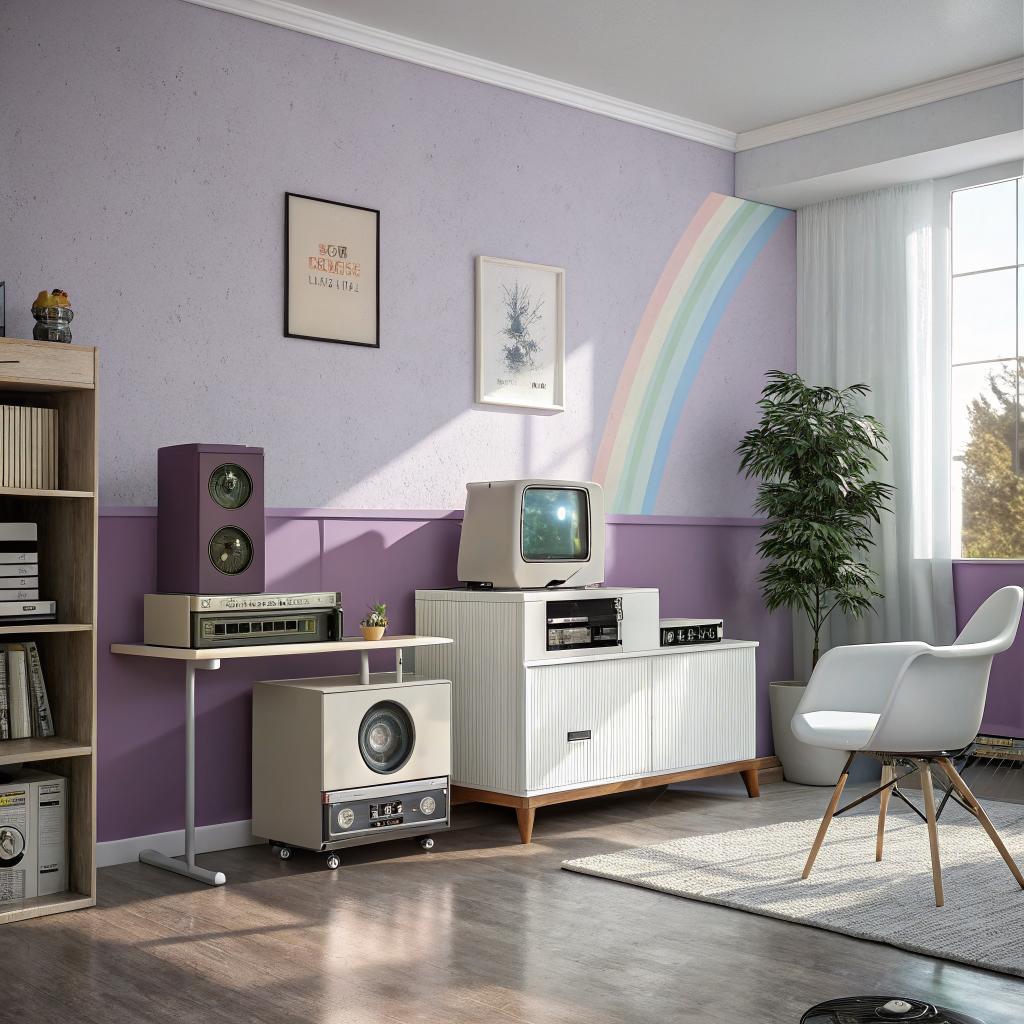
What if I told you the next upgrade to your retro gaming nook or 80s style office is not a new device, but the color on your walls?
Here is the short answer: you can use Colorado Springs painting company to echo the look of old tech, vintage consoles, cassette decks, and beige computers, while still keeping your home fresh and modern. The trick is to treat paint like hardware: pick a generation, borrow its colors, copy its patterns, and then wire everything together with light and a few simple rules, so it still feels like a place you actually want to live in.
Once you look at it this way, your walls become part of your setup, not just a background. They tell the same story as the gear on your shelves. And if that sounds a little strange, that is fine. Interior paint does not usually get to be the fun part of tech nostalgia. It usually gets ignored, which is a pity.
Paint can act like an extra piece of retro hardware: silent, flat, but completely changing how your screens, shelves, and gadgets feel in the room.
You do not need to be a designer, and you do not need a room full of vintage equipment. You can start with one console, one old camera, or even one keyboard, and pull the room around it with color and a few careful accents.
You can go very deep with this, but I will try to keep it practical and honest, not some dreamy design fantasy where every corner looks like a movie set. Some paint ideas look great in photos and are annoying in real life. We will talk about that too.
Why retro tech and interior paint actually fit together
At first, this mix seems odd. Retro tech feels hard and shiny. Paint feels soft and flat. But there is a quiet link: color memory.
Most people do not remember exact model numbers of their old devices, but they remember:
- The yellowed beige of old PCs
- The deep gray of early consoles
- The bright red power light on a VCR
- The teal plastic of a portable CD player
Those colors live in your head as feelings. Good or bad, they are still there.
If you pick wall and trim colors that echo old tech, you tap into memory without needing to fill the room with actual hardware.
When you think about Colorado Springs, there is another layer. Natural light is strong, shadows are sharp, and the seasons swing from bright snow glare to dry, sunny days. That plays very well with retro themes, because old tech often looked best under hard light. Think office fluorescents, CRT glow, arcade cabinets. Painting for this style is a bit like tuning a monitor.
So the real question is not “Should I paint my room retro?” but “Which era of tech do I want the room to feel like?”
Once you have that, the rest gets easier.
Picking your retro tech era before you pick paint
Before you start comparing paint chips, pick a time period. Not perfectly, just roughly. If you skip this and go straight to colors, the room can feel random.
Here are three simple eras many people know well. Each one points to a different style of interior painting.
| Tech era | Main devices | Typical color mood | Good wall strategies |
|---|---|---|---|
| 70s to early 80s | Hi-fi receivers, wood TVs, early arcades | Warm, muted, lots of browns and oranges | Earthy walls, off white ceilings, dark trim |
| Mid 80s to mid 90s | Nintendo, DOS PCs, VHS, boomboxes | Grays, beiges, primary accent colors | Soft gray walls, one bold accent wall |
| Late 90s to early 2000s | iMac G3, translucent gadgets, early consoles | White, black, clear colors like teal and purple | Clean light walls, bright but small color blocks |
If you are not sure which you like, look around your room right now. Which old devices do you still own, or which ones do you wish you had? That is usually your answer.
Pick one decade to lead, then let other influences appear only as accents, not as equal players.
If you try to mix 70s warm browns, 80s plastic beige, and 2000s white gloss all at once on the walls, it will probably feel confused. Some people enjoy that chaos, but most do not want to live in it every day.
Era 1: 70s to early 80s color ideas
Think of heavy receivers with silver knobs, wood case speakers, CRT TVs with rounded corners. Rooms from that time tended to be warm and a bit dark.
For walls:
- Soft tan or caramel walls for a “living room with records” mood
- Muter olive or moss for a more “basement den” memory
- Cream instead of bright white on ceilings to keep harshness down
You can pair these with:
- Wood trim or painted trim in a medium brown
- One darker wall behind a TV or shelving area to echo a wood cabinet
This style works very well in basements in Colorado Springs, where natural light can be limited. The warm colors fight the cold feeling that some underground rooms have.
But be careful with heavy orange or strong mustard on large walls. It looks retro online but can feel like a themed restaurant in person. Sometimes one orange strip or painted panel is more than enough.
Era 2: Mid 80s to mid 90s color ideas
This is the classic “computer room” era. Beige boxes, darker screens, gray plastic, and clean primary buttons. It might sound boring, but it is actually friendly for interior painting.
Ideas for walls:
- Soft gray with a very slight warm or cool tint, not pure “battleship” gray
- Off white that leans toward gray instead of yellow
- One accent wall in muted teal, navy, or deep burgundy
This matches those early console plastic bodies. It also gives a neutral base for shelves with old VHS tapes, cartridges, and books with faded covers.
To echo CRTs and text editors, some people paint a small square or rectangle in a darker shade behind their desk or monitor. It looks like an old monitor bezel without being too literal.
Era 3: Late 90s to early 2000s color ideas
If you like translucent plastics, clear teal gadgets, and early USB gear, you probably lean this way. This period is bright but also more clinical.
Wall ideas:
- Very light gray or near white on most walls
- Small blocks of strong color, not full walls, like a 4 foot wide teal panel
- Simple, sharp borders between white and color so it feels like UI elements
This style loves natural light. Colorado Springs homes often have large windows, so white walls can keep the room bright while the small color blocks carry the retro feel. Those color blocks can sit behind a floating desk, a media unit, or a shelf with old gadgets.
Designing a retro tech “circuit” around your room
Once you pick an era and some colors, the next step is to think of the room like a simple circuit board. Not in a cheesy way, more in a “where does the eye travel” way.
You want the walls, the trim, and the devices to make a loose path. Your eye should land somewhere, travel across a line of color, and rest on something you like, such as a console or an old camera.
Here are a few ways to do that without going into full geek theme park mode.
Accent walls that follow your gear
An accent wall is the obvious move, but it works better when it is not random. Tie it to your devices.
- Put the darkest color behind your main screen or TV, like a modern CRT glow
- Use a mid tone wall color behind open shelves with old media and manuals
- Keep the wall opposite your main screen lighter to avoid eye strain
If you like 80s arcades, a single dark navy wall with soft gray side walls can bring that feeling in, especially if you add a strip of color near the ceiling. Think of it like the top of an arcade cabinet, not a mural.
Color blocking that feels like UI
For late 90s and early 2000s fans, color blocking works well. You can make simple rectangles that follow furniture edges.
For example:
- A horizontal block the same width as your desk, in teal or blue, with the rest of the wall white
- A vertical strip that lines up with a bookcase full of old software boxes
- A small “window” of color above a console shelf
If you keep the shapes simple and the lines crisp, the room will feel like a calm version of a desktop interface. Not cartoonish, just slightly graphic.
Trim, doors, and outlets as “ports”
Most people keep trim and doors white and forget about them. For a retro tech feel, that is a wasted chance.
You can:
- Paint door trim a darker shade than the wall to echo a screen bezel
- Use a medium gray for baseboards in a mostly white room
- Match outlet covers and switch plates to the wall color so your tech, not your plastic plates, stands out
Some people get very into this and color code trim by function, like ports on a device. That can look childish fast, so I would keep that idea small, for example just in a gaming corner.
Balancing nostalgia with actual day to day living
It sounds fun to turn your room into a shrine to old tech. In practice, you still have to pay bills there, host friends, and sometimes join a video call.
If the room looks like a museum, your family may hate it. You may also get tired of it much faster than you think. Retro themes age quickly when they are too literal.
Here is where paint can rescue you. You can pull in the feeling while keeping the room:
- Calm enough for work
- Bright enough for long winters
- Neutral enough for guests who do not care about your old hardware
A simple rule helps:
Let the walls be 70 percent “normal home” and 30 percent “retro tech experiment.”
That 30 percent can be:
- One strong accent wall
- A set of color blocks
- Painted trim and a painted door
If you go beyond that, you start painting patterns that may annoy you in a year. That is not the worst thing, paint can be changed, but it is still more work.
What to avoid if you do not want to regret it
Some ideas sound fun but can be tiring or hard to live with.
- Full neon rooms that try to copy arcade lighting
- Complex pixel art murals that lock your layout in place
- Dark ceilings in small rooms that already feel low
- Glossy paint on every surface, which shows every bump and reflection
If you really love strong colors, keep them on smaller zones: columns, panels, or inside recesses. Your eyes, and your future self, will thank you.
Color tricks that work well in Colorado Springs homes
Homes in Colorado Springs often have a mix of strong natural light, basement spaces, and sometimes textured walls. That matters when you use retro palettes, because many retro colors were shown in very artificial environments on screen.
You are trying to bring that into a real house, not a lab.
Using light to make retro colors feel right
Harsh sunlight can wash out delicate grays and pastels. On the other hand, it can make deeper blues and teals glow.
If your retro inspired room faces strong light:
- Use slightly deeper colors than you think, so they do not look faded at noon
- Avoid very glossy finishes that bounce sunlight into your eyes
- Let one wall stay lighter to reflect light back into the room
If you are working in a basement or a room with smaller windows:
- Keep most walls light, even if you like darker tech moods
- Place darker accent colors where they catch lamp light, not in the darkest corner
- Use warm white bulbs near any brown or orange walls so they do not look muddy
It can help to think of your lamps and windows like CRT brightness controls. You want enough contrast to read the details of your “interface” but not so much that you strain.
Flat vs eggshell vs satin for retro spaces
Finish matters more than people expect.
| Finish | Look | Good for retro tech style when… |
|---|---|---|
| Flat / matte | Soft, hides texture | You want a CRT-like, non reflective background |
| Eggshell | Slight sheen | You need some cleanability in living rooms and bedrooms |
| Satin | More sheen | You want trim or “plastic” elements to pop slightly |
For a retro look, many people like flat on walls and satin on trim. That mix reads a bit like old plastic cases against darker screen glass.
Bringing your gear into the plan instead of fighting it
Many people design a room in their head, then place the devices, and it all clashes. It is easier to start from what you already own.
Using your main device as the color anchor
Pick one piece of tech as the “boss”:
- Your main console or PC
- An old hi-fi stack
- A TV with a strong bezel
Look at its main colors: body, buttons, any accent stripe. Use those to influence the walls.
For example:
- If your console is dark gray with red buttons, a medium gray wall with a very subtle red panel behind the shelf can work
- If your old Mac is beige with a small colorful logo, keep the room off white and use that logo color lightly in trim or door paint
You do not have to match everything exactly. In fact, perfect matching can look fake. Close enough is better, like memory.
Hiding modern tech that breaks the mood
You probably still have modern devices mixed in: flat TVs, black soundbars, large monitors. They can conflict with old gear.
Paint can help here too:
- Use darker paint behind the TV so its black frame disappears a bit
- Place shelves of retro items on the same wall to mix ages intentionally
- Paint nearby furniture or paneling in colors that connect old and new, for example mid gray between beige and pure black
You are not trying to fake living in 1994. You are layering. The mix can look nice if you accept that it is a mix.
Small retro paint projects before a full room redo
If you are not ready for a full repaint, you can still bring retro tech style in with smaller, controlled projects. These can be fun weekend tests.
Project 1: The console or PC wall strip
Instead of painting a whole wall, paint a horizontal or vertical strip where your main device sits.
Steps:
- Measure the width of your console shelf or desk
- Add a few inches to each side
- Tape off a rectangle that wide from floor up to mid wall, or from desk height up to a foot above your monitor
- Fill it with a color from your chosen era, like navy, teal, or muted orange
This makes the device feel “mounted” in the wall design, similar to a control panel.
Project 2: Retro door and frame
Doors are underused surfaces. You can give a plain door a subtle tech vibe.
Ideas:
- Paint the door a medium gray and the frame a slightly darker gray, echoing monitor bezels
- Use a two tone scheme with a lighter top half and darker bottom half, separated by a thin painted stripe
- Paint only the door edges in a bright color, visible when it is slightly open
This works well in hallways that connect a retro styled room to the rest of the house. The door becomes a hint of what is inside.
Project 3: Shelving back panels
If you have open shelves with gear, you can paint only the back panel area behind them.
- Dark colors behind silver or white hardware make it pop
- Warm browns behind metal amps echo older listening rooms
- Soft gray behind beige computers keeps them from looking too yellow
This is low risk, since it is a small area and mostly hidden by objects. It is also a good place to test bold colors before committing to a wall.
Working with a local painter without losing your weird ideas
If you decide to hire painters instead of doing everything yourself, you might worry they will push you toward plain gray walls and call it a day.
You do not need to accept that. At the same time, not every idea is practical or worth the trouble. A good balance is possible.
How to talk about retro style so painters understand
Painters care about surfaces, order, and clean lines. They may not care about your vintage console collection. That is fine.
Instead of long emotional descriptions, bring:
- Printed photos of rooms or setups you like
- Pictures of your actual gear that will live there
- A short description, like “late 90s computer lab, but calmer”
Then translate your ideas into simple tasks:
- “This wall light gray, this one darker navy.”
- “Rectangular block here, aligned with this desk.”
- “Flat finish on walls, satin on trim.”
If you are clear on shapes and colors, even a painter who does not care about nostalgia can help you reach a retro feeling by accident.
What is worth paying for, and what is not
Some details are worth hiring out:
- Crisp color blocking with very straight lines
- Large accent walls in dark colors that show brush marks
- Textured or damaged surfaces that need repair before painting
Other parts are fine to handle on your own:
- Small panels behind shelves
- Inside of closets or niche areas for experiments
- Door edges or small trim elements
You do not have to be all DIY or all pro. Mixing both lets you keep control of the fun, strange parts while leaving the tedious prep to people who do it every day.
Examples of retro tech paint setups that actually work
Sometimes a concrete picture helps more than another guideline. Here are three simple room sketches that people with normal homes and budgets could pull off.
Example 1: 90s den for gaming and movies
Room: Basement living area with small windows.
Paint plan:
- Walls: Light warm gray in flat finish
- Accent wall behind TV: Deep navy in matte
- Trim and doors: Slightly darker gray in satin
Setup:
- Old game consoles stacked under a modern TV on the navy wall
- Framed posters from 80s and 90s games on the side walls
- Simple floor lamps with warm bulbs to keep the navy from feeling too cold
Feel: Feels enough like a retro den to trigger nostalgia, but still usable as a regular family room.
Example 2: Early 2000s “study” with modern PC
Room: Small bedroom turned office facing bright light.
Paint plan:
- Walls: Mostly white with a hint of gray
- Color block behind desk: 4 foot wide teal rectangle from desk height up 3 feet
- Door: Medium gray with white frame
Setup:
- Modern PC and monitor centered on teal block
- Old translucent gadgets and early handhelds on floating shelf just above the block
- Simple white blinds to manage strong sun
Feel: Clean, bright, but clearly influenced by that early USB and colorful plastic era.
Example 3: 70s music corner in a larger living room
Room: Open living room with a corner for hi-fi gear.
Paint plan:
- Main walls: Soft tan
- Corner behind audio rack: Muted olive from floor up to 6 feet
- Ceiling: Warm cream
Setup:
- Vintage receiver and speakers against the olive corner
- Record storage below, with a single wall shelf for tapes or small gadgets
- Warm floor lamp near the corner to create a pool of light
Feel: Only part of the room is retro, but the color block quietly marks it as the “old sound” zone.
Questions you might be asking yourself right now
Q: What if my partner or roommates hate retro stuff?
A: Then painting the whole shared living room in retro colors is a bad idea. You are not wrong to like it, but they are also not wrong to want something calmer. The middle ground is to keep shared spaces simple and use retro palettes in your own room, office, or a defined corner. Sometimes even a single retro inspired wall inside a closet office is enough to scratch the itch.
Q: Do I really need to pick a single era? I like 70s audio and 90s games.
A: You do not have to obey that rule fully, but it helps to pick one era as the main color guide. You can still show gear from other decades. For example, you can let the walls follow a 90s gray palette and place a 70s wood receiver there. The wood becomes an accent instead of fighting the walls. If you try to honor every era equally with paint, the room can feel noisy.
Q: How do I know if I took the theme too far?
A: Ask yourself two simple questions:
- Would I feel strange hosting a non nerd friend here?
- Do I already feel tired thinking about repainting this if I move or change my mind?
If both answers lean toward yes, you probably went a bit far. That does not mean it is wrong, but it might mean you treat some parts as temporary experiments. Start by toning down the largest, most aggressive colors and leave the smaller fun pieces. In most homes, a few panels of strong retro color are easier to live with than four walls of it.
