

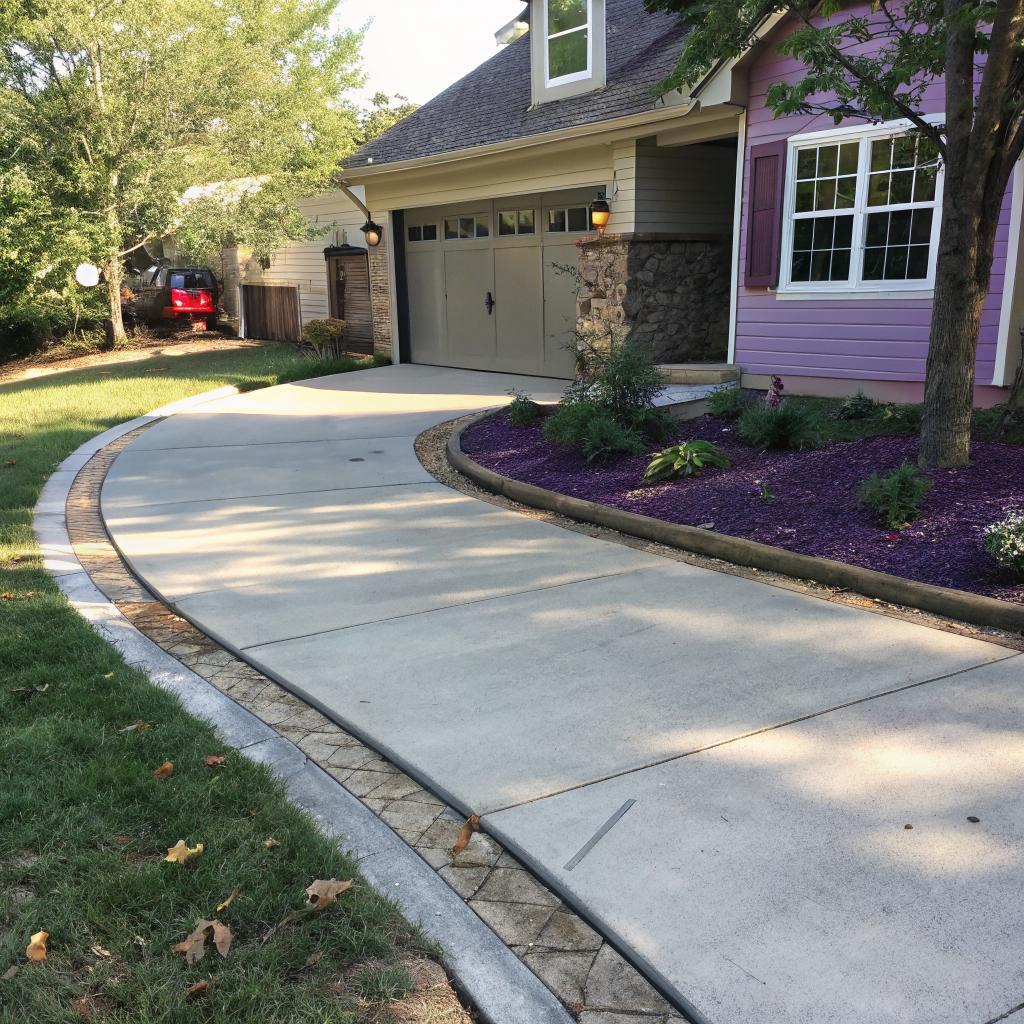
What if I told you the most future-facing tech upgrade on your property might be sitting right under your tires? Not your security cameras, not your Wi-Fi system, but that strip of concrete that quietly takes all the weight, all year long. In Nashville, a lot of people are still living with driveways that were poured when cassette tapes were new, and they are quietly paying for it in puddles, cracks, and car repairs.
If you want the short answer: the smartest move for most homeowners is to stop patching the same cracks every year and instead plan a proper repair or replacement with modern concrete and simple smart add-ons, using a local pro who understands both old-school methods and newer tech. A good project treats your driveway like an evolving piece of your home, not a one-time slab. And if you are looking locally, a service like driveway repair Nashville can handle that full spectrum, from fixing vintage curbs to installing smart concrete features.
Now let us slow down a little and unpack what that really means.
Why Nashville driveways age faster than you expect
Nashville has a weird mix of conditions for concrete. It is not the snow capital of the country, but you still get freeze and thaw cycles. You get heavy rain. You get heat that can make a black car feel like an oven. All of that works against concrete.
On top of that, some homes still have driveways that were poured decades ago. I have walked up to houses where the driveway tells you the house was built in the 70s before you even see the door. Narrow, hairline cracks that grew into big gaps. Edges that have sunk near the street. Old broom finishes that have gone almost smooth.
So when people say, “It is just a driveway, it should last forever,” I do not really agree. It lasts a long time if it was done well and if the soil behaves. But not forever.
The hidden cost of living with an old driveway
A driveway is not just about how it looks. It affects other parts of your property more than most people think.
Old or poorly sloped concrete often sends water straight toward your foundation, garage, or walkway, which can quietly damage your house over time.
If your driveway tilts even a little the wrong way, you can end up with:
- Water pooling near the garage door and seeping inside
- Moisture pushing against your basement or crawl space walls
- Soil that softens and lets sections sink or tilt
There is also the safety side. Worn edges, lifted sections, and deep cracks are trip hazards for kids, older relatives, and even delivery drivers. I know one homeowner who delayed a simple repair for three years and then paid more in medical bills from one fall than the repair would have cost.
So yes, a driveway feels boring compared to gadgets, but it can quietly cause more trouble than most apps on your phone.
From vintage curbs to smart concrete: what has actually changed?
Some people think concrete is just concrete. Gray, hard, and not very interesting. That is partly true, and also not true at all.
We are in this strange point where you can stand on a driveway that looks like it belongs in a black-and-white photo, but inside it might have fiber mesh, advanced mix design, and sensors talking to your phone. That mix of nostalgia and tech is exactly what makes this topic kind of fun.
Here are the main shifts.
Old-school driveways: what worked and what did not
If you grew up walking on those vintage driveway slabs, you probably remember a few common traits:
- Simple gray concrete, usually 4 inches thick
- Minimal reinforcement or basic wire mesh
- Almost no thought about water drainage
- Narrow width and tight curves near the street
Those driveways did their job, but they often ignored long-term movement in the ground and changing weather patterns. Expansion joints were spaced too far apart. Soil was not compacted well. Sometimes the mix was not controlled that carefully.
So decades later, you see the same problems repeating across Nashville neighborhoods: cracked centers, sunken tire paths, chipped curbs.
Newer concrete: stronger mixes and smarter design
Today, the ingredients look similar, yet the thinking behind them has shifted.
Modern driveway concrete in Nashville often uses better reinforcement, more controlled mix designs, and a lot more attention to drainage and soil support.
Common upgrades you see now:
- Fiber reinforcement inside the mix instead of only relying on steel
- Thicker slabs in areas where vehicles turn or park
- Better compaction of the base layer under the concrete
- Saw-cut control joints placed at smart intervals to guide cracks
These changes are not fancy on the surface. You might not even notice them once the driveway is done. But they change how that slab lives through hot summers, cold snaps, and heavy trucks.
What “smart concrete” really means
“Smart concrete” sounds like marketing at first. And sometimes it is. But some of the real tech behind it is worth paying attention to.
You see things like:
- Embedded sensors that measure moisture or temperature
- Heated driveway cables under the surface for snow and ice
- Permeable concrete that lets water pass through
- Coatings that protect the surface and reflect heat
Not every Nashville home needs all of that. In fact, most do not. A simple, well-poured driveway will still give you a long life. But if you like following the evolution of materials, it is interesting that your driveway can now collect data or melt a light ice layer without salt.
Comparing old and new: what has actually improved?
Sometimes it is easier to see the shift in a simple comparison. Here is a straightforward look at where old “vintage” driveways differ from newer, smarter approaches people are using now.
| Feature | Older driveways | Modern / smart driveways |
|---|---|---|
| Thickness | About 4 inches, same everywhere | 4 to 6 inches, thicker in high-load areas |
| Reinforcement | Light wire mesh or none | Fiber, rebar, or stronger mesh |
| Drainage | Often ignored or poorly planned | Slopes planned to move water away from house |
| Crack control | Wide joint spacing, random cracking | Planned control joints, better crack patterns |
| Surface | Plain broom finish, can polish smooth | Better grip options, coatings, or textures |
| Tech features | None | Sensors, heating cables, or permeable sections |
| Look | Uniform gray, often stained or faded | Range of colors, borders, or exposed aggregate |
You can still keep the look of a vintage driveway if you like that style. Straight lines, simple finish, light gray. The tech and structural stuff can stay inside the slab while the curb appeal stays classic.
How to read your own driveway like a timeline
If you stand at the street and look at your driveway, you can almost read its age and history.
Cracks, stains, patches, and patches on top of patches, all tell a story.
Common signs your driveway is past the “quick fix” stage
Some problems are cosmetic. Others suggest the driveway has reached the point where repair alone is not enough.
Here are signs you should pay closer attention to:
- Deep cracks that go across the full width
- Multiple sections that have sunk or lifted
- Large areas where the surface is flaking off
- Frequent puddles after any rain
- Water running toward your house or garage
You can patch a crack or two and still get extra years out of an older slab. That is normal. But if you see new cracks each season, or if vehicles start rocking as they pull in, it might be time to plan more than another round of patching.
Monthly recurring patch jobs often hide the real problem, which is either a bad base under the concrete or poor control of water.
Where nostalgia helps and where it hurts
Some people get attached to how their driveway looks. I understand that. Maybe you remember teaching your kid to ride a bike on that exact concrete. Or you have old chalk art photos. Or your curb has that distinctive rounded shape you rarely see in new neighborhoods.
The question is: what are you keeping, the look or the actual material?
You can:
- Keep the vintage aesthetic but use new concrete
- Match the old curb style with modern forming techniques
- Use exposed aggregate that feels “older” but is new
Where nostalgia gets in the way is when someone insists on never changing anything, even while water flows toward the house, or pieces are breaking off near the street. At that point, the cost of staying attached is higher than the cost of an upgrade.
Repair, resurface, or replace: which path fits you?
People often jump straight to “I need a whole new driveway” or “I can get by with a cheap patch.” The better approach is to match the repair level to the actual damage.
Light damage: repair and basic care
If your driveway has:
- Hairline cracks
- Minor chips at the edges
- One or two small sunken spots
Then you might be fine with focused repairs.
Options include crack filling, sealants, or small concrete patches. These are not meant to make a 30 year old driveway feel brand new, but they can slow down further damage.
I will be honest here: do not expect miracles from a tube of crack filler. It helps, but it is still a bandage. Use it with realistic expectations.
Medium damage: resurfacing and partial replacement
This is where a lot of Nashville driveways sit.
You might see:
- Widespread surface wear
- Multiple cracks, but the slab is mostly stable
- Ugly stains or old patchwork that looks tired
Resurfacing can cover the top with a new cement-based layer. It gives you a fresh surface without fully removing the slab. It costs less than a total replacement and can bring back grip and color.
You can also replace only the worst sections near the street or garage, then tie them into the older parts. That kind of compromise can stretch your budget while targeting the real trouble spots.
Heavy damage: full replacement and redesign
When the whole driveway has:
- Large shifted sections
- Visible base failure under cracked slabs
- Ongoing drainage issues that you cannot fix from the surface
Then full replacement usually costs less in the long run than years of partial fixes.
This is where you get a chance to rethink:
- The width: Is it too narrow for current vehicles?
- The slope: Does water move away from the house now?
- The shape: Do you need easier turnarounds or parking?
A new driveway project is often the best time to solve old drainage issues, protect your foundation, and add simple smart features that would be harder to retrofit later.
Smart upgrades that actually make sense in Nashville
Not every advanced feature is worth the cost in this climate. You probably do not need systems suited for extreme snow zones. But there are a few practical ideas that fit this area well.
Better drainage is your first “smart” move
You do not need electronics for this. Just gravity and planning.
Consider:
- Regrading the driveway so water runs toward the street or yard
- Adding a trench drain in front of the garage where water pools
- Using small swales or drains to direct water away from the foundation
This might not feel high tech, but it is the base layer of smart design. Tech sensors will not help if water is still going the wrong way.
Permeable or semi-permeable sections
Permeable concrete, or concrete pavers with gaps, let some water pass through instead of running off. In Nashville, this can help reduce puddles and ease pressure on storm drains.
You do not have to make the whole driveway permeable. In fact, partial sections can be enough, such as:
- Parking strips along the sides
- Transition areas near the street
- Spaces between wheel paths
The tradeoff is that these systems need more maintenance. You must keep them clear of debris so they keep absorbing water. If you know you hate yard work, be honest about that before you choose this option.
Sensors and simple monitoring
Some newer concrete systems can include small sensors that track moisture, temperature, or even strain. For a regular homeowner, this might sound unnecessary, and in many cases it is.
But there are a few situations where it makes sense:
- You are already dealing with foundation issues and want better data on water near the house
- You like monitoring your property from your phone and want to see freeze conditions on the driveway
- You are planning a high-end project and the added cost is small relative to the whole job
Think of sensors as optional. Nice, but not required for most people.
Heated concrete and coatings
Nashville gets ice and the occasional snow, but not like northern states. Heated driveway systems can keep surfaces clear without salt or shoveling.
They are impressive, but they are not cheap. Between electrical upgrades and installation, you really want to ask how often you will use them. If you live on a steep slope where ice has caused accidents, that is a different conversation.
Coatings are simpler. A clear sealer or surface coating can:
- Protect against stains
- Help with light-reflecting properties so the surface stays cooler
- Extend the life of decorative finishes
These require reapplication after some years. If you accept that ongoing maintenance, they can be a practical part of “smart concrete” that fits regular homeowners.
Blending nostalgia, evolution, and tech in one driveway project
This might sound too philosophical for concrete, but it comes up more often than people admit. Many homeowners want their property to keep a certain feel, especially in older Nashville neighborhoods. At the same time, they like the idea of using better materials and simple tech.
So how do you mix all three?
Keeping the vintage look
You can keep that older style by focusing on:
- Straight or gently curved edges instead of complex shapes
- Neutral gray or soft tones instead of bold colors
- A classic broom finish with clear edges
- Curbs that match the height and radius of the original
A good concrete crew can study the old driveway and recreate the look with new methods. Bring them photos from years back if you have them. It might sound obsessive, but those details help.
Quietly upgrading what you cannot see
Below the surface is where you can evolve the design without changing the feel.
You can insist on:
- A properly compacted gravel base
- Correct thickness for your vehicle load
- Fiber or rebar reinforcement
- Well-planned joints to control cracks
None of that will scream “smart” to your guests, yet your driveway will move from a fragile vintage slab to something that works with modern life.
Adding just enough tech to feel current
If you like the tech angle but do not want your driveway to feel like a gadget, you can pick low-visibility upgrades.
For example:
- Use a high-quality sealer with UV resistance
- Install subtle drainage systems that disappear into the concrete line
- Run conduit under the driveway now in case you want sensors or more lighting later
Think of it like wiring your house for future internet needs. The driveway can hide future options so you are not stuck cutting into it years from now.
Working with a local pro without losing control
Some people like doing everything themselves. Personally, for large concrete work, I think that is risky. Mistakes with grade, base, and drainage are expensive to fix later. That does not mean you hand over every decision to a contractor.
Questions to ask a Nashville driveway contractor
When you talk with someone about repairing or replacing your driveway, ask real questions. Not just “How much?” and “When can you start?”
Good questions include:
- How will you handle drainage so water goes away from my house?
- What thickness and reinforcement do you recommend for my vehicles?
- How deep will you prepare the base and what materials will you use?
- Where will you place control joints to manage cracking?
- What finish and sealer do you suggest for this area?
You do not need to be an expert. You just need to listen for clear answers instead of vague promises.
If a contractor cannot explain their approach in plain language, that is a warning sign.
Setting realistic expectations
Concrete is strong, but it is not perfect. It will move and settle a little. Hairline cracks can still appear even in excellent work. If someone promises zero cracks for life, I would question that.
What you want is:
- A driveway that drains properly
- Controlled, minimal cracking
- A surface that holds up for many years with basic care
That is not as flashy as “never cracks” or “maintenance free,” but it is honest.
Simple maintenance habits that protect your investment
After repair or replacement, the story is not over. How you treat the driveway matters.
Seasonal checks
Each year, at least once, walk the entire driveway slowly and look for:
- New cracks starting near joints or edges
- Low spots where water sits after rain
- Signs of oil or chemical spills
Small cracks can be sealed early before water makes them worse. Stains can be treated before they soak deep.
Basic cleaning and sealing
You do not need to pressure wash every month. In fact, overdoing it can hurt the surface. A light wash, once or twice a year, is usually enough.
Some people skip sealing because they see it as an extra step. I think for many driveways, especially decorative or heavily used ones, a sealer every few years is worth the effort. It is not magic, but it buys you time against moisture and stains.
Avoiding bad habits
A few habits quietly damage driveways:
- Parking very heavy vehicles on thin sections
- Letting tree roots grow right along the edges
- Using harsh chemicals for ice that attack concrete
Being honest, most people do at least one of these until a problem appears. Just being aware of them helps you pick better options in the future, like using sand instead of strong deicers during a rare Nashville ice event.
Common questions about driveway repair, nostalgia, and smart concrete
Question: Is it worth paying more for smart features if I plan to sell in a few years?
Answer: Maybe, but be selective. Buyers in Nashville will notice a clean, well-graded driveway that does not flood the garage more than they will notice hidden sensors. Drainage improvements, a solid surface, and a good finish usually have more impact than tech features you have to explain. If budget is tight, prioritize structure and slope over electronics.
Question: Can I keep my old curb and just replace the slab?
Answer: Sometimes. If the curb is in good condition, some contractors can tie new concrete into the old curb. But if the curb is already cracking or the elevations need to change for drainage, it may not make sense to keep it. You can ask to have a new curb formed to look like the old one, which often gives you a better long-term result without losing the character you like.
Question: How do I balance my love for the old look with my worry about future problems?
Answer: Start by listing what you actually like. Is it the color, the texture, the shape, or just the feeling of age? Then talk with a contractor about replicating those parts while updating the structure under and around them. You might keep the straight layout and simple finish but change the slope, thickness, and base. That way you respect the past without carrying its problems into the next decade.
