

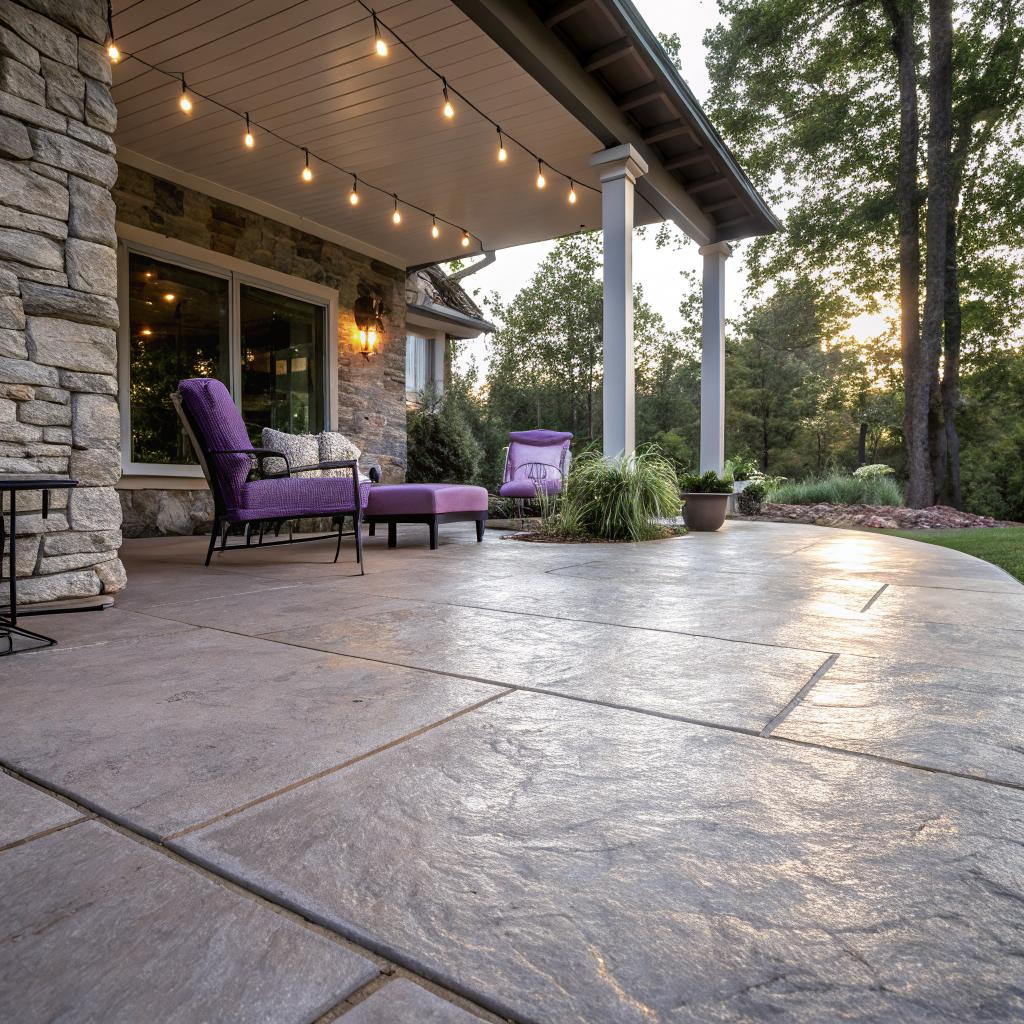
What if I told you that the most interesting place to see the future of home technology in Franklin is not the living room or the home office, but the concrete patio in the backyard? That the simple gray slab you remember from childhood cookouts is quietly turning into a kind of outdoor living hub, shaped by sensors, new materials, and a strange mix of nostalgia and engineering? That is exactly where companies like concrete Franklin TN are headed: pouring concrete, yes, but also setting the stage for smarter, longer lasting, more personal patios.
The short version: if you live in or near Franklin and you want a patio that will still feel current 10 or 15 years from now, you should plan it as both a memory space and a tech platform. That means solid, well thought out concrete work, room for wiring and drainage, materials that handle heat and rain well, and a layout that supports real human use instead of just looking good in a listing photo. Concrete is not the star of the show, but it is the stage, and a bad stage ruins everything that sits on top of it.
From chalk drawings to smart patios
For a lot of people, “patio” still means something like this: a rectangular gray slab, maybe 10 by 12, a grill in one corner, two plastic chairs, and stains from old cookouts. It worked. It was simple. It aged pretty badly.
Now patios are being asked to do more. They are supposed to:
- Feel like an extra room, not just a leftover space behind the house
- Handle fire pits, outdoor TVs, and speakers
- Blend old habits with new tech without feeling cold or awkward
Franklin is an interesting place for this shift. You have historic homes, new builds, and a lot of people who care about both character and convenience. So the backyard has started to feel like a negotiation between eras: rocking chairs and string lights on one side, smart lighting and weather data on the other.
If you look closely at recent projects, you can see three forces pulling on patio design:
The modern Franklin patio sits at the intersection of memory, climate stress, and quiet technology.
That might sound abstract, so let me break it down.
Nostalgia: why patios still feel like “home base”
Think for a second about your earliest patio memory. It is rarely about the concrete itself. It is about:
- Sidewalk chalk or toy cars grinding grit into the surface
- The smell of charcoal or a gas grill
- Sitting outside at night when the air finally cooled down
- Watching a storm roll in from a safe distance
The patio was where the house loosened up a little. Shoes came off. Rules blurred. You could make a mess.
That feeling still matters. In fact, a lot of homeowners in Franklin say they want outdoor spaces that “feel like when I was a kid, but nicer.” They want the same casual energy but without cracked concrete, standing water, or that one loose chair leg nobody fixed.
So nostalgia is not just about style. It affects layout:
When people say they want a “cozy” patio, they usually mean a space that supports the same small rituals they grew up with.
Things like:
- Room for a long table where people linger after eating
- A corner where a couple of people can have a quieter talk
- Enough open space for kids to move around without tripping over furniture
Concrete work responds to that in a practical way. The slab needs to:
- Hold weight without settling or tilting chairs
- Drain well so that puddles do not collect where people actually sit
- Have a finish that feels good under bare feet and is not too slippery when wet
Old-school patios did some of this by accident. New patios need to do it on purpose.
Evolution: from slab to outdoor “system”
If you talk to contractors in Franklin, you can hear how the job has changed over the past decade. They are not just pouring a base for a couple of chairs. They are building platforms that must coordinate with:
- Gas lines for fire pits and outdoor kitchens
- Electrical runs for outlets, lighting, sound, and screens
- Drainage systems that protect both the patio and the house foundation
- Landscaping plans, including root zones and soil movement
The work is still physical and local. Concrete trucks, rebar, forms, trowels. But the design part now sits in a web of choices about lifestyle, tech, and maintenance. That is where the future of patios gets more interesting, and slightly harder to predict.
How tech is sneaking into Franklin patios
The readers of a site about nostalgia, evolution, and technology might ask: is smart home tech really changing patios, or is this just marketing? Fair question.
Right now, most Franklin patios do not look like sci-fi decks with touchscreens in the floor. Instead, tech shows up in smaller, quieter ways that shape how long the patio lasts and how people actually use it.
1. Smarter planning, same gray material
The concrete itself often still looks like, well, concrete. But under and around it, planning has changed.
A typical modern patio plan in Franklin might include:
- A small conduit path under the slab for future wiring
- Drainage channels that tie into a broader yard water plan
- Expansion joints placed with sensors or heavy features in mind
- Surface finishes tuned for local weather and foot traffic
This is not glamorous. Nobody posts “check out my expansion joints” on social media. Yet that is the kind of decision that keeps a patio from cracking early or becoming uneven.
Contractors who do this work well are thinking a decade out. They know homeowners will want to add more tech features in the future, even if they are not ready right now.
A future-ready patio is less about gadgets and more about leaving smart pathways under the concrete for whatever comes next.
2. Materials that listen to the climate
Middle Tennessee has hot summers, freeze-thaw cycles, and sudden storms. That is tough on concrete. The future of patios here will probably involve more use of:
- Fiber reinforced concrete mixes for better crack resistance
- Sealers tuned for UV exposure and rain patterns
- Cooler-toned surfaces that do not absorb quite as much heat
- Better base preparation so shifting soil does less damage
Here is a simple comparison of older patio habits versus current and near-future choices in Franklin:
| Aspect | Typical older patio | Modern / future Franklin patio |
|---|---|---|
| Concrete mix | Standard mix, minimal reinforcement | Higher strength with fiber or rebar, tuned for local soil |
| Drainage | Basic slope away from house | Integrated drains, attention to runoff and neighboring yards |
| Surface finish | Smooth or basic broom | Slip resistant, comfort under bare feet, sometimes decorative |
| Tech prep | No wiring path, limited outlets | Conduits for future lines, planned outlet and lighting layout |
| Lifespan planning | Short term, “it should last a while” | 10 to 20 year horizon, with maintenance schedule in mind |
This is where the nostalgia and tech angle cross. People want the reliability and comfort of the patio they remember, but with less cracking, less heat build-up, fewer surprise repairs.
3. Quiet sensors and invisible data
We are not at the point where every Franklin patio has embedded sensors. But some projects are already seeing bits of that approach.
Examples:
- Soil moisture sensors near the patio that tie into irrigation systems
- Weather-based control for outdoor lighting so it responds to sunset and storms
- Security cameras and motion lights planned into the patio layout, not bolted on later
You might not think of any of that as “patio technology.” It feels like yard or home tech. Yet the concrete layout often decides where wiring runs, where fixtures can sit safely, and what is practical to maintain.
The next step could involve more predictive maintenance. Tiny shifts in slabs, early crack formation, or repeated standing water points could be mapped over time. But here we hit a line: at some point, a patio that reports its own health might feel overbuilt for a suburban backyard.
That tension, between “this is useful” and “this is too much,” is going to shape how far tech pushes into outdoor concrete work.
Designing a patio that respects the past and faces the future
If you are planning a patio in Franklin right now, you probably face a simple sounding but actually tricky question:
How do you build something that feels warm and familiar, that can flex with new tech over the next decade, and that does not turn into a maintenance headache?
There is no perfect template, but there are some practical principles that come up again and again.
Start with how you actually live, not with features
Many homeowners start with a list:
- Fire pit
- Outdoor kitchen
- Built-in seating
- Space for a TV
That is one way to go, but it often leads to cluttered patios that look good on paper and feel cramped in real life.
A different approach is to ask:
- How many people usually sit outside together on a regular evening?
- Do you cook outside weekly, or a couple of times a year?
- Are you more likely to host a small quiet gathering or a bigger group?
- Do kids or pets use the space daily?
Then you work backward into concrete decisions.
Example:
If you almost never cook outside, building a large, permanent kitchen can lock you into a layout you rarely use. A better approach might be a more flexible slab with a defined grill pad and room for a future island if habits change.
The best patios in Franklin seem to grow out of habits, not out of catalogs.
Leave room for the unknown
Tech changes quickly. You might not care about outdoor audio or a big screen outside right now. But the future owner of your house might. Or you might change your mind.
So instead of loading the patio with gadgets you do not need, you focus on flexibility:
- Conduits that run under key sections of the slab to carry future cables
- A couple of thoughtfully placed junction boxes with covers
- A layout that supports different furniture arrangements
This is quiet work. It does not show up in photos. Yet it can make later upgrades much cheaper and cleaner.
Respect the house and the yard
A patio does not exist by itself. It connects to:
- The style and age of the house
- The slope and soil of the yard
- Sun patterns during the day
- Neighboring views and noise
A future focused patio in Franklin will probably avoid some common traps:
- Pouring right up to siding without clear moisture control
- Ignoring tree roots that will raise or crack the slab over time
- Creating big heat reflecting surfaces with no shade plan
Instead, the concrete design might include:
- A small step down from the house for water safety
- Expansion gaps near trees and room for root growth
- Portions of the patio that are ready for pergolas or shade sails later
This is where you start to see a blend of old and new. A simple rectangle stuck on the back of a house worked 40 years ago because expectations were lower. Now, the same move can feel careless.
Franklin TN Concrete Works as part of a wider shift
Local concrete teams around Franklin are not operating in a vacuum. They respond to:
- Home buyer preferences
- Insurance and building codes
- Climate data and storm patterns
- Material costs and supply chains
What makes this moment interesting is that patios, which used to be low-stakes projects, are turning into central pieces of the way people think about home.
Some of the trends that are likely to grow in Franklin over the next few years:
More multi-level patios, fewer lonely slabs
As yards get more complex and lots get smaller, flat slabs feel limited. You start to see:
- Split-level concrete areas that track a sloped yard
- Transitions between concrete and pavers or gravel
- Steps that double as seating
This kind of layout is not just an aesthetic choice. It can:
- Manage water flow better
- Define zones for different activities
- Help larger groups move without bumping into each other
At the same time, complex layouts require better planning. Badly placed joints or uneven settling can ruin the effect.
More blending of old textures and new hardware
You may see a patio with:
- A brushed or stamped surface that echoes older stone or brick
- Simple wood or metal furniture
- But also: discreet smart lighting, outdoor Wi-Fi coverage, hidden speakers
This raises an interesting question: at what point does the tech presence strip away the relaxed feel people want outside?
There is no single answer. Some homeowners are happy with visible speakers and screens. Others want everything to disappear into the background.
In many Franklin projects, the compromise has been:
- Tech that supports safety and comfort (lighting, outlets, weather alerts)
- Less focus on constant screen use outside
So the patio becomes a place where technology supports the space instead of dominating it.
A slow shift toward climate-aware design
Forecasts for middle Tennessee suggest continued heat stress and strong storms. That reality will push patio design in a few ways:
- More attention to shade, through structures or plantings
- Greater care around water movement and flash flooding
- Materials that handle temperature swings better
This is not about giant futuristic systems. It is about small, grounded choices:
- Lighter surface colors to reflect sunlight
- Broom finishes or exposed aggregate to keep grip when it rains
- Drain lines that do not fail the first time a major storm hits
These decisions quietly extend the useful life of a patio and reduce repair costs. They also sit at a crossroads of data and habit: we know more about local weather patterns now, but we still want to sit outside the same way we did decades ago.
Where nostalgia and technology actually meet on your patio
Up to this point, a lot of this might sound either very practical or very abstract. Let me ground it in what you might actually feel under your feet five or ten years from now on a Franklin patio.
Future memory: what will stand out?
Imagine a family gathering in 2035 on a patio poured this year. What will people notice?
Probably not the PSI of your concrete mix or the type of fiber reinforcement. They will remember:
- The way shadows moved across the slab thanks to a pergola design
- How the space felt usable even on a very hot day
- That people did not trip over cords or hunt for outlets
- The absence of ankle-twisting cracks or sudden puddles
Tech presence might show up in quieter details:
- Lights that came on at the right time without harsh glare
- Music that was present but not overwhelming
- A sense of safety from camera coverage or motion lights, not cages
The concrete work makes all of that reliable. It is rarely in the spotlight. When concrete becomes visible, it is usually because something went wrong.
Where homeowners sometimes go wrong
Since you asked me not to agree with everything, I will say this directly: many people approach patio projects in a way that almost guarantees regret.
Common missteps:
- Starting with how it should look on social media instead of how it will feel in August heat
- Underestimating drainage and soil movement because it is not visually exciting
- Overbuilding tech features that will feel dated in a couple of years
- Thinking of the patio as separate from the rest of the home systems
A more grounded path is slower and less shiny at first glance:
- Define real use cases and habits
- Get drainage, thickness, and base work right
- Provide simple, flexible support for future tech
- Spend a little more on the parts you will never want to dig up
That approach does not make for dramatic before-and-after photos, but it does produce spaces people use for longer.
Simple steps to plan a future-ready patio in Franklin
If all this feels a bit theoretical, here is a practical way to think about your own project.
Step 1: Write down three must-have activities
Not features. Activities.
For example:
- Quiet morning coffee outside most days
- Dinner with 6 to 8 people about twice a month
- Occasional work on a laptop out back when the weather is nice
Those three lines already imply:
- Comfortable seating and a table size that actually fits the group
- Shade and power access for working outside
- A surface that feels fine under bare feet in the morning
Features follow from that.
Step 2: Sketch where water goes
You do not need an engineering degree for this, but you should at least walk your yard after a good rain.
Ask:
- Where does water already collect?
- Which direction does the yard naturally drain?
- Where would new hard surfaces push water?
Then talk to your contractor about:
- Correct slopes away from the house
- Whether you need French drains or channels
- How your patio might affect neighbors if done poorly
This is not glamorous, but it might be the single most future oriented part of the build.
Step 3: Decide your tech comfort level
You do not need to predict every device you will own. You can roughly choose a level of complexity.
Some people want:
- Basic lighting and a couple of outlets
- No permanent speakers or screens
Others are open to:
- Always-on outdoor Wi-Fi
- Discreet speaker locations
- Mounting points for future screens
Share that honestly with whoever is doing the concrete work. It will affect conduit placement and slab layout.
Step 4: Ask harder questions about lifespan
Instead of just asking “How long will this patio last?”, ask:
- What kind of maintenance will this finish need, and how often?
- What usually fails first in patios in this area?
- If I want to extend or change this patio later, how will that work?
Good contractors should be able to answer without sales language. If the answer is always “no problem” or “maintenance free,” that is usually a bad sign.
A patio you can update is often more future friendly than a “maintenance free” one that resists change.
Questions people in Franklin ask about future patios
Q: Will tech really change concrete patios that much, or will they still look mostly the same?
A: From a distance, many patios will probably still look like familiar slabs or variations of them. The visual evolution will be slower than the change in what sits under and around the concrete.
You will likely see more attention to:
- Invisible conduits and wiring
- Better drainage tied into broader yard plans
- Materials tuned to local climate risks
So yes, technology will shape patios, but less in the sense of glowing surfaces and more in the sense of reliability and quiet comfort. You might not “see” the tech directly, but you will notice fewer failures and more options.
Q: Is it worth paying extra now for a future ready patio, or should I just pour something simple and fix it later?
A: In many cases, paying a bit more up front for solid base work, proper drainage, and basic future proofing saves much more money and frustration later. It is much harder and often more expensive to dig up and redo badly planned concrete than to pour it correctly the first time.
If your budget is tight, it can be smarter to:
- Build a slightly smaller, better designed patio now
- Leave clear options for future expansion
rather than pour a large but underbuilt slab that will crack or drain poorly.
The future of patios in Franklin is likely to be quiet rather than flashy. More like a well made tool than a gadget. The concrete work you choose now decides whether that quiet future feels relaxed and inviting, or like a long series of small repairs.
