

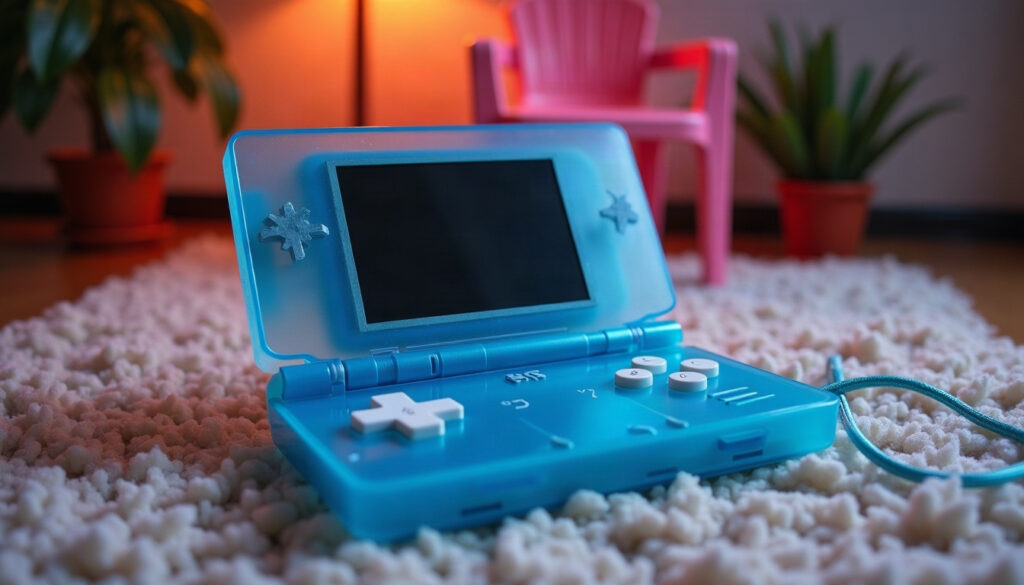
Beep-beep-beep-bwoooop. That’s the game-over jingle, and I heard it a lot on the back step, where I’d been sent to “get some fresh air” with my handheld console. Outside was the only place anyone would let me play, because indoors the family computer owned the good seat.
Today the backyard has switched sides. The to-do list now runs from landscape design to outdoor kitchens to patio installers Reno NV, and the Wi-Fi reaches the back fence. Same yard. Brand-new game.
The back step was our pause button
Then
The back step was where the sun did the work. My handheld console had a screen with no backlight at all, so it came alive in daylight and sulked in a dim bedroom. I tilted it toward the sky like I was catching rainwater, hunting for the angle where the blocky characters stopped looking like smudges.
Retro vault
The original Game Boy had no backlight. Its reflective gray-green screen read best in good light, which is why players chased sunny windows and lamps. Clip-on light accessories were sold for that exact reason.
So we played outside. Not because we loved nature, though some of us came around. Because that was where the screen worked, and the back step turned out to be the quietest corner of the whole house. Nobody ever fought us for it.
Now
These days the screen is a bright phone, and the sun is its enemy. Glare wins outdoors, so the best seat in the yard is often a shaded one. That’s the first thing a good patio crew will ask about: where the afternoon light lands, where the water goes after a storm, and what sits under the surface so it stays level.
Reno is dry and sunny with real winters, so a patio there has two jobs: stay comfortable in summer and keep its shape when the cold shows up. Ask any installer how they prepare the ground. The part you never see decides whether the patio still looks flat a few winters from now.
Shade comes next, whether that’s a tree, a cover or a fence line. Landscape designers think in layers like that, and a good one will talk it through before anything gets dug. Seating, shade, planting and the patio itself all have to agree with each other, like the pieces of a puzzle level.
Multiplayer meant a very short cable
Then
Two players meant sitting hip to hip, because the link cable was about as long as a shoelace. We traded, battled and argued over whose turn it was, all within elbow range. No headset, no lobby, no lag. Just a cable, a porch and a friend who breathed too loudly when concentrating.
Retro vault
Link cables let two handheld consoles of the era talk to each other directly, for head-to-head games and trades. The cable’s short length is why multiplayer was a side-by-side affair.
Nobody called it social gaming. We called it “come over, bring your cable.” If you forgot the cable, you spent the afternoon watching someone else win, which was its own kind of multiplayer. It totally counted as hanging out.
Now
The link cable has a descendant, and it’s the grill. Everyone clusters within elbow range again, except now there’s food. An outdoor kitchen turns a yard into a place people stay, and that’s the whole point of building one.
Planning is a team sport. Counter space, where the smoke drifts, how far guests stand from the heat, whether there’s room to walk past with a tray. A company that installs outdoor kitchens will usually ask about all of it before settling on a layout.
The unglamorous part comes with a warning label. Gas lines and outdoor power are jobs for licensed professionals, never a weekend experiment, and the local building department can tell you which permits apply. Your job is the fun bit: deciding who gets the seat nearest the grill.
A good layout also leaves room to move. Think about the path from the back door to the counter, and where the chairs sit so nobody ends up in the smoke. Sketch that route on paper first. You’ll spot a traffic jam long before you build one.
Level design happens before the first shovel
Then
Before I could beat a nasty level, I mapped it: graph paper, a sharp pencil, and a rule that every corridor got a label. That folded paper map in my pocket was less a cheat sheet than a plan.
Some of us drew our own levels too, with a legend and a boss at the end. Nobody told us we were doing design work. We just wanted to see the whole thing before we walked into it. Mistakes were erasable, which is the beauty of pencil. A wall in the wrong place cost you an eraser smudge, not a weekend. I still remember the satisfaction of finally drawing a loop that got me back to the start without a dead end. Mapping beat guessing every single time.
Now
Now the preview lives on a screen. A landscape designer can show a yard in 3D before anyone breaks ground, so you can walk the level before you play it. That matters when a patio, planting beds and an outdoor kitchen all have to share the same square footage.
The design stage is also the easiest time to change your mind. Moving a line on a plan is simple. Moving a finished patio is not. Here are my top three questions for any pro, ranked by how much heartache they save:
- Where will water go after rain or snowmelt?
- What sits under the surface, and how is it prepared?
- Who handles the gas, power and drainage, and which permits apply?
Write the answers down. Future you will want the notes, and so will anyone who works on the yard later. A good designer or installer will walk you through the plan until it makes sense, so keep asking until it does.
What we kept, what we lost
| Then | Now |
|---|---|
| Back step and a handheld | Patio chairs and a phone |
| Sunlight as the backlight | Shade to beat the glare |
| Link cable, elbow to elbow | Everyone around the outdoor kitchen |
| A pocketful of spare batteries | Outdoor power from a licensed electrician |
| Hand-drawn graph-paper map | 3D design preview |
| Bare grass and a step | Level, well-drained patio surface |
We lost the excuse of being banished outside, and the screen that only worked in sunlight. We kept the best part: a game, a meal or a conversation is better when someone is sitting right next to you.
Hit save
The thing worth keeping from the old days is how close we sat. Plan your backyard around where people will actually sit, and let the gadgets fit around them. Put a spot for the phone to charge near the seating, leave room for chairs to scoot back, and keep the walkways wide enough for a tray. Then call a local pro for the parts that involve gas, power or ground preparation. Press start.
