

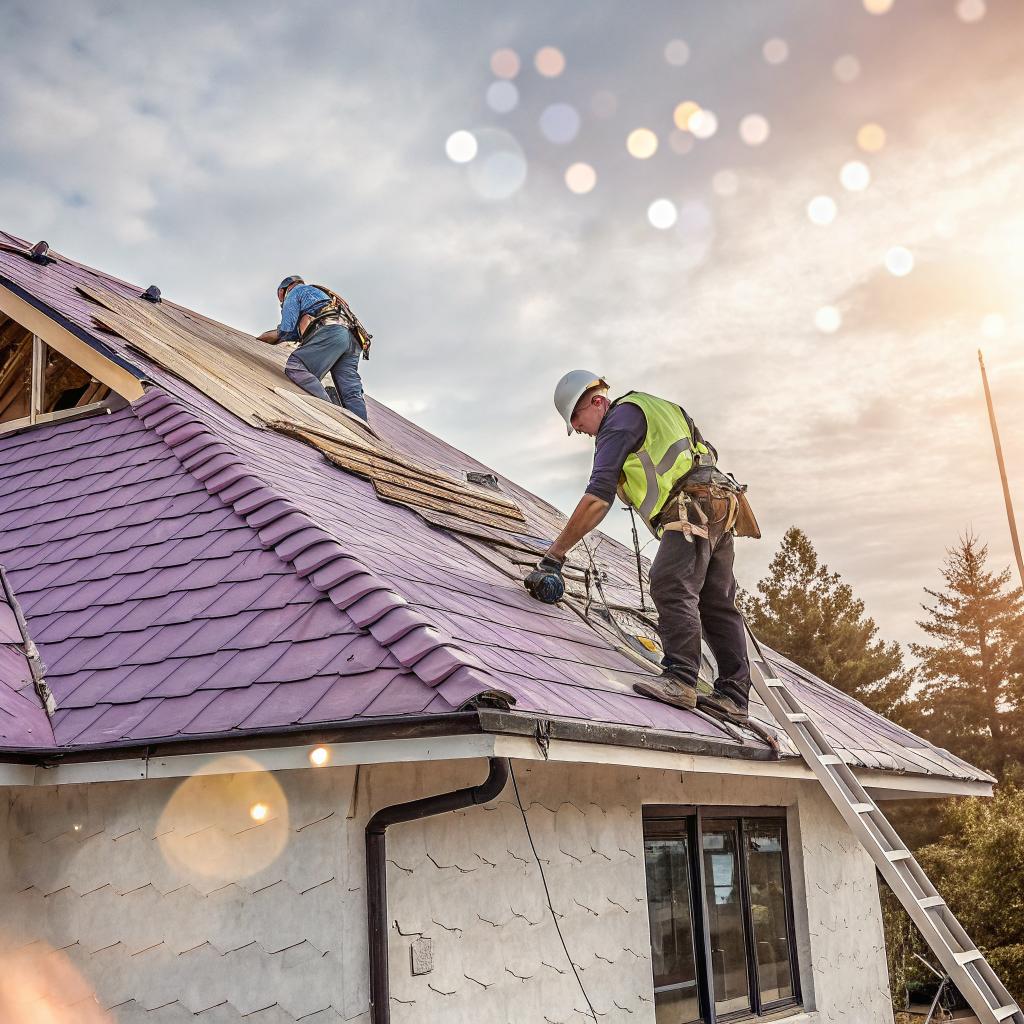
What if I told you that one of the quietest places to see tech progress is on your roof, not in your pocket or on your desk?
The short answer is this: companies like Seattle roofing mix old-school craft with newer tools by doing something very simple, but strangely rare. They treat software, drones, and digital planning as helpers, not replacements, for people who still know how to swing a hammer, read weather patterns, and listen to how wood and metal behave. That mix cuts guesswork, reduces waste, and gives you a roof that feels hand-built but planned with the same care as a circuit board.
That is the core idea. Everything else is just how they pull it off in real houses, on real streets, in real storms.
Why nostalgia and roofing actually belong in the same sentence
If you like stories about how things used to be, roofing is almost the perfect example.
You can probably picture it: a crew on a steep roof, measuring by eye, loading shingles by hand, working off a sketch in a notebook. No satellite images. No digital moisture meters. No drone flyovers. Just tape measures, chalk lines, and whatever the oldest worker on the crew remembered from 30 years ago.
Part of that picture is still true. And to be honest, I think it should be.
But here is where the tension starts. Modern roofs are more complex. You have:
- Solar arrays that need precise placement and wiring paths
- Ventilation systems that affect indoor air and energy bills
- Building codes that change more often than people expect
- Weather patterns that shift faster than old rules of thumb
So you get this weird mix. People miss the reliability and touch of traditional craft, but they also want roofs that work with smart thermostats and solar inverters.
Roofers who ignore tech feel outdated. Roofers who chase every new gadget can feel hollow, like they are testing on your house.
Diamond Roofing and Construction sits in that uncomfortable middle. And that middle is where the interesting stuff happens.
The strongest work usually comes from companies that love old methods enough to keep them, and respect new tools enough to use them carefully.
How tech enters the life of a roofer without ruining the craft
If you ask someone on the crew what changed their day the most, they probably will not say “AI” or “machine learning.” They will say something like:
“It is faster to measure now.”
Or:
“We make fewer second trips.”
Most of the real changes are quiet. They hide inside small steps that repeat on every job.
From eyeballing measurements to digital planning
In the past, a roofer would go up a ladder, walk the roof, stretch a tape measure, and jot numbers on a pad. Good crews were accurate, but it was still a manual process. Any mistake echoed through the whole order.
Now, many roofing teams start with aerial imagery and measurement tools. A lot of them use satellite data. Some use drone captures for more detail.
Here is how the process often looks today:
- They pull up your home on an aerial measurement platform and get a rough layout before the first visit.
- They still climb the roof, but now they use digital measuring tools to confirm and correct.
- They combine both sets of data into a clear material plan.
What changed?
Not that measuring stopped being a craft. It is that the tech catches the small human errors that no one sees until the truck is already back at the yard.
Good tech in roofing does not replace human judgment. It keeps human judgment from paying a price for one tired moment at the end of a long day.
Drones, cameras, and the new kind of roof “inspection” memory
This might be where nostalgia and tech feel furthest apart.
Old version: the roofer climbs, looks around, takes a few photos, climbs down, then describes the damage with words and maybe some blurry images on a phone.
New version: a drone flies a slow grid pattern, taking dozens or hundreds of photos. Software maps them into a model of your roof. The crew still checks in person, but now they can scroll through your roof like a map.
Is the human eye worse? Not really. The human eye is better at noticing odd things: a soft spot in the decking, a sound under a boot, the smell of trapped moisture.
The tech is better at:
- Keeping a record of what the roof actually looked like, not just what people remember
- Showing small cracks or lifting shingles that are hard to see while you are standing on them
- Comparing past images when the next storm hits
That last point matters. Nostalgia loves “before and after” stories. Drones turn those stories into files that crews can re-check years later.
The real magic is not in the drone itself, but in the quiet archive it builds, so the next crew is not guessing about what your roof went through three winters ago.
From paper estimates to transparent digital proposals
If you have ever held a roofing estimate that looked like a car receipt from the 1980s, you know the feeling. The numbers are there. The logic is not.
Modern roofing companies use software that:
- Maps every part of the roof to a material and labor cost
- Attaches photos or diagrams to each problem area
- Lets you see options side by side, instead of in scattered sheets
This is where tech helps trust. You can see each part of your roof as a line item, not just a lump sum.
That said, software can easily slide into pushy sales behavior. Too many “upgrade” buttons. Too many “limited time” messages.
The better companies keep the digital part simple. They use tech to explain, not to pressure.
Where the craft still does the heavy lifting
All of this would be boring if every story ended with “and then tech saved the day.” It does not.
There are parts of roofing that still lean completely on hands, ears, and weather sense.
Reading materials like a language
Think about what sits under your shingles:
- Decking that may be new, patched, or older than both you and the crew
- Underlayment that can be synthetic, felt, or part of a bigger system
- Flashing that bends around chimneys and skylights
You cannot trust software to tell you how brittle an old board has become or how a certain brand of shingle behaves in your specific climate.
Roofers learn that from:
- Seeing how certain materials age over 5, 10, 20 years
- Noticing patterns after big wind or ice events
- Hearing certain sounds underfoot and knowing what is going on below
When a company like Diamond Roofing and Construction picks materials, that choice is not just “what is new this year.” It is also “what survived the last five winters on a similar slope a few blocks away.”
That kind of memory lives in people, not in software.
Craft choices that numbers cannot fully explain
You can model water flow in software. You can calculate load. You can plot nail patterns.
But there are still moments where a foreman decides to:
- Extend flashing a bit further than code requires, because the wind in that spot is strange
- Add an extra fastener line on a ridge that catches storms head-on
- Rebuild a soft section more thoroughly than the minimum, because it “feels wrong” under foot
From a strict spreadsheet view, these might look like small overbuilds.
From the craft side, they are the exact touches that keep future leaks away.
This is where nostalgia is not a weakness. It is a memory of all the times the “bare minimum” failed.
Teaching new roofers to use tech without losing feel
There is a real risk here. When new workers start with software, they can lean on it too much.
If the app says the roof is fine, but the deck creaks, who do you trust?
Strong crews train in almost the opposite order:
1. Learn to walk, feel, smell, and listen to a roof.
2. Learn to measure by hand and read daylight, slope, and drainage.
3. Only then layer in the digital tools, as checks and helpers.
That way, tech is a second opinion, not the only opinion.
You can think of it like driving. You learn to use mirrors and look around before you trust a backup camera. If you reverse your learning, you lean on the camera and lose awareness.
Nostalgia vs progress: how roofing companies walk that line
This kind of website you are reading likes the tension between old and new. Roofing is full of that tension, sometimes in funny ways.
The language problem: “old-school” vs “high-tech”
There is a marketing trap here. If a roofer leans too much into tradition, people worry about quality control or modern standards. If they lean too far into tech language, people worry they are all screens and no skill.
So the wording becomes a balancing act.
You might see phrases like:
- “Locally trained crews with long experience”
- “Modern inspection and planning tools”
- “Traditional workmanship backed by digital documentation”
It can sound a bit flat, to be honest. But the idea behind it is not flat at all.
The real question is this: when tech and craft disagree, which side wins?
In the healthier companies, the person on the roof has veto power over the spreadsheet.
The emotional side of craft
There is another piece that numbers miss. People who spend years on roofs tend to care about them in a way that is hard to fake.
They remember storms by the houses they damaged. They remember a certain ridge as “that tricky one with the surprise rot.” They tell stories about tough jobs.
Tech does not really hold stories. Files, yes. Stories, no.
So when a company keeps long-time crew members and pairs them with new tools, you get this odd mix:
- Old memories of ice dams, leaks, and fixes that worked
- New data about wind zones, solar gain, and code changes
Sometimes the memory wins. Sometimes the data does. The work lives in the argument between them.
How this looks on an actual project
To keep this grounded, here is a simple example of how craft and tech might blend on one job.
| Stage | Tech part | Craft part |
|---|---|---|
| Initial check | Aerial measurement gives a quick estimate of roof size and pitch. | Roofer walks the roof, presses on suspect spots, checks attic for daylight and moisture. |
| Damage assessment | Drone captures high-resolution images of valleys and ridges. | Crew taps decking, inspects by hand, smells for mold, notes where ice usually forms. |
| Planning | Software calculates material quantities and cost options. | Foreman chooses specific flashing details, starter courses, and nail patterns based on experience. |
| Installation | Digital schedule and checklists keep tasks organized. | Roofers cut, fit, align, and adjust by sight and touch, not just by lines on a screen. |
| Final review | Photos and checklists stored for records and warranties. | Foreman does a slow hand-run over edges and penetrations, listens during first rain if possible. |
The fancy part is a thin layer. The human part is thick.
Energy, solar, and the new roof “ecosystem” (for lack of a better word)
Modern roofs are not just barriers. They are closer to platforms.
You see this with:
- Solar panels that need roof-integrated racking
- Battery systems that depend on predictable roof performance
- Smart vents that respond to conditions inside and outside
Here is where tech is not optional anymore. Matching solar layouts with roof structure requires:
- Load calculations
- Wiring paths that keep penetrations secure
- Coordination with electricians and sometimes utility rules
But the crew still has to know basic things like:
- How to flash around mounts so water does not sneak in two years later
- Which side of a ridge sees the worst weather
- Where snow tends to slide and where it tends to pack
There is a strange comfort in this.
Your smart home might talk to the grid. Your thermostat might learn patterns. But the system still depends on sheet metal bent by hand and nails driven to the right depth.
What this means for you if you are choosing a roofer
This is where it gets practical. If you care about nostalgia, progress, and tech, you probably do not just want a roof that “passes inspection.” You want to feel like your home sits at a good point between old and new.
So what should you watch for?
Questions to ask a roofer about tech and craft
You do not need to quiz them like an engineer. Simple questions can reveal a lot.
- “How do you measure my roof before you start?”
Listen for a mix of aerial tools and manual confirmation. - “Who actually installs the roof, and how long have they been doing this kind of work?”
Try to find out if crews are stable, not just hired per job. - “What kind of photos or records will I have when you are finished?”
Digital records help later if you sell or file an insurance claim. - “What do you do different on roofs in this neighborhood compared to other areas?”
A good roofer should be able to talk about local wind, trees, snow, or rain habits from experience. - “If a drone or software report says one thing and your foreman thinks another, how do you decide?”
This one matters more than it seems. The answer shows who has final say: the screen or the craft.
If all you hear is tech buzzwords, something is off. If all you hear is “we have always done it this way,” something is also off.
You are listening for a mix, even if they do not describe it perfectly.
Signs that tech is helping, not leading
When tech is serving the craft, you will notice little things like:
- Clear before and after photos tied to specific repairs
- Simple diagrams that explain what is under your shingles
- Schedules that update cleanly when weather shifts
- Options presented with pros and cons, not just “good, better, best” packages
When tech is driving the process in a bad way, you get:
- Endless upgrade suggestions without clear reasoning
- Very polished digital proposals with vague labor descriptions
- Quick answers that change when you ask for on-site confirmation
If you care about the evolution of craft, this is your filter. Ask yourself: does the tech reveal the work, or hide it?
Why this story fits a nostalgia and tech audience
It might feel odd to say, but roofing tells the same story as many other crafts that are now half-digital:
- Photography moving from film to sensors
- Music recorded on tape, then on screens
- Print shops adding digital presses next to old machines
The feeling is familiar. Some people miss the old tools. Some chase new ones. The most interesting work usually lives between those two reactions.
Roofing has its version of that: chalk lines next to drones, nail guns next to detailed digital plans.
And, quietly, roofs shape more of your daily life than a lot of flashier tech. They affect:
- How your home sounds during rain
- How heat and cold move through rooms
- Whether you trust your space in a storm
If you like thinking about where tradition and progress meet, your own roof is actually a pretty good place to look.
Q & A: Common questions about craft and tech in roofing
Q: Does a “high-tech” roofer always do better work?
A: No. Tech helps planning and documentation, but the actual roof still lives or fails by hands, training, and judgment. A modest company with strong craft and simple tools often beats a flashy one with poor crews.
Q: Are drones and digital measurements just marketing?
A: Sometimes they are used that way. But when used well, they reduce measurement mistakes, improve safety on steep or fragile roofs, and keep a record for future repairs. The key is whether crews still climb and verify, not just trust the screen.
Q: If I like traditional methods, should I avoid tech-heavy companies?
A: Not automatically. Look for those that talk easily about both: how they train installers and how they use tools. If they can tell clear stories about past jobs and also show you clean digital records, you probably found a good balance.
Q: What part of roofing craft do you think tech should never replace?
A: The simple act of walking the roof, listening to it, and deciding where it feels weak. No camera or sensor fully replaces that mix of balance, touch, and caution. Tech can add a second look, but that first walk should still belong to a person.
Q: Where do you think roofing tech will actually help next?
A: Probably in predicting long-term wear more honestly. Not “this roof lasts 30 years” as a slogan, but “on houses like yours, with this slope and weather, here is the pattern we see over 10, 15, 20 years.” If that prediction gets tied back to craft choices, not just product labels, then the mix of old and new will feel even more useful.
