

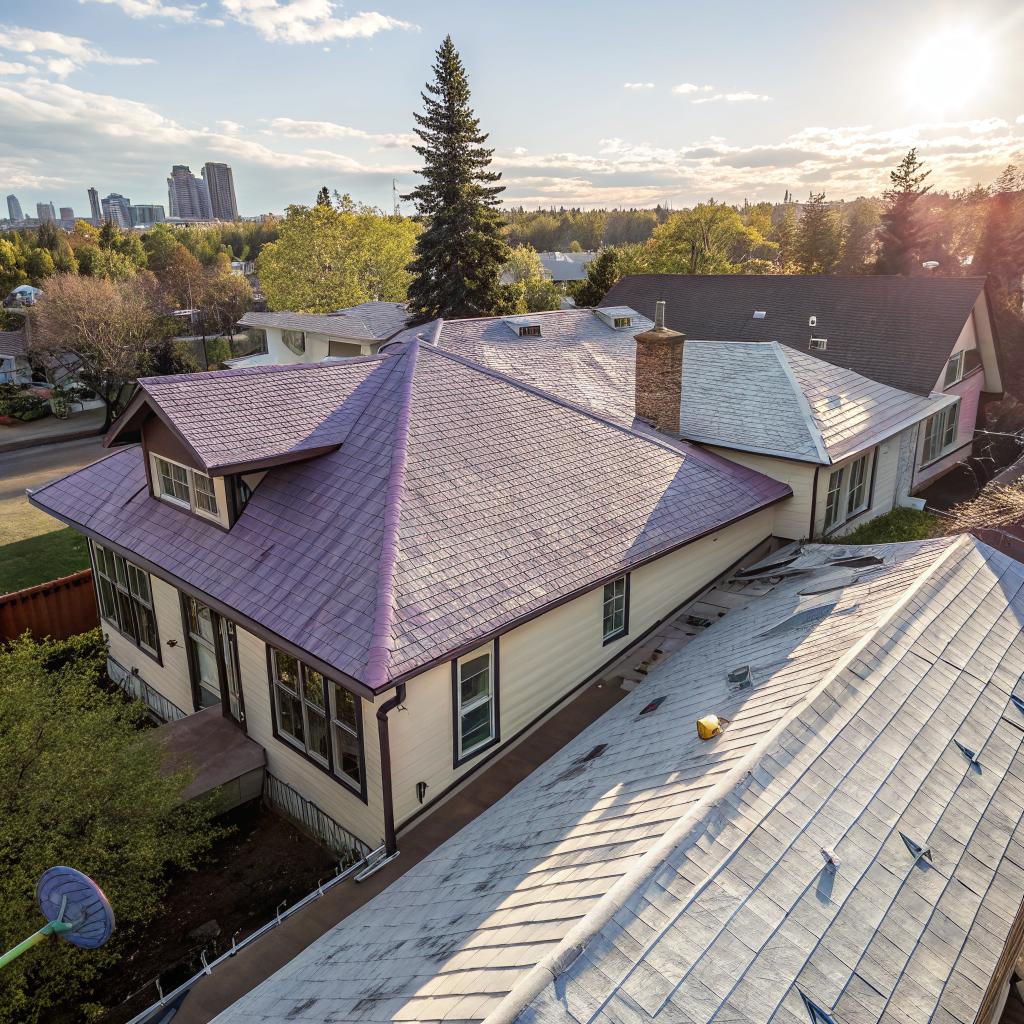
What if I told you that the average roof in Calgary not long ago was little more than wood, tar, and whatever the wind did not blow away, and that today some roofs here can text your installer when they start to fail?
In short, roofing in Calgary has moved from simple tar paper and cedar shakes to layered systems of engineered shingles, membranes, vents, and even sensors. If you search for roofing calgary today, you are not just choosing colors. You are making decisions about energy use, storm resilience, and how much of your weekend you want to spend thinking about leaks. The old roofs were lighter on tech but heavier on risk. The new ones are far more stable, but also a bit more complex and less forgiving if you get the details wrong.
That is the short answer. The longer story reaches back through a mix of nostalgia, weather, and a surprising amount of chemistry.
From tar paper and shakes to shingles and membranes
If you ask someone who grew up in Calgary in the 1960s or 70s what their parents roof looked like, they will probably say one of three things: cedar shakes, asphalt shingles, or some kind of flat tar-and-gravel surface.
Each of those choices made sense at the time. They matched the building styles, the costs, and what people knew then about weather. They also say a lot about how people here thought about risk. Roofs were, in many cases, something you expected to patch often, not a 30-year promise.
Old Calgary roofs were about getting through winters. New Calgary roofs are about managing decades.
That shift did not happen overnight. It came in steps, usually after storms, fires, hail seasons, and a lot of insurance claims.
What older Calgary roofs were made of
Here is a rough picture of common roof types in Calgary from mid‑20th century to now. This is not perfect, but it gives you a working sense of the changes.
| Period | Common roof type | Main materials | Typical lifespan (real-world) | Key weak point |
|---|---|---|---|---|
| 1940s–1960s | Steep cedar shakes | Wood shakes, felt, basic nails | 15–25 years | Fire, rot, mold |
| 1950s–1980s | Flat tar & gravel | Tar (bitumen), felt, gravel | 10–20 years | Ponding water, cracking |
| 1970s–1990s | 3‑tab asphalt shingles | Organic mat, asphalt, light granules | 10–18 years | Hail, curling, wind uplift |
| 1990s–2010s | Architectural shingles | Fiberglass mat, modified asphalt | 20–30 years | Improper ventilation, cheap installs |
| 2010s–today | Impact‑rated shingles / metal / membranes | Polymer‑modified asphalt, steel, TPO/EPDM | 25–50+ years (type-dependent) | Cost, design complexity |
Looking at that table, you might notice something that is easy to miss: the biggest weak points moved from the material itself toward the design and the installation.
Tar cracked. Wood rotted. Early asphalt got shredded by hail.
Today, the material is often strong enough. The trouble comes when a vent is in the wrong place, or the attic has no air movement, or someone nails into the wrong rafter.
Calgary weather is the main plot twist
You cannot talk about roofs here without talking about the sky. Calgary weather is not gentle. You know this if you have watched hail hit sideways in July or seen a Chinook melt a driveway overnight.
Roofs here live in a strange loop:
– Deep cold, then sudden thaw
– Heavy snow, then wind that scours it off
– Intense sun at altitude, then late day temperature drops
– Hail that can be small but sharp, or large and destructive
Older tar paper systems had almost no chance against this over time. Seams split. Gravel shifted. The membrane baked, then snapped when the temperature plunged. Contractors patched and patched again.
Modern roofs accept that this cycle will keep happening. The whole idea now is not to resist every change, but to flex with them in a controlled way.
Good modern roofing in Calgary is less about building a shield and more about building a controlled escape route for water, heat, and pressure.
That sounds a bit abstract, so let us break it down into pieces you can actually see on a real house.
What changed on the roof itself
Most people notice two big things: the look of the shingles and the color choices. Those did change. But the more interesting changes are hidden under that top layer.
Here are the main shifts you can see if you compare a roof from around 1975 to one built in the last few years.
- Stronger shingle design and materials
- Better underlayments and ice barriers
- Improved flashing and detailing
- More attention to attic ventilation
None of these is mysterious. They are small, practical upgrades that change how the roof behaves over time.
From basic asphalt to impact rated shingles
Older 3‑tab asphalt shingles were simple. A flat strip, three tabs cut into it, nailed in straight rows. Easy to produce, and cheap, but limited.
They had a few recurring issues in Calgary:
– Tabs tore off in strong wind
– Hail bruised the asphalt and exposed the mat
– UV from the sun dried out the asphalt quickly
– They did not hide deck imperfections, so roofs often looked wavy
Modern architectural shingles are thicker and laminated. They stack layers of asphalt and granules. The fiberglass mat does not soak up moisture like older organic mats. On impact rated models, the asphalt is modified with a polymer to give it more flexibility in cold and under impact.
That means:
– Better survival in hail storms
– Less blow off in wind
– Longer color retention
– Slightly higher weight, which helps stability
They are not perfect. Some of the marketing around them overpromises. A hailstone large enough and fast enough will still damage almost anything. But in the mid range of normal Calgary hail, they handle abuse that would have destroyed older roofs.
Underlayments and ice protection got smarter
Tar paper was simple. Roll it out, overlap it, nail it down. It worked well enough until it got wet, tore, or folded. It was also not great with ice dams along eaves.
Today you will see two main changes under the shingles:
– Synthetic underlayments
– Self sealing ice and water membranes at critical zones
Synthetic underlayments look like fabric or plastic sheets. They resist tearing, handle UV exposure better during construction, and shed water more reliably.
Ice and water membranes are sticky sheets that bond to the deck. They create a sealed area where water is most likely to back up, such as:
– Along eaves
– In valleys
– Around skylights and chimneys
– Low slope transitions
That is not very glamorous, but in a Chinook cycle where snow melts during the day and refreezes at night, that bond matters. It reduces the chance of water backing up under shingles and finding the smallest nail hole.
If you live in Calgary, the fight against leaks often starts at the bottom edge of your roof, not the top.
Flashing went from “good enough” to “this is the whole game”
Ask any experienced roofer here what actually leaks. Most of them will not say “the shingle field.” They will say something like “valleys, walls, chimneys, vents.”
Flashings are the metal pieces that bridge those intersections. Older roofs often used basic L‑shaped metal or re-used pieces. Some relied on roofing cement as a fix-all.
Now, better practice includes:
– Pre-formed step flashing along walls, each course integrated with shingles
– Proper valley metal or woven shingle valleys, depending on design
– Dedicated chimney flashings with counter flashing set into the masonry
– Gaskets and boots sized correctly for each vent pipe
A roof can use premium shingles and still fail if the flashing is rushed. This is where the human factor shows up most clearly, more than the material choice.
Ventilation moved from afterthought to design requirement
In older homes, attics often had one or two static vents and maybe some small soffit openings. Many had none at all. The attitude was simple: keep the heat in, especially in winter.
We now know that trapped heat and moisture do more damage over time than some heat loss through the attic. Calgary roofs suffer when warm indoor air reaches a cold roof deck, condenses, and freezes. That cycle rots wood from the inside out.
Modern roofing systems in the city usually aim for a balanced setup:
– Intake vents along the soffits
– Exhaust vents at or near the ridge
– A calculated air flow ratio tied to attic size
This balance helps:
– Keep roof deck temperatures more stable
– Reduce ice dam formation
– Keep insulation dry and performing closer to its rating
If you are into tech and sensors, this is a spot where basic science meets real outcomes. Some homeowners now put small sensors in attics to watch temperature and humidity over time. That kind of monitoring would have seemed ridiculous 40 years ago.
How building codes, insurance, and money pushed change
Roofs did not change in Calgary just because materials got better. They changed because rules tightened, premiums went up, and people grew tired of replacing their roofs every decade.
Building codes followed the weather
City and provincial codes gradually added:
– Stricter nailing and fastening patterns
– Requirements for ice barriers along eaves
– Clear rules about venting and insulation
– More precise slope requirements for each roofing type
These are not just paperwork. They push installers away from shortcuts that used to be common, like skipping underlayment on small overhangs or leaving valleys under-detailed.
Of course, codes usually follow pain. A string of hail storms or ice dam seasons exposes weaknesses. Inspectors, insurers, and contractors eventually agree on tougher rules.
Insurance companies started caring about shingle technology
If you talk to a long-time homeowner here, you will sometimes hear a pattern like this:
– House built with basic shingles
– First big hail storm destroys them
– Insurance replaces them with slightly better shingles
– Future storms still cause repeated claims
Insurers did not love that pattern. It meant frequent payouts on the same houses. Over time, many began to:
– Push impact rated shingles in high risk areas
– Adjust premiums based on roof age and type
– Limit coverage for older, worn roofs
– Offer discounts for certain materials or upgrades
That nudged the market toward stronger products. Not because everyone woke up suddenly caring about roof tech, but because money flowed that way.
Homeowners started doing more research
This is one place where your nostalgia and your laptop meet.
In the past, someone might call a single local roofer, get a quote, and go ahead. The contractor used what they were familiar with. Information was limited and local.
Now, a homeowner can:
– Watch detailed installation videos
– Compare shingles from many brands
– Read claims data on hail damage trends
– Ask neighbors in online forums about their experiences
There is still confusion, and sometimes that extra information just brings more stress. But in general, people here now treat a roof as a major project worth understanding, not just a big dark surface out of sight.
From nails and ladders to drones and sensors
This is where technology gets more obvious. Roofers in Calgary still climb ladders, carry bundles, and use nail guns. That part stayed old-school. Around that core though, a lot changed.
Drones changed roof inspections
If your house is tall, or your roof has a lot of complex angles, a full manual inspection used to be tough and slow. It also carried risk for the person on the ladder.
Now many roofing contractors here use drones to:
– Capture high resolution photos of every surface
– Zoom in on suspected hail hits
– Build basic 3D models for measurement
– Check steep or fragile areas that are hard to walk safely
Drones do not replace the need to check the attic or touch the shingles. But they give a faster, broad view. For an insurance claim, having a clear, dated image set is helpful. It also avoids some guesswork about where to focus repairs.
Digital measurement and planning tools
Old school quotes often involved tapes, wheels, and a lot of sketching. That still works, and some experienced roofers do it very well. The newer method often blends that experience with software.
Satellite and aerial imagery tools can:
– Measure roof perimeter and area
– Identify slopes and facets
– Highlight complex sections that could increase labor
Combined with site visits, this can:
– Reduce material waste
– Help plan crew size and staging
– Estimate load impacts for heavier materials like concrete tile or metal
Here is a simple comparison of how a mid-size roof project might be planned then and now.
| Step | Old approach | New approach |
|---|---|---|
| Measurement | Tape, wheel, hand-drawn sketch | Drone, satellite, digital model plus site check |
| Material planning | Rules of thumb, round up to be safe | Exact counts from software, small buffer added |
| Risk checking | Walk where safe, guess on hidden areas | Combine attic view, drone images, and deck probing |
| Homeowner review | Paper estimate, verbal explanation | Digital report with photos, options, and timelines |
Some people love that level of detail. Others just want a number and a date. The tech does not change the fact that someone still has to swing a hammer. It just helps avoid surprises.
Smart vents, ice sensors, and basic monitoring
This part is still early, and it is easy to oversell it. You can now find:
– Powered attic fans with smart controls tied to temperature and humidity
– Basic leak sensors along key interior points where past problems occurred
– Weather stations tied to your home that log local hail, wind, and temperature
Do you need all of that on a typical Calgary home? Probably not. But if you own a valuable property, or you had several expensive water problems, some small sensors can pay for themselves by catching a problem early.
There is a risk here of going too far. A roof that relies only on gadgets, while the basic flashing and shingle work is poor, is worse than a simple, well built roof. Tech should support good practice, not replace it.
Nostalgia vs reality: did older roofs have any advantages?
If you have ever walked under old cedar trees and smelled a shake roof in the sun, you know there is something pleasant about it. Older roofs also had a kind of honesty. You could look up and see the structure, read the age in the curls and stains.
So, were they better in any way?
What older Calgary roofs did well
Some things the older systems did fairly well:
- They were usually simpler, which made some repairs easier.
- Materials like cedar had decent natural insulation value.
- Many roofs were overbuilt structurally, just by habit.
- You could often patch small areas without worrying about warranties.
There is also the psychological part. When everyone expected to repaint, patch, and mend often, a leak was annoying but somewhat normal. Today, people expect 30 years with almost no attention. That shift in expectations makes any failure feel larger.
Where nostalgia can mislead you
Memory trims out a lot of the messy parts:
– Fires on wood shake neighborhoods
– Chronic ice dam problems long before anyone talked about “ice and water”
– Poor attic insulation that drove up heating bills
– Frequent small leaks that families just “lived with”
If you could see heat loss maps of Calgary neighborhoods in the 1970s and compare them to many areas today, you would probably not wish for the old roofs back.
There is also a social part here. People sometimes remember the old roofs as cheaper. In pure dollars, that was true. In total cost over 30 or 40 years, with repeated re-roofing, lost energy, and damage, the picture changes.
What all this means if you care about tech, history, and your own roof
If you like nostalgia and like to see how tech creeps into everyday stuff, roofing in Calgary is an interesting little case study. It ties together:
– Material science
– Weather data
– Human trust and memory
– Money and risk
And you, standing in your yard, staring up, trying to figure out what to do next.
Questions to ask yourself about your own roof
You do not need to become a roofer. But you can ask better questions that line up with what actually matters here.
Start with “how does water leave my house at every edge and corner” before you ask “which shingle color do I like.”
Some practical questions:
- How old is my current roof, and what material is it really made of (not just “it is black shingles”)?
- Has anyone checked the attic for ventilation and moisture, not just the outside surface?
- Where did past leaks occur, and were they fixed at the surface or at the root cause?
- Am I in a part of the city that routinely gets stronger hail or wind?
- Do I plan to live here long enough for a premium material to make sense?
You might find that your roof is fine, and that you only need better gutters or minor flashing fixes. Or you might find that your 15-year-old 3‑tab shingles that have been through multiple hail storms are closer to failure than you thought.
How tech-focused should a Calgary roof be?
This is where opinion comes in. There is no single right answer.
If I had to split it, I would say something like:
– Focus 70 percent of your attention on core build quality: deck, underlayment, flashing, ventilation, and careful installation.
– Spend 20 percent of your attention on material choices: impact rating, color, matches with your climate zone and budget.
– Leave 10 percent for extras: monitoring, smart vents, insurance-driven tweaks.
Going past that, chasing every new gadget, probably gives you more to maintain than benefit. On the other hand, avoiding all tech on principle just because the word “sensor” bothers you can cost you simple wins.
Is a “high tech” roof worth it in Calgary?
Let us end with a direct question and a clear answer.
Q: Should you push for the most advanced, tech-heavy roof you can get in Calgary?
A: Not usually. For most homes, the sweet spot is a modern, impact‑rated shingle or metal system, laid over smart underlayments and ice barriers, with clean ventilation and careful flashing. Add simple monitoring only where it helps a known weakness, not as a replacement for real workmanship.
The nostalgic part of you might miss the smell of cedar or the crunch of gravel underfoot. The practical part of you probably wants a quiet, well behaved roof you do not think about too often.
If your next roof can do that for decades, in this climate, with this weather, that is a pretty good mix of past lessons and present tech.
