

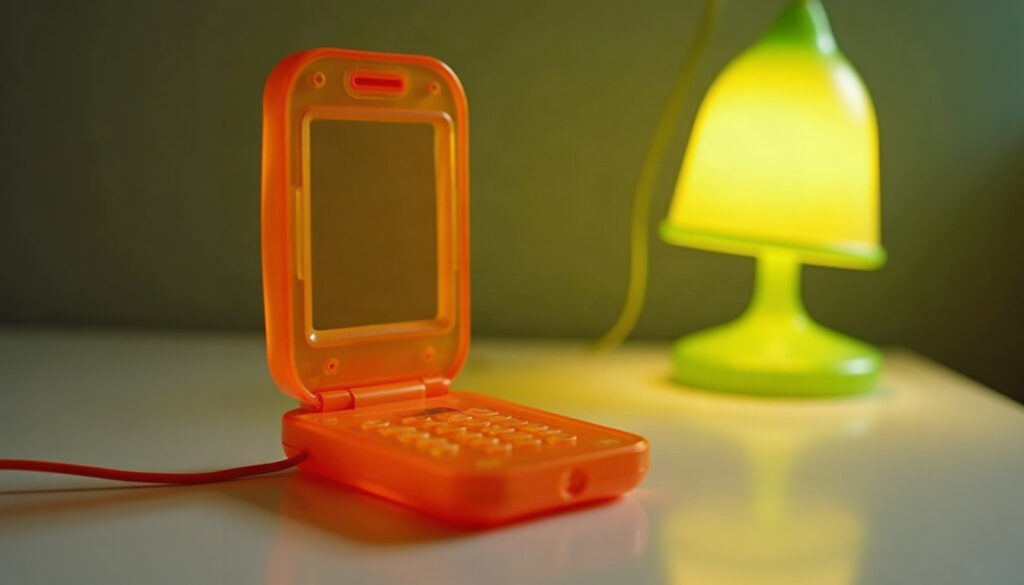
Flip it open, feel the little detent in the hinge, then snap it shut. A good flip phone ended a call with a click you could feel in your thumb, and everyone in the room knew the conversation was over.
I still judge hardware by that click, windows included. If you’re reading up on window installation Colorado Springs CO, you’ll see the same basics come up again and again: the glass, the frame, the seal and how the whole thing closes. A flip phone turns out to be a decent teacher for all four.
A hinge you could trust with your thumb
Then
The clamshell hinge was the part you handled most, and the part that told you how the phone was built. A cheap one wobbled sideways and rattled. A good one swung smoothly, stopped where it should and held its position, and it kept doing that after a thousand pockets and a couple of drops.
Keep-it-alive tip from the collector’s shelf: hinges mostly suffer from dust and lint, not from age. Store old phones closed, dry and out of the pocket fluff. If one gets stiff, leave it to somebody who repairs electronics. Prying at it is how a nice hinge becomes a paperweight.
Retro vault
The clamshell, or flip, design folded the keypad and the screen against each other on a hinge. It protected both from keys and coins in a pocket and made the phone shorter to carry.
Now
A window has a hinge-and-latch story of its own. Depending on the style, a sash slides, tilts or swings out, and the way it does that tells you a lot. When you handle a window, open it, close it and lock it, more than once. It should move without rubbing or sticking, and the latch should meet its partner without a fight.
Here’s the thing most people miss: the installation matters as much as the product. A good window set in a frame that is out of square will still catch and stick. That is why the person doing the install is worth asking questions of. A local specialist can show you how the window will open, what room it needs and how it fits the wall around it. Treat the hands-on test like an unboxing. Operate it before you decide.
The battery door that never quite closed
Then
Every phone had a battery door, and every battery door had a personality. Some snapped on with a crisp click. Some needed a thumbnail and a prayer. After enough swaps, the little tab wore down, and the cover sat a hair off, so we fixed it with a rubber band and called it a feature.
Retro vault
Early mobile phones had removable batteries. You popped off the back cover, slid the battery out and put in a charged one, which is how people carried a spare for a long day.
The door was really a seal, of sorts. Dust crept in at the gap, and damp crept in behind it. Anything that opens and closes for years has to close properly every time, or it fails slowly.
Now
The seal around a window does the same job. Weatherstripping and the gap between sash and frame decide whether the room stays comfortable. Colorado Springs weather is dry and sunny, with cold winters and wind that finds every gap, so a poor seal shows up as a draft you can feel and a heating bill you can see.
A few low-effort checks help, and none of them involve taking anything apart:
- On a windy day, hold the back of your hand near the closed window and feel for moving air.
- Wipe dust out of the tracks and sills with a soft brush, and keep drainage slots clear.
- Look for fog or moisture between the panes. That means the seal has failed, and it is a job for a professional.
Anything past that, such as removing sashes, resetting glass or opening up a frame, is not a hobby project. Glass is heavy, edges are sharp, and the frame is part of the wall.
Screens that vanished in the sun
Then
Take a flip phone outside on a bright day and the little screen turned into a mirror. You’d tilt it, cup your hand over it, squint, and walk toward a patch of shade like a person hunting for a signal. The home computer had the same disease: a window beside the monitor, and a glare that painted the afternoon across the desktop.
We solved it with the curtain, the tilt and the angle of the chair. Nobody called it ergonomics. We called it “ugh, the sun.”
Now
The same fight happens in the home office today, and the window is the only part of the room that can really settle it. Light is welcome, glare is not, and the sunny climate in Colorado Springs gives you plenty of both. Windows come with different glass options that change how much heat and light pass through, so ask the installer what’s available and what each choice does. Don’t expect a spec sheet from a blog.
If your house is older, mention it early. Paint on old frames can contain lead, and scraping or sanding it should be left to a licensed professional. Same goes for any rot or damage you find behind the trim. A good installer will tell you what they see before the work starts, which is the kind of honesty I’d take over a shiny brochure any day.
What we kept, what we lost
| Then | Now |
|---|---|
| Hinge detent told you the phone was well made | Smooth sash and a latch that meets its partner |
| Wobbly hinge meant a cheap phone | Window that rubs or sticks may be out of square |
| Battery door gap let in dust | Weak seal lets in drafts |
| Rubber band fixed the loose cover | Fogged glass needs a professional |
| Cupped a hand over the screen in the sun | Glass options help with glare and heat |
| Store old phones closed and dry | Keep tracks and sills dusted and clear |
We lost the satisfying snap and the rubber-band repairs. We kept the instinct that something you handle every day should feel solid. A window is the biggest gadget in the room, and it deserves the same scrutiny.
Hit save
The old-days habit worth keeping is testing the click before you commit. Today’s nudge: before any work begins, photograph each window from inside and out, open and closed, and jot down what annoys you about it. Take that list to your installer. Gruff advice, but sound: if it doesn’t close right in the showroom, it won’t close right at home.
