

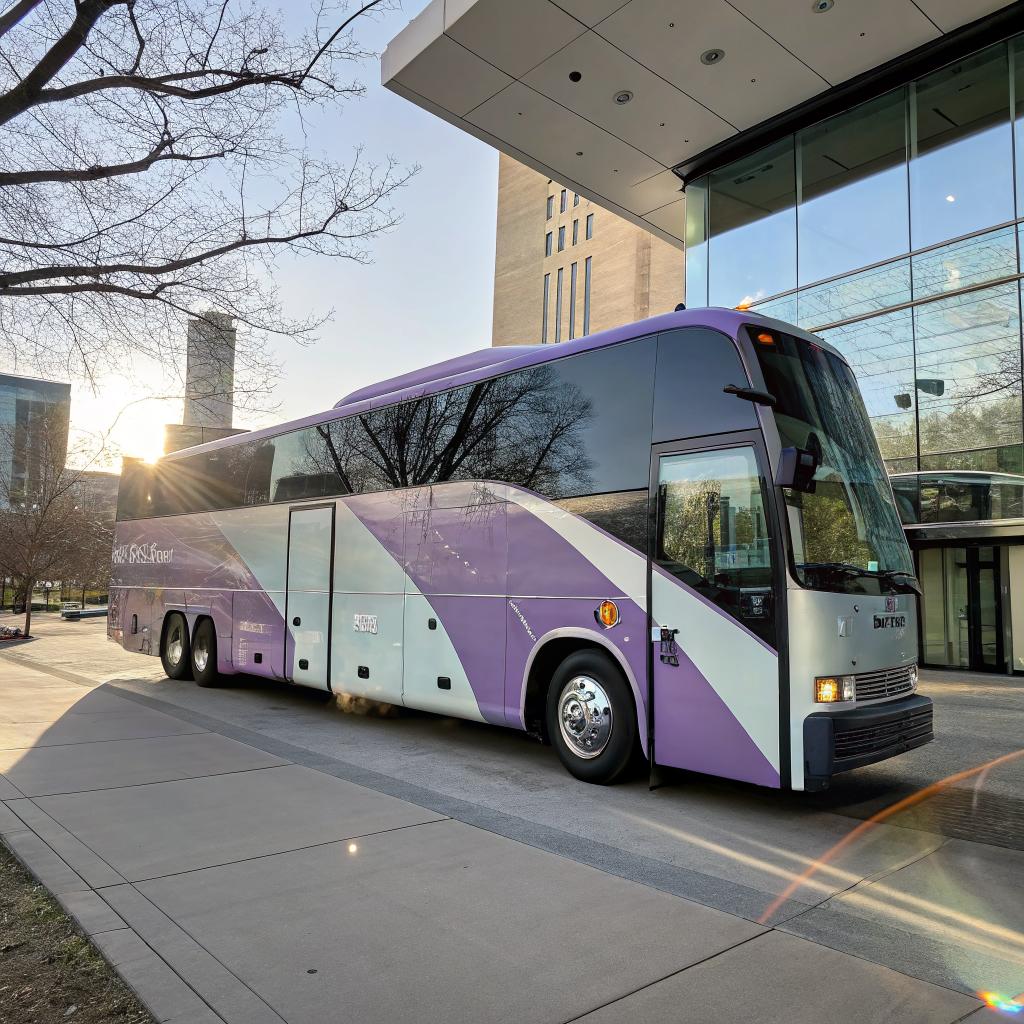
What if I told you the closest thing to time travel in Denver is not VR goggles, a museum, or some secret government lab by the airport, but a plain-looking bus full of people you already know?
The short answer: when you book a Group charter bus rental in Denver, you turn normal travel into a rolling time capsule. Everyone is in one place, your phones come out less, old stories come out more, and the city outside the window starts to feel like a slideshow of past and present Denver at the same time. It is part nostalgia trip, part tech upgrade, packed into a moving box on wheels.
You can probably picture it already. The quiet hum of the engine. Someone in the back playing a playlist that jumps from 90s rock to early 2000s pop, then gets interrupted by a TikTok audio. Your friend pointing out the old brick building where their parents worked, while someone else is streaming a game on the bus WiFi. That mix of old and new is what makes this feel a bit like you are bending time, even if you are just going from Union Station to Red Rocks.
Why a charter bus feels strangely like time travel
We usually think of tech as something that pulls us away from the past. It replaces, updates, overwrites. Old malls become data centers. CDs turn into playlists. Maps fold into apps.
A group bus flips that pattern a little.
You are using modern tech: GPS routes, booking tools, bus tracking, onboard outlets. But what you do with that tech is oddly retro:
- You stay together, instead of scattering into separate rideshares.
- You watch the city roll by, instead of staring at your own map.
- You talk to each other, sometimes with no screen in between.
It feels old and new at the same time. You get the comfort of upgraded seats and climate control, but the social rhythm feels closer to a school field trip than to a 5 star app-based ride.
The strange thing about riding a charter bus in Denver is that the tech fades into the background, and the people become the main event again.
I think that is part of why these trips stick in your mind. Your brain remembers the jokes, the arguments about which decade had better music, the way downtown Denver looks different out of a big window than it does on Google Maps.
Denver as a living timeline out your window
Denver is a good city for nostalgia. It keeps changing, but it rarely changes all at once. Sometimes you turn a corner and it feels like two different years are arguing with each other.
The old, the new, and the in between on a single route
If you planned a simple group route, maybe for a company event or a big family weekend, your bus might roll through places that tell a pretty clear story of evolution without anyone saying a word.
For example, imagine a route like:
- Pickup near Union Station
- Loop through LoDo and RiNo
- Stop in an older neighborhood where someone grew up
- Head out toward Red Rocks or Golden for an event
Look at how those spots line up on a mental timeline:
| Stop | Past vibe | Present tech / change |
|---|---|---|
| Union Station | Historic rail hub, early Denver life | Transit screens, apps, co-working spots, restaurants |
| LoDo / RiNo | Warehouses, factories, rail yards | Murals, breweries, startups, galleries |
| Old neighborhood stop | Childhood houses, local shops, older streets | New builds, coffee chains, fiber internet, e-bikes |
| Red Rocks / Golden | Geology, early settlers, classic concerts | Digital ticketing, LED lighting, live streaming |
From your seat on the bus, this is just a ride. But for people who have lived in or visited Denver at different times in their life, each stop pokes at a different memory.
Someone might say, half laughing, “I remember when this block was just a parking lot.” Someone else might pull out photos from an old phone or even a printed one, and that sparks more stories. At the same time, navigation is dead simple because the driver is using real-time routing. No one in the group needs to think about exits, traffic, or maps.
That split is interesting. Human memory on one side. Routing algorithms on the other.
The bus connects your past version of Denver with the current version, so your memories and the city can argue with each other a little.
Old-school group travel, upgraded by quiet tech
If you strip away the booking process, GPS, and WiFi, a charter bus is a very old idea. Get people together in one vehicle and move them from A to B.
But the details matter.
What has actually changed on modern group buses
Not every vehicle is the same, but most decent group charter buses now include things that would’ve felt like science fiction to your younger self.
- Power outlets at seats, so your phone does not die halfway to the mountains
- WiFi that lets people message, work, or stream
- Better climate control so you do not freeze in the front and overheat in the back
- Seat designs that are a bit kinder to your back than older buses
- Navigation support so drivers are not guessing on side streets or weather
This creates a weird blend. The format is very familiar: rows of seats, the narrow aisle, the big windshield. The experience feels more like sitting in a moving lounge where your past trips and your current tech habits meet.
Someone in front might be scrolling through old Facebook albums to show pictures from a college trip to Denver. In the back, another person is watching a tutorial video about some new app. The bus holds both timelines without caring.
You can be watching a 4K stream while staring at a 100 year old brick building out the window, and it feels surprisingly normal.
Why groups feel different on a bus than in separate cars
If you take the exact same people and split them into different cars or rideshares, the day feels different. You arrive at the same place, but the social part is weaker.
On a bus, you have shared context. You hear the same jokes, see the same landmarks, go through the same delay at the same time. That builds a kind of low-key, automatic memory.
Memory works better with shared small moments
You probably do not remember the exact conversation you had in a rideshare three years ago. But if your whole group was stuck on a bus in a snow flurry near downtown, and the driver put on some local radio, and someone started a trivia game, that might stick.
Cold, traffic, music, the view of the city, and the faces around you all layer into one memory.
On a group charter ride, those small events happen more often:
- A song comes on that someone associates with a high school dance.
- Someone points out the old Mile High Stadium site and complains about feeling old.
- Two people who barely talk at the office end up sitting next to each other and find out they both loved the same early smartphone.
Half of that sounds trivial, but those are the details people bring up years later. That is where nostalgia hides.
Connecting nostalgia, evolution, and tech on one bus
If you like thinking about how tech changes human habits, a charter bus in Denver is a simple but interesting case study.
Old mental models, new tools
There is something almost stubborn about group buses. While transport apps try to make travel more personalized and on demand, a bus does the opposite:
- Everyone shares one schedule.
- Everyone shares one physical space.
- Everyone shares the same delays and shortcuts.
Yet the bus uses the same digital tools behind the scenes. Online booking, route planning, real-time traffic data. It is not anti-tech. It is tech that still respects a very old pattern of moving groups.
If you pay attention, you can see three “layers of time” stacking on a trip like this:
| Layer | What you see | Where tech fits |
|---|---|---|
| Past | Old brick buildings, rail lines, first trips to Denver, school buses | Memories, analog photos, stories people repeat |
| Present | Traffic, construction, phone screens, bike lanes | Navigation, booking, streaming on the bus |
| Future | Speculation about self driving, new rail, changing neighborhoods | Predictions, route data, city planning tools |
On a charter bus, these three layers are literally in the same view: out the window, on your phone, in your head.
Different kinds of trips, different flavors of nostalgia
Not every group has the same reason to rent a bus. The type of trip shifts what kind of “time travel” you feel.
Family reunions and multi generation trips
On a big family trip in Denver, grandparents might remember the city as it was decades ago. Parents might remember their younger years downtown. Kids mostly know it from screens and a few recent visits.
Put them all on one bus and you get:
- Storytelling: older relatives pointing out what used to stand where those glass towers now sit.
- Photo comparisons: someone holding up an old printed photo in front of a window view so you can see the change.
- Tech swap: kids show older relatives how to take better photos of the mountains or how to use maps offline.
In that space, technology is not the center. It is just part of the conversation, sitting next to longer memories.
Company outings and offsites
For work trips, the nostalgia is usually more compressed. People have shorter shared history, but tech has changed so fast that even three or five years can feel like a different era.
On a Denver company offsite with a charter bus, common scenes include:
- Comparing “first week at the job” memories while passing familiar office buildings.
- Talking about which tools the team used before your current stack.
- Quietly watching dashboards or emails on the ride out, then shutting laptops and slipping into more casual talk on the way back.
You might notice something odd. When the bus is moving, there is a natural break point for switching modes. Work screen, then window, then conversation, then back to screen. The pace is slower than at an airport or a rideshare hop.
Concerts, sports, and fan trips
Concert and game day bus trips are nostalgia machines by design. Old jerseys. Old band tees. Inside jokes from past seasons or tours.
On the way to a Broncos game, people will recall playoff runs, specific drives, or the first time they saw the stadium. Someone will pull up a YouTube clip on the bus. The screen gives you the past, the window gives you the present, and the feeling of going to a live event ties them together.
Same idea with a Red Rocks show. Someone remembers their first concert there in college. Someone else is going for the first time and only knows it through high-res drone shots on social media. The ride up lets those two realities talk to each other.
Why a bus is better than VR for this kind of nostalgia
There is a lot of talk about virtual travel. Headsets, 360 video, digital recreations of old cities. Those tools are interesting, but they miss something simple that a bus trip gives you for free.
The weight of actual place
You feel a city differently when you move through it at ground level. You notice:
- How long it really takes to get from downtown to the foothills
- The smell of rain on asphalt on a summer afternoon
- The way light hits glass towers at sunset
A bus that takes you through those details is not re-creating a past version of Denver. It is letting your brain overlay old snapshots on top of the current street. The result can be gentle or jarring, but it is always specific.
VR can reconstruct a 3D space, but it still struggles with how your body tracks time and movement. A 40 minute bus ride has texture: small annoyances, small joys, a shared sense of distance. That physical context gives your memories more grip.
Practical reasons to pick a bus, beyond the vibes
So far this might sound a bit romantic. There are also very simple reasons groups in Denver keep booking charter buses that have nothing to do with time travel, but still support that feeling.
One point of focus instead of scattered logistics
If you have ever tried to coordinate a group that drives separately, you know the usual mess:
- Text chains filling up with “where are you” messages
- Someone getting lost in an unfamiliar part of town
- Parking confusion near busy venues
On a charter, that stress drops.
Everyone meets at one spot. Everyone boards one vehicle. One professional driver cares about the route, traffic, parking, and timing. You care about your group, your day, and maybe what snacks you brought.
The calmer your logistics, the more room you leave for unplanned memories. Your brain is not stuck in navigation mode, so it can notice small moments again.
Space for shared tech instead of isolated screens
Oddly, putting everyone in the same vehicle can make people use their devices in more social ways:
- Streaming the same playlist through the bus audio
- Passing one phone around to show old photos
- Looking at a digital map on a laptop to talk about how the city has grown
That is different from each person in a separate car listening to their own podcast. It is not better in every possible way, but it is better for building a shared story.
Planning a “time travel” style route in Denver
If you want to lean into this idea a bit, you can design your bus route so it moves through your own history with the city.
Step 1: List your personal “chapters” of Denver
Ask yourself and your group:
- Where did you first stay or live in Denver?
- What bar, park, or venue meant the most to you 5 or 10 years ago?
- Which places have changed so much they almost feel like a different city now?
You do not need to hit all of them. Even two or three stops that matter to your group can shift the feel of the ride.
Step 2: Mix “memory” stops with “future” stops
Maybe your route looks like:
- Pickup in a neighborhood where a few of you used to live in low rent apartments
- Drive past a tech corridor where people in your group work now
- End at a venue or restaurant in an area that has grown quickly in recent years
You can tell the driver the general path you want, as long as it fits safety and timing. The point is not to build a perfect tour. It is to pass through places that will trigger real memories.
Step 3: Leave room for silence and talking
You might be tempted to plan every minute. Some groups do that: trivia, games, scheduled talks.
But part of what gives a bus trip that time travel feeling is the loose space. People staring out the window. Two friends whispering in the back. Someone half asleep while others debate old tech gadgets they miss.
If you fill every gap, the ride starts to feel like work again. Let there be a few quiet stretches. The city will do part of the job for you.
How tech might change charter buses next, without killing the nostalgia
Looking ahead a bit, it is fair to ask: what happens when more automation or more advanced routing reaches charter buses in Denver?
Possible changes on the horizon
Some directions seem likely over time:
- More precise real-time traffic prediction for smoother routes
- Better onboard interfaces for music, media, and info about places you pass
- Improved accessibility tech for riders with different needs
There is also talk in transport circles about partially automated driving and how that might blend with group buses. That might sound like it would strip away the human layer, but I am not sure it will.
The group still shares a space. People still bring their memories. The outside city still shifts year by year. The tech may change how smooth the ride feels or how flexible the stops can be, yet the social pattern will likely remain.
If anything, more invisible tech might make the logistics even calmer, giving people more mental space for nostalgia and conversation.
Questions people usually ask about group charter buses in Denver
Q: Is a charter bus worth it for a small group, or is it only for big events?
A: It depends on your budget and what you care about. If you only judge by strict cost per person, a small group might be cheaper in separate cars or rideshares. If your main goal is staying together, sharing one route, and building a shared memory of Denver, then a bus can still make sense, even for a mid sized group. The “time travel” feeling comes from that shared context, not from headcount.
Q: Does using a bus cut down on tech use, or do people just stare at their phones anyway?
A: People rarely stop using phones entirely, but the pattern shifts. On a bus, screens are often part of group interactions: sharing photos, playlists, old clips, or maps. There is also more looking out the window than in private cars, simply because the view is bigger and someone else is driving. You still see phones, but you also hear more in person conversation.
Q: If I care about nostalgia and history, should I book a formal tour instead?
A: Tours are good if you want an expert guide and a structured story of Denver’s past. A charter bus is better if you care more about your own history with the city. On a tour, you mostly listen. On a charter, you and your group create the story as you ride, mixing personal memories with what you see. It is less polished, but often more meaningful.
Q: Can a single bus ride really feel like “time travel,” or is that just a nice phrase?
A: It depends on what you expect from “time travel.” You will not see actual years change in front of you. What you will notice, if you pay attention, is your mind jumping between your past, the present city, and your guesses about the future. A quiet seat, a familiar skyline that looks different somehow, a song from another decade, a new building where an old one used to be. Those jumps in your head are the closest many of us get to moving through time on a normal weekday.
