

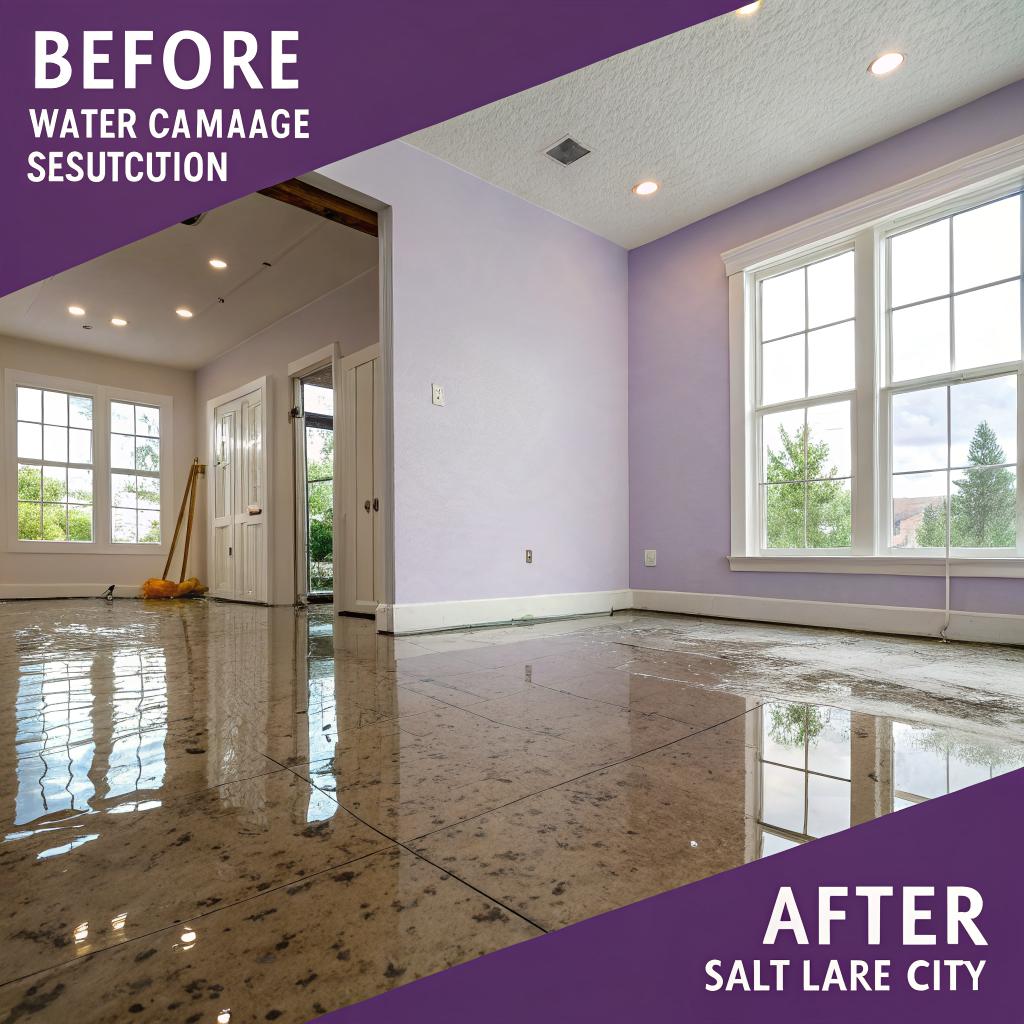
What if I told you that 40 years ago, “water damage restoration” in Salt Lake City mostly meant opening the windows, renting a fan, and hoping for dry weather? Today, a tech with a moisture meter can tell you, down to a fraction of an inch, how wet your wall is behind the paint. The short answer: modern water damage restoration Salt Lake City services are faster, more scientific, and, frankly, much less hit or miss than what people had in the 70s, 80s, or even early 2000s.
That is the precise change. Old way: wait, guess, and patch. New way: measure, dry, and verify. The tools changed, the building codes changed, the climate information improved, and our patience for musty basements dropped. If you want the quick idea, here it is: what used to be a slow, mostly manual cleanup is now a data-backed process that aims to stop mold before it even has a chance.
But this story is also about memory. About how people remember “the flood in 1983” or the winter their parents shop downtown smelled like mildew for weeks. Water damage in Salt Lake City is wrapped up with nostalgia, with pictures of State Street as a river, and with how our homes and tech have quietly changed around us.
So, let us walk through it. No big speeches. Just what actually changed, what stayed stubbornly the same, and why your grandparents probably have a very different idea of what “restored” means.
What water damage looked like in old Salt Lake City
If you talk to anyone who lived in Salt Lake City during the early 80s, you start hearing the same story: sandbags, overflowing gutters, snowpack, and worry. Not many people talk about dehumidifiers or thermal cameras.
For most families and small shops, water damage used to mean:
– Mopping
– Tearing out ruined carpet
– Maybe running a box fan or two
That was pretty much it.
For a long time, “restoration” meant “get the visible water out and hope for the best.”
There was not much talk about hidden moisture inside walls or under baseboards. Mold was “that smell” that came a month later. People did not connect those dots as clearly as they do now.
A typical response in the 70s or 80s looked something like this:
– A pipe bursts in a Sugar House basement
– Someone turns off the water, calls a plumber, and maybe the insurance agent
– Family and friends show up with towels and brooms
– If they can afford it, they replace the carpet weeks later
– Nobody measures the moisture in the framing or insulation
Some contractors did their best with what they had, but the tools were very basic. Drying was judged by touch and time. “It feels dry” was the standard.
Old tools, old buildings, and slower information
Think about what was missing back then:
– No cheap digital moisture meters at every supply house
– Limited access to strong portable dehumidifiers
– Little public awareness around mold and indoor air quality
– Slower access to weather data and flood risk maps
Salt Lake City’s older homes also used different materials. More plaster, less drywall in some areas. Older window styles. Less insulation in some walls and crawl spaces. All that changes how water behaves once it gets in.
It is easy to romanticize the past, but water in a wall in 1975 was not kinder than water in a wall today. People just knew less about what it was doing behind the paint.
Nostalgia remembers the sandbags and neighbors helping each other; it usually forgets the hidden mold that grew behind the paneling for years.
Then vs now: what actually changed in water damage work?
To see how far things have come, it helps to put old habits next to new methods. This is not perfect or scientific, but it still paints a clear picture.
| Topic | Then (roughly 1970s–1990s) | Now (2020s) |
|---|---|---|
| Finding moisture | Touch, sight, maybe a guess | Moisture meters, thermal imaging, detailed readings |
| Drying equipment | Household fans, open windows | High-powered air movers, commercial dehumidifiers, negative air machines |
| Standards | Personal experience, local habits | Restoration standards, categories of water, documented drying goals |
| Mold awareness | Seen as a smell or stain, often ignored | Recognized as a health concern, treated proactively |
| Records and proof | Handshake, maybe a simple invoice | Moisture logs, photos, reports for insurance |
| Communication | Phone calls, paper estimates | Text, email, photos, real-time updates |
| Typical time to dry | 1 to 2 weeks, often with guesswork | 3 to 5 days, with monitored progress |
This shift did not happen in a single year. It came in pieces, with each new tool, each big local flood, and each change in building style. If you like following the evolution of tech and process, water damage in Salt Lake City is actually a quiet little case study.
The nostalgia: the floods people still talk about
If you enjoy old stories, ask older Salt Lake residents about water. You might hear:
– The late 1982–83 high runoff and State Street covered in sandbags
– Basement floods during fast spring thaws
– Old irrigation and canal overflows in older neighborhoods
For a site about nostalgia and tech, these memories matter because they show how people coped before they trusted sensors and standards.
Someone might say, “We just opened the windows and put rugs out in the sun.”
It sounds simple. It also leaves out the wood that slowly warped, the smell that never fully left, and the headaches years later selling that same house.
The stories that feel warm and nostalgic often came with hidden costs in the walls, ceilings, and air that nobody measured.
There is also a strange tension here. People miss the neighborly response, the shared effort, the way everyone on the street helped stack sandbags or pull up carpets. At the same time, they are quietly relieved that, now, they can call a crew that arrives with tools that actually measure what is happening.
Some people see the new tech as cold or too clinical. Others see it as peace of mind. The truth is probably in the middle. You still need neighbors who care, but you also need someone with a hygrometer.
How water damage restoration works in Salt Lake City today
If water hits a home or condo in Salt Lake City now, the process feels very different from what your grandparents did, even if the basic goal is still the same: get dry, stay safe, rebuild.
Here is what usually happens today when a modern company responds.
1. Assessment: less guesswork, more measurement
A tech does not just walk around and say, “Looks bad.” They:
– Check how far the water spread
– Use meters to test drywall, baseboards, wood, sometimes concrete
– Look at ceilings below the leak, not just the floor where it started
– Take photos and notes, sometimes video
The aim is to map out what is actually wet, not just what looks wet. Because in many cases, the surface dries first while the inside stays soaked.
2. Category and class: naming the type of water
Modern restoration uses categories for the water source:
– Clean water from supply lines
– Gray water from appliances
– Black water from sewage or floodwater
That labeling guides how aggressive the cleaning and demolition have to be. For instance, sewage on a basement floor is not handled with the same method as a clean supply line that burst behind a fridge.
There is also the “class” of water, which describes how much of the material is wet and how easy it is to dry. A small spill on tile is not handled like saturated carpet and soaked insulation.
This naming might feel a little dry or technical, but it keeps people from relying only on intuition. It also affects what insurance will cover.
3. Extraction: fast removal of standing water
Modern extraction uses:
– Truck mounted or portable extractors
– Weighted tools for carpets
– Wet vacs for edges and smaller areas
Instead of just letting water sit and soak further into the slab or framing, the priority is to pull out as much as possible right away. The less water stays in the building, the faster the air movers and dehumidifiers can do their job later.
If you compare that to a mop and shop vacuum from 1985, you can imagine how much water probably stayed behind back then.
4. Drying setup: air movement, dehumidification, and containment
This is where the tech side became much more prominent.
You now see:
– Air movers arranged to push air across wet surfaces
– Dehumidifiers pulling moisture from the air
– Plastic sheeting to create smaller controlled zones
– Sometimes negative pressure setups to control mold spores or odors
The tech will check the temperature, the humidity, and the moisture content of materials. They adjust equipment placement and settings as the job goes on.
In the past, someone might have just said, “Leave the fan on for a week and see how it goes.” That still happens in DIY situations, but it is not the standard for professional work anymore.
5. Monitoring: daily check-ins instead of waiting and guessing
Every day, or at least regularly, the crew returns to:
– Take new moisture readings
– Move or remove equipment as areas reach dry goals
– Document progress
This record is not just for insurance. It is also a kind of conversation with the building itself. The numbers show what your eye cannot see. Sometimes a wall that looked fine on day one still reads high days later.
Again, this clashes a bit with the nostalgia of the old days, where people trusted their senses more. But drywall does not really care about feelings. It cares about moisture content.
6. Cleaning and rebuilding: finishing what the water started
Once the materials are dry, the work shifts:
– Remove damaged drywall or flooring that cannot be saved
– Clean and sanitize hard surfaces
– Address visible mold growth or staining
– Repair and repaint as agreed
Older methods often stopped after the visible mess was cleared. Now, there is more focus on indoor air quality, long-term structural soundness, and documenting what was replaced.
It is not always perfect. Some companies cut corners, or insurance budgets limit what can be done. But the baseline expectations are very different from what they were decades ago.
Salt Lake City is not the same city it was
To understand why water damage work changed so much here, you have to admit that Salt Lake City itself is not the same.
Different buildings, different risks
Look around:
– More multi family units, condos, and townhomes
– Taller buildings downtown and in surrounding areas
– Finished basements instead of bare storage rooms
– More plumbing fixtures per home, more appliances
More plumbing and more finished space means more that can be damaged when water shows up. A small leak in a high rise can affect multiple units. A failed fridge line in a condo stack can impact neighbors above and below.
In that kind of world, the old “wait and see” approach is not enough. You either take the problem seriously or you pass the cost on to the next owner.
Changing climate patterns and runoff concerns
Winters, snowpack, and spring runoff in Utah have felt less predictable in recent years. Some years bring heavy snowfall followed by fast warming. That means:
– Faster melt
– Heavier runoff in creeks and storm systems
– More stress on old drainage paths and aging infrastructure
That is not unique to Salt Lake City, but it feels sharp here because the valley holds both long time residents and new growth in the same bowl. Older storm lines, newer roofs, and random backyard slopes all interact once heavy water moves through.
People used to shrug off a wet basement as a “spring thing.” Now, there is more urgency in addressing grading, sump pumps, and drainage around homes, because a finished basement is not as forgiving as a bare concrete storage room.
Insurance, codes, and tech finally catching up
Insurance companies also changed the game a bit. They grew tired of repeated claims for the same homes where leaks were handled poorly the first time. So they began to expect:
– Documented drying
– Clear cause of loss reporting
– Photos and moisture logs
Local building codes improved too, especially around plumbing and grading. Materials also changed: different carpet pads, different drywall, different insulation. Some are more water resistant, some are not, but as they changed, so did the way restoration pros had to work.
You might feel this as a homeowner when you call and learn there is a “process” now. It is not just a guy with a truck and a new shop vacuum. There is a structure. That can feel stiff, but it also keeps your home from becoming a long term science project for mold.
Tech that quietly changed water damage restoration
For a site that cares about evolution and tech, it is worth looking at the actual tools that made this work feel different.
Moisture meters and thermal cameras
These two tools changed everything.
– Moisture meters can show how wet a material is without tearing it out at first
– Thermal imaging cameras reveal cold or damp patterns behind surfaces
Suddenly, a tech is not guessing which part of the wall is wet. They can trace the path of a leak, find hidden pockets, and decide where to open up and where to leave alone.
It is not magic. Meters can be misused. Thermal images need interpretation. But compared to touching a wall with your hand, it is another world.
Dehumidifiers and air movers
Older dehumidifiers were small and slow. Many homes had none at all. Now, commercial units can pull dozens of pints of water out of the air each day in a single room.
Paired with strong air movement, the system creates a cycle:
– Air movers push moisture off wet surfaces
– Dehumidifiers pull that moisture out of the air
– The process repeats until materials reach a dry target
Think of it less as a miracle and more as good control of air and temperature. It feels mundane when you watch it, but without it, deep structural drying in a Salt Lake winter would take much longer.
Monitoring apps and digital records
Many companies now:
– Track readings on tablets or phones
– Take timestamped photos
– Upload information for adjusters or property managers
For the homeowner, this can mean better transparency. You can see readings, dates, and progress. For older residents, this can feel too formal, maybe even cold. They remember the days of cash, a handshake, and a paper receipt.
There is a trade off. Nostalgia offers trust and simplicity, but digital records provide proof and long term clarity. When you sell your house 10 years later, those records can help show that a past leak was handled correctly.
The human side: how local attitudes shifted
Tech and standards are one part of the story. The other part is how people themselves changed their thinking around water in their homes.
From “it is just water” to “this could affect my health”
Older thinking often treated clean water leaks as harmless. Maybe a hassle, but not dangerous. Mold was sometimes seen as just cosmetic or as something that happened only in very neglected spaces.
Now, more people connect:
– Lingering moisture
– Mold growth
– Respiratory issues, allergies, and smells
They ask different questions. Not “How fast can we put the room back together?” but “Is it actually dry and safe?”
To be fair, there is also more anxiety. Some people worry too much about minor issues, while others still shrug off real problems. But, overall, the awareness is higher.
DIY vs calling a pro
This is where I disagree a bit with what some people say online. There is a popular idea that with enough YouTube videos and a rented fan, you can handle any water damage yourself.
Sometimes that is fine. A small spill on tile? Towels and airflow will do it.
But once drywall, insulation, or subflooring are wet, or when the water comes from a dirty source, pretending that DIY gear equals pro equipment is risky. The difference between a hardware store fan and a professional setup is not just marketing.
At the same time, not every situation needs a full team and truck. People in Salt Lake City are still pretty self reliant. The smart approach is to at least get a professional opinion when:
– Water soaked a room for more than a few hours
– The source is unknown
– You cannot reach parts of the area easily
– There is any sign of sewage or ground water
Ignoring those signs because “we handled worse back in 83” is not a good plan.
Memory vs moisture readings
Old stories and new numbers do not always agree. Someone might say:
“Our basement always dries on its own. It has for 30 years.”
That might be partly true. Or it might mean the framing has quietly stayed at higher than ideal moisture for decades.
Memory is powerful, and people trust what has worked for them. But buildings age. Materials change. Climate shifts. What was safe enough in a 1975 unfinished basement is not the same in a fully finished theater room in 2025.
This small tension will not go away. Each generation has its own comfort level with risk, science, and cost.
What you can learn from the “then and now” contrast
So where does this leave you if you are not a contractor, just someone who lives in or cares about Salt Lake City and likes seeing how things change over time?
A few practical lessons shake out of this story.
1. Respect water, even when it looks harmless
Clean water from a broken pipe can cause almost as much hidden trouble as a minor flood if it reaches the wrong places and sits long enough.
The nostalgic idea that “water is just water” used to be common. Today, we know:
It is not the drama of the water that matters most, it is how long it touches materials that were never meant to stay wet.
That small view shift can save you from large repairs later.
2. Use tech, but do not worship it
Meters, cameras, and apps are helpful, but they do not replace basic sense:
– Fix the source of the water quickly
– Remove standing water fast
– Get air moving and humidity down
– Verify dryness instead of guessing
If a contractor waves around a gadget but ignores obvious wet areas or downplays your questions, the tech does not help. Tools are only as good as the judgment behind them.
3. Keep records for your future self
If you ever have a significant water event:
– Take photos before, during, and after work
– Keep receipts, reports, and test results
– Write down dates and descriptions
You might not care now, but your future self, or a future buyer, probably will. This is one of those small habits that older generations did not always follow, partly because the expectations were different. You have the benefit of their experience plus better tools.
Common questions Salt Lake residents ask, then and now
To wrap this up in a more practical way, it helps to just answer a few questions people often ask, whether they live in a 1950s brick bungalow or a new downtown condo.
Q: “We never did all this before. Is modern restoration just overkill?”
A: Sometimes it can feel like overkill, but in many cases it is simply catching up with what water has always done to buildings. The difference is that:
– Homes are more finished and more packed with belongings
– Health expectations are higher
– Resale and disclosure rules are tighter
In the 70s, you might have accepted a slightly musty basement. Today, many buyers will not. So the extra care is not pure marketing. It is also about meeting modern standards of comfort and safety.
Q: “Can I just open windows and use fans like my parents did?”
A: For small spills on hard surfaces, that can still work fine. Fresh air and airflow are not outdated. But if:
– Water reached drywall, insulation, or cabinets
– You see swelling, staining, or bubbling
– The leak lasted for hours before you stopped it
Then relying only on windows and household fans is risky. You might dry the surface while leaving deeper layers wet. That is how long term issues start.
A better middle ground is to handle what you reasonably can, then bring in someone who can at least measure the hidden moisture and tell you if you are in the clear.
Q: “Is mold more common now, or are we just talking about it more?”
A: Both. More finished spaces, tighter buildings with less natural airflow, and more plumbing all increase the chance of mold when water shows up. At the same time, we also talk about it more and recognize health links sooner.
It is not that your grandparents lived in perfectly dry homes. They often just lived with issues in silence or called it “old house smell.”
Q: “Is all this tech making us too dependent on experts?”
A: That is a fair concern. It can feel like every small problem now needs a specialist. The balance, I think, is to stay curious and informed so you can tell the difference between a minor issue and a serious one.
Use the story of water damage in Salt Lake City as a reminder: things do change, sometimes for real reasons, not just for profit. The tools are better, but your judgment still matters.
The city is different, the climate feels different, and the houses are very different, but the basic question is the same as it was in 1983:
When water gets in, how quickly and how carefully will you respond?
