

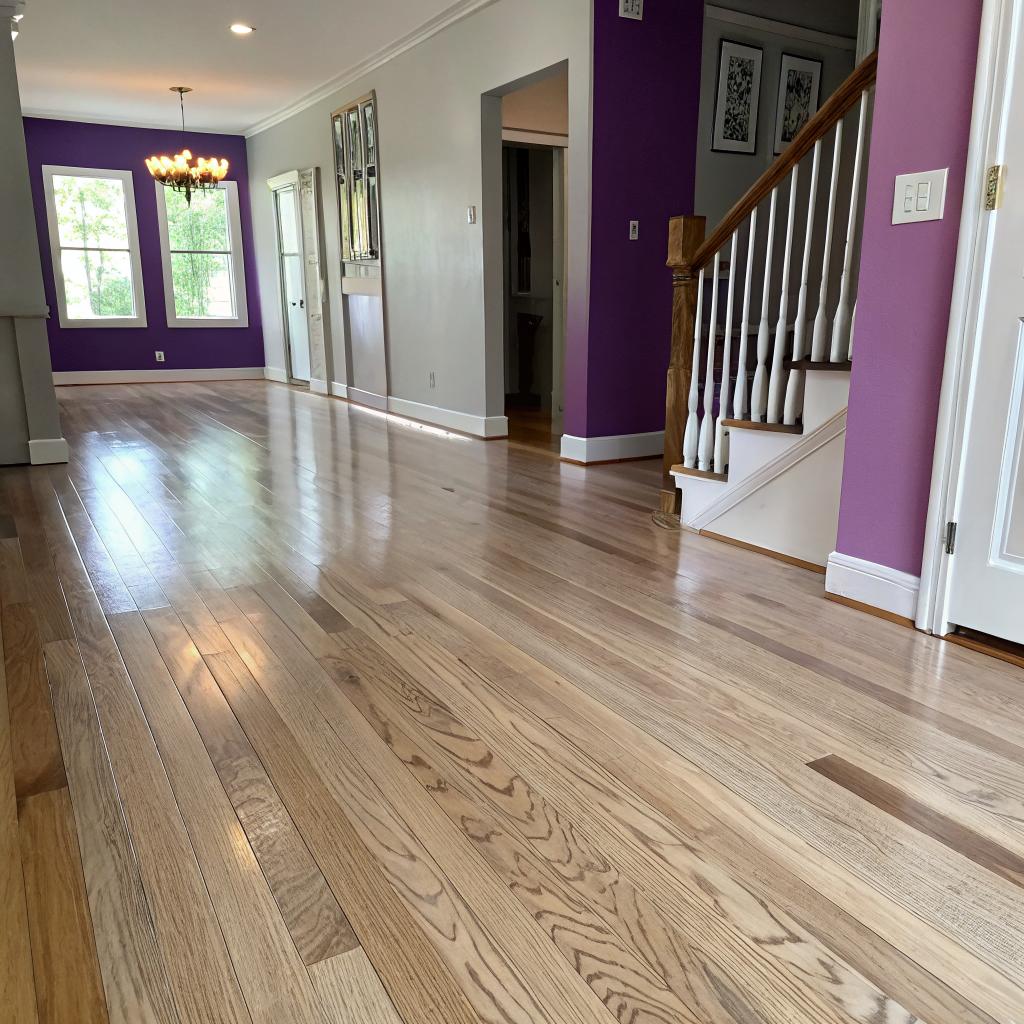
What if I told you that the future of home tech in Denver is hiding under your rug, not on your wall or in your pocket?
If you want the short answer: modern wood floor refinishing Denver gives you that vintage, lived-in look people miss from older homes, while using high tech tools, low VOC finishes, better dust control, and smarter planning to reduce mess, guesswork, and long downtime. You keep the nostalgia, but you get less odor, more durability, and more control over the final look.
That is the simple version. The longer story is where it gets interesting, especially if you like to see how old and new collide.
From squeaky boards to smart schedules
If you live in Denver, you know older wood floors are everywhere. Bungalows, mid-century ranches, narrow brick Victorians. A lot of them have floors that were first finished decades ago, with heavy oil-based products and clouds of dust that probably still live in someone’s memory.
Now you can refinish a 1940s oak floor while checking the progress on your phone, pick a stain in a simulated daylight setting, and sleep in the house the same night with barely any lingering smell.
That jump from retro to high tech did not happen overnight. It came in small steps.
- Sanders that collect dust instead of spraying it into every vent
- Water based finishes that dry faster and smell less than old oil products
- Moisture meters that scan boards before work starts
- Sample boards and apps that help you test colors in your actual lighting
The floor is still wood. You still get grain, knots, and small imperfections. The process around that wood is what changed.
Why wood floors feel nostalgic in the first place
If you talk to people who grew up in older homes, they rarely describe the drywall or the trim. They remember the floor.
Maybe it was cold in the morning. Maybe their grandparents had a deep amber varnish that made everything look a bit warmer than it really was. Or the creak near the hallway that gave away your midnight snack.
Wood floors record time. You can usually tell which path people used most, where a dog liked to sleep, or where someone dropped a pan. That is part of the charm, and it is also why some people resist refinishing. They are afraid all of that will vanish.
The truth is a little more nuanced.
Modern refinishing can reset the surface of your floor while keeping the story in the wood itself, if you choose the right level of sanding and the right finish.
Deep dents, sun fading, and old finish layers can change. The grain, nail patterns, and plank layout stay, and those are the parts that carry most of the nostalgic feel.
Retro looks you can actually recreate
When people say they want their floor to “look original,” they rarely mean they want 60 years of wear back. They usually want:
- Warmer, more natural tones rather than gray trends
- Satin or matte sheen instead of glossy plastic shine
- Visible grain, not a thick coat that hides everything
- Small character marks, not a showroom-perfect surface
The interesting part is that current finishes and tools can hit those goals more reliably than products from the past.
You can have a 1960s vibe without 1960s dust and fumes.
The “old school” refinishing process, and what changed
Traditional hardwood floor refinishing in Denver looked something like this:
1. Cover up doorways with plastic and tape.
2. Run a drum sander across the floor, often by feel and experience alone.
3. Make a few passes with finer grits.
4. Hand scrape or edge sand the perimeter.
5. Stain, then apply several coats of oil-based polyurethane.
6. Leave the house for a while, because the smell hangs around.
Parts of this process are still common. Sanding, edging, staining, coating. Those fundamentals are the same.
The shift came from three main areas.
| Old approach | Modern approach |
|---|---|
| Drum sanders with limited dust bags | Vacuum-connected sanders with better dust collection |
| Oil-based finishes with strong odor and long cure time | Water-based and modified finishes with lower VOCs and faster drying |
| Visual guesswork on moisture and flatness | Moisture meters, better abrasives, more precise grit sequences |
| One-size-fits-all stains | Custom mix stains, color systems, and sample panels |
So the basic path is familiar. The tools and decisions in each step are where tech quietly sneaks in.
Dust: the part everyone remembers
If you talk to someone who refinished their floor 20 years ago, dust is usually the main complaint. It stuck to walls, vents, plants, and sometimes their patience.
Sanding wood produces fine particles. Older machines had small bags that caught some of it, but a lot went into the air because there was nothing pulling it away at the source.
Modern systems are not perfect, but they are noticeably different.
Dust control is probably the most practical upgrade in floor refinishing, because it affects your health, cleanup time, and ability to keep living in the space.
Today you often see:
- Big vacuum units on wheels, connected directly to the sander by hoses
- Better seals on machines, so less dust blows out around the bag
- Plastic barriers used with more intention, not just wherever there is tape
Is your house going to be spotless after? No. You still have fine particles that hang in the air. But it is realistic now to refinish the main level of a home without finding dust inside every kitchen cabinet.
If you have allergies or kids, that change alone might be the deciding factor.
Finishes: from long fumes to quick turnaround
Oil-based polyurethane used to be the default. Many people still like the amber color it creates, especially over oak. It can look rich and familiar.
The trade offs are not hard to guess:
- Strong smell during application and curing
- Longer dry times between coats
- Yellowing over time, which you may or may not like
Water-based finishes gained ground as chemistry improved. Early versions sometimes looked cloudy or too cool in color. That has changed a lot. Now you can pick:
| Finish type | Look | Dry time (approx) | Odor level |
|---|---|---|---|
| Oil-based poly | Warm, amber tone, higher build | 8–24 hours between coats | High |
| Water-based poly | Clear to slightly warm, natural grain | 2–4 hours between coats | Low to medium |
| Hybrid / modified | Balanced warmth and clarity | 4–6 hours between coats | Medium |
For a lot of Denver homes, water-based finishes are a good match. They keep the floor from darkening too much, which matters in smaller bungalows or homes with limited natural light.
If you love a retro amber tone, there are ways to mimic it without locking yourself into heavy fumes and long cure times. Some contractors use:
- Tinted sealers under a clear water-based topcoat
- Oil-based stains, then water-based finishes on top
- Special “amber” or “warm” water-based products
This is where tech and nostalgia shake hands. You choose the look from the past, supported by chemistry from the present.
Denver climate: not as simple as “dry air”
People often say “Denver is dry, so wood shrinks.” That is only halfway true. Wood reacts to relative humidity, not just the idea of “dry.”
Summer storms can push humidity up. Winter heating can pull it down. When that swing is large, floors feel it.
Refinishing is the one time you are fully resetting the floor surface, so it is the best time to check moisture and movement, not guess.
Modern refinishing often involves:
- Moisture readings of the wood and sometimes the subfloor
- Checking humidity inside the home with a simple meter
- Planning gaps and expansion with local climate in mind
If you refinish in a very humid week with windows open, then run dry heat all winter, you might see more gaps or small cracks later. A careful contractor will watch for that timing.
You do not need smart sensors in every room, but a $20 humidity meter and a moisture meter in the right hands are real upgrades from guessing by feel.
Color trends: from orange to gray to something in between
Nostalgia can trick us. When people think of “old hardwood,” they often remember what they saw last, not the original color.
Many Denver floors from the 80s and 90s went a bit orange over time from oil finishes. Later, cooler grays and very dark browns took over design magazines.
In practice, what most homes seem to want now is:
- Light to medium natural tone
- Less yellow and less red
- Sheen below gloss, usually satin or matte
Modern staining systems can document exact formulas. That matters more than it sounds like.
With some product lines, you can:
- Mix stains by percentage and record the recipe
- Apply sample sections and photograph them in your light
- Compare those photos on a screen instead of guessing from memory
It is not full virtual reality, but it gives you a level of repeatability that old “eyeball it” methods lacked. Again, future tools, retro goals.
Retro character vs high tech perfection
This part is more personal. Technology tempts people to aim for perfection. Lasers, better abrasives, precise finishes. It can push floors toward a uniform, almost plastic look if you are not careful.
The catch is that old floors never looked perfect. They cupped a little, they had small gaps, and the color was uneven in a natural way. People often miss that, even if they do not have the words for it.
So you have to decide how far you want to go.
Ask yourself:
- Do you want to hide every nail outline, or keep some as character?
- Are small gaps between boards a problem, or part of the charm?
- Is your goal a “new build” feel or a “well kept vintage” feel?
If a contractor offers to “flatten everything” with very aggressive sanding, that can remove more life from an older floor than you might expect. Sometimes a slightly lighter touch, paired with a durable finish, gives you a better mix of history and function.
From manual to measured: where technology quietly helps
Not every upgrade is visible. Some of the most helpful ones are behind the scenes.
Better abrasives and sanding sequences
Older methods sometimes jumped between grits in bigger steps. You could end up with swirl marks that only showed up after stain went down.
Now there are more:
- Refined grit steps that reduce scratch patterns
- Specific sanding paths to blend edges with the field
- Mesh abrasives that collect dust more evenly
You do not need to know every detail as a homeowner. What matters is whether your contractor has a clear process and can explain why they pick certain grits and machines. If the answer is “we always do it this way” without more thought, that can be a small red flag.
Scheduling, access, and communication
This is the less glamorous side of tech, but it is real.
Refinishing turns rooms into work zones. Coordinating that used to be mostly verbal or on paper. Now you are more likely to see:
- Digital estimates with line items for sanding, stain, and finish types
- Text updates during the job, including photos
- Shared schedules that show when you can walk on the floor, move furniture, and place rugs
Some people find this overkill. Others like having a clear plan and fewer surprises. You might not think of it as technology in the same way as a new machine, but it shapes how the job feels.
Common questions about refinishing in Denver homes
You can read a lot of theory, but your real questions are usually practical. Things like: Will I be able to sleep in my bedroom? Where does the furniture go? How long before I can bring the dog back?
How long do you need to be off the floors?
This depends on product choice, temperature, and humidity, but a rough pattern for water-based finishes might look like:
| Stage | Typical timing | What you can do |
|---|---|---|
| After final coat, 4–6 hours | Light surface set | Usually no walking yet, only airflow as directed |
| After 24 hours | Initial cure | Walk in socks, limited traffic |
| After 48–72 hours | Stronger surface | Move furniture carefully, use pads under legs |
| After 7+ days | Full or near full cure | Normal use, area rugs can return (with spacing) |
Oil-based products usually stretch those times out. This is one place where “high tech” finishes actually change your daily life.
Can you refinish every wood floor?
Not always.
Some older floors have already been sanded several times. Each pass removes a thin layer of wood. At some point, the tongue and groove system that holds boards together sits too close to the surface to allow more sanding.
You also have:
- Engineered floors with a thin wear layer that might only handle one light sanding
- Floors with water damage or structural movement that sanding alone cannot fix
- Patchwork from older repairs that may need board replacement before refinishing
This is where experience matters more than the newest tool. Technology helps measure, but it does not replace judgment. If someone promises to “make it like new” without checking thickness or movement, that is risky.
How to talk with a contractor about retro style and modern methods
You do not need to know every product name, but it helps to ask a few pointed questions. Not to quiz anyone, just to see how they think.
You might ask:
- “What finish options do you suggest for low odor and decent durability?”
- “Can you show examples of satin vs matte sheen on actual jobs?”
- “How do you control dust on a typical Denver project?”
- “If I want a warm, older look without yellowing too fast, how would you approach stain and finish?”
Listen less to brand names and more to the logic. Are they thinking about your house orientation, light levels, and how you use the space, or just repeating the same plan everywhere?
You might disagree with some of their suggestions. That is fine. Good refinishing is a mix of craft, science, and preference. If everything sounds like a script, that can feel off.
The nostalgia of sound and feel
Something people rarely talk about is sound. Old wood floors have a certain noise when you walk on them. Slight creaks, a softer echo, a particular rhythm.
Refinishing can change that more than you might expect. When you sand, fill gaps, and add finish layers, the boards can move differently. Sometimes the floor feels tighter and quieter, which is nice. Sometimes it loses a bit of that creaky charm.
There is no universal right answer here.
Some homeowners ask contractors to tighten squeaks where possible. Others feel odd when the house suddenly goes silent. If the squeaks are from loose nails or structural issues, fixing them makes sense. If they are from harmless friction between boards, you might decide to keep a few.
If you love how your floor sounds right now, tell your contractor. It is not a strange request. Sound is part of the character, just like color.
The same goes for texture. Heavy screening and thick finishes can remove small ridges between boards. Many people like that smoothness. Others miss the subtle waves that made the floor feel older.
You can ask for a slightly lighter touch or a lower-build finish if you want to keep more texture.
Where technology should stop
There is a point where chasing tech becomes its own goal. Automatic color pickers, AI-generated room mockups, sensor overloaded “smart” machines. Some of it is useful, some of it feels like a distraction from what matters.
At the end of the day, a wood floor is a natural surface that you look at and walk on every day. The choices that affect your life most are simple:
- How it looks in your real light, not a staged photo
- How it smells during and after work
- How long it keeps that look under your level of use
- Whether you still feel like you are living in the same house, just refreshed
Software, sensors, and new tools should serve those points, not run past them. If an approach sounds too futuristic to explain in normal words, you can be cautious about it.
Questions you might still have, and some plain answers
Q: I like older, slightly worn floors. Is refinishing even the right move?
A: Sometimes, yes. You can refinish without sanding all the way to perfect. In some cases, a “screen and recoat” that lightly abrades the surface and adds new finish can extend the life of the floor while keeping most of the existing color and character. If the damage is deep, you may need full sanding, but you can still request a less glossy finish and a natural stain to keep a mellow feel.
Q: Are water-based finishes actually durable, or is that just marketing?
A: Good quality modern water-based finishes are quite durable, especially multi-component products. They resist yellowing better and usually handle surface scratches well. Oil-based still has strengths, especially in certain commercial settings, but for most Denver homes, a good water-based system is a realistic, not hyped, choice.
Q: Does refinishing always increase home value?
A: Not in some automatic, guaranteed way, but clean, well-finished wood floors usually make homes easier to sell and photograph. Buyers often react strongly to floors, even if they do not say so outright. You will not get every dollar back like a math equation, yet neglected or badly finished floors can pull interest down in a way that feels larger than the actual cost to fix them.
Q: Is there any real connection between nostalgic design and modern floor tech, or am I stretching it?
A: You are not stretching it. The whole field of refinishing sits at that intersection. People want older looks, familiar warmth, and lived-in character, but they also want clean air, faster timelines, and more control. The best refinishing jobs in Denver right now respect the age of the house while quietly using better tools and chemistry behind the scenes.
If you had to choose, would you lean more toward keeping every bit of vintage character, or toward a cleaner, more modern finish that is easier to live with day to day?
